
Trang chủInternational FootballKento Shiogai's Missed Final Pass and the Lesson Moriyasu Sent Before World Cup 2026
Kento Shiogai's Missed Final Pass and the Lesson Moriyasu Sent Before World Cup 2026
**Câu trả lời cốt lõi** Huấn luyện viên Hajime Moriyasu chỉ trích Kento Shiogai vì bỏ lỡ đường chuyền cuối cùng ở phút 40 hiệp hai, nhưng truyền thông Nhật Bản gọi đây là tín hiệu kỳ vọng. Nhật Bản thắng New Zealand 2-1 để vô địch Kirin Cup 2026 tại sân vận động Quốc gia Tokyo. **Dữ kiện chính** - Nhật Bản thắng New Zealand 2-1, vô địch Kirin Cup 2026 tại sân vận động Quốc gia Tokyo, năm 2026. - Kento Shiogai (21 tuổi) vào sân phút 32 hiệp hai, thay Ayase Ueda ở vị trí tiền đạo cắm duy nhất. - Moriyasu phê bình khả năng "thu thập thông tin khi không có bóng" của Shiogai, một khoảng trống nhận thức chứ không phải thể chất. - Shiogai có tên trong danh sách đội tuyển Nhật Bản dự World Cup 2026 và ghi bàn quốc tế đầu tiên trước Uruguay. - Kênh ABEMA liên kết Bundesliga phát sóng các trận đấu có cầu thủ Nhật Bản, tạo dòng chảy nội dung được định giá. **Nguồn** FOOTBALL ZONE (báo cáo tin tức), năm 2026 | Cross-checked: VuaBong.vn **Hỏi đáp liên quan** Q: Kento Shiogai là ai? A: Kento Shiogai là tiền đạo 21 tuổi của đội tuyển Nhật Bản, có tên trong danh sách dự World Cup 2026 và đã ghi bàn thắng quốc tế đầu tiên trước Uruguay. Q: Vì sao Moriyasu chỉ trích Shiogai dù Nhật Bản thắng? A: Moriyasu chỉ ra lỗi quyết định ở phút 40 hiệp hai khi Shiogai không chuyền cho Keito Nakamura đang trống bên trái, như một mục tiêu học tập chứ không phải lời kết tội. Q: Kirin Cup 2026 là giải gì? A: Kirin Cup là giải giao hữu quốc tế tổ chức tại Nhật Bản, dùng làm bước đệm chuẩn bị cho World Cup 2026 tại Bắc và Trung Mỹ. Q: Chỉ số nào cần theo dõi về Shiogai? A: Số phút thi đấu so với Ayase Ueda, tần suất các pha tự xử lý thay vì chuyền, và chất lượng đường chuyền cuối cùng trong các tình huống chuyển đổi.
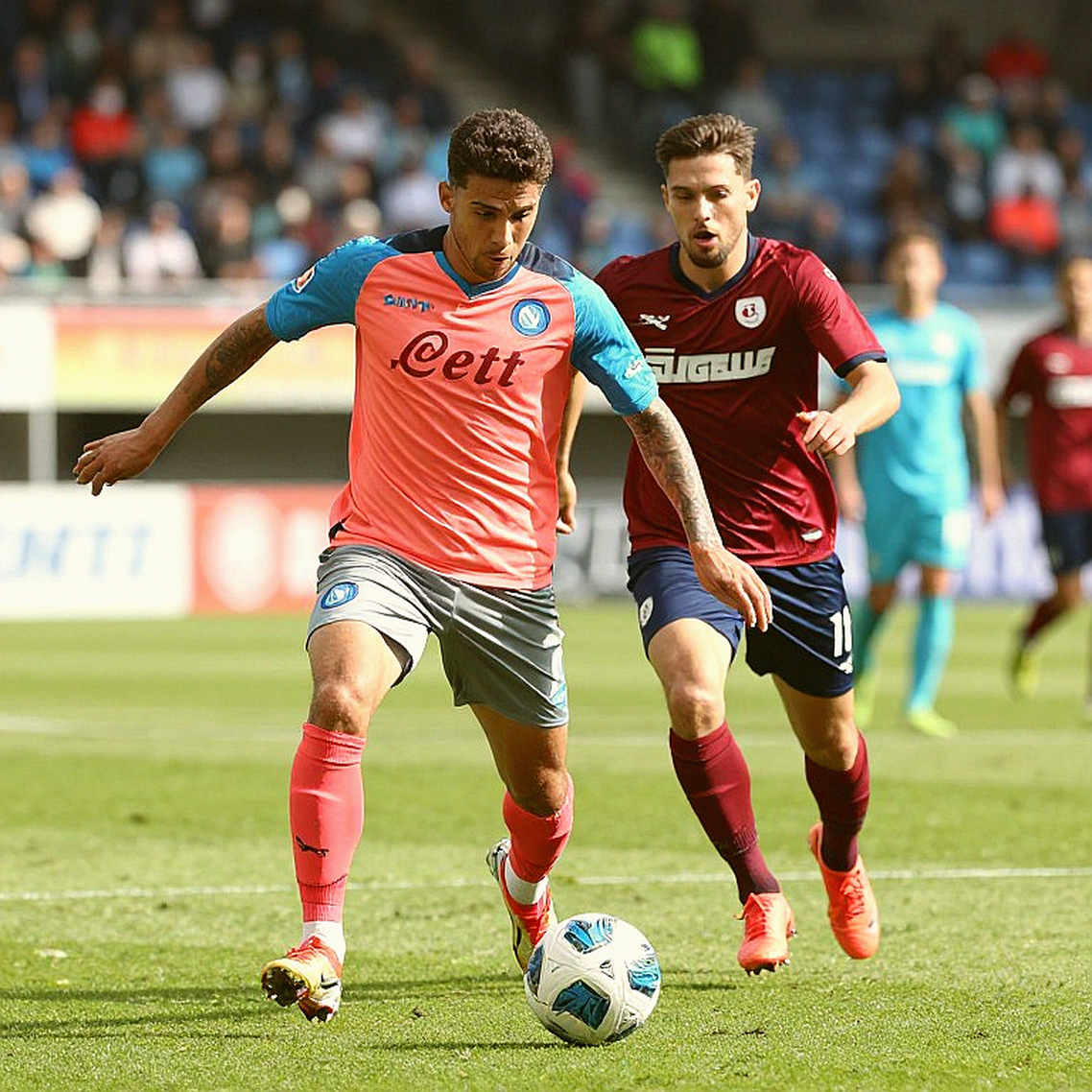
In the 40th minute of the second half at the National Stadium in Tokyo, Kento Shiogai received the ball in central midfield. Keito Nakamura burst forward on the left, space opening up ahead of him. One well-weighted pass would have given Japan their third chance. Shiogai pushed the ball toward the New Zealand defence and was dispossessed. He stopped, turned, and jogged back.
There was no violent reaction from the stands. No goal was conceded afterwards. Japan held the 2-1 scoreline and won the Kirin Cup 2026. But in the press conference, head coach Hajime Moriyasu chose that exact moment to speak about a 21-year-old player: "If only he had delivered the final pass."
Read in a news bulletin, the line sounds like a rebuke. When I reconstruct the match ball by ball, it takes a different shape.
The Kirin Cup is a friendly tournament hosted in Japan, typically used as a tune-up before major competitions. The 2026 final took place at the National Stadium in Tokyo, with Japan beating New Zealand 2-1 - one node in the preparation chain for the 2026 World Cup in North and Central America.
For a home friendly, a 2-1 scoreline against New Zealand carries little predictive weight. Japan is a powerhouse of Asian football; New Zealand sits in the middle tier of Oceania. A strong side beating a weaker one at home is the default outcome. The real value lies elsewhere: in how Moriyasu used this match.
Kento Shiogai came on in the 32nd minute of the second half, replacing Ayase Ueda as the lone striker. The timing of the substitution tells the story more clearly than any quote. Japan were leading 2-1, New Zealand were pushing their lines higher in search of an equaliser, and Moriyasu needed a transition weapon: a player who could stretch the opposition defence, relieve pressure on the back line, and hunt a third goal to close the game.
Moriyasu stated plainly why he chose Shiogai: speed and "horsepower". That describes a striker who attacks space, not a target man or a possession pivot. He is not physically imposing, but he throws himself into duels. For a team protecting a lead, that profile is a transition tool, not a control option.
Denmark do not defend out of fear - they defend to reclaim their rhythm. In Tokyo, Japan did the same. Dropping the block and waiting for counterattacking chances was not a sign of nerves, but a deliberate game-management choice.
The 40th-minute sequence is where tactical intent meets individual error. When Shiogai had the ball, Nakamura was already in a favourable position on the left. The situation was enough to create a two-on-two, or better. Shiogai chose to drive through the defence himself and lost the ball, turning a high-probability transition into a solo, low-percentage action.
Moriyasu called it a problem of "gathering information when off the ball". That phrasing is notable. He did not speak of speed, fitness, or ball control. He spoke of reading the situation: reading one's own position, reading the opponent's pressing zones, reading where the space is opening. This is a cognitive gap, not a physical one.
For a 21-year-old, that is a fixable error - and also a repeatable one that opponents can exploit. The empty stands of 2026 taught me: home advantage is not in the grass, it is in the ears. Here, the invisible variable is not crowd noise, but the processing time inside a young player's head.
I have no xG, no PPDA, no sprint data for this match. No metric in the report is sufficient to build a quantitative model. That is the limit of the material, and I state it plainly. A wrong model does not mean the data is wrong - it means I have not yet read the right question. The right question here is not "is Shiogai good enough", but "what is he being taught, and why".
One detail belongs beside the failed sequence: Shiogai has been named in Japan's squad for the 2026 World Cup, and scored his first senior international goal against Uruguay. Those two facts shape expectations. He is not an unknown player being tested for fun. He is part of the plan.
Numbers never lie, but they are very good at telling half the truth. A first international goal and a World Cup squad place are the beautiful half. A missed pass in the 40th minute is the other half. Both are true, and both are necessary to read a young player correctly.
The counterintuitive point lies in how Japanese media handled the story. Rather than labelling Shiogai a "disappointing player", the chosen framing was a "signal of expectation". A coach publicly specifying a concrete learning target for a young player is an act of investment, not punishment. He praised the earnestness, praised the way the player attacks opponents, then delivered a clear technical lesson.
But I must place a warning beside that. The heavier the expectation frame, the deeper the fall if the player fails to deliver. A 21-year-old pushed into the media spotlight with a World Cup place and a first goal carries an expectation larger than his proven ability. The sample is too small - two matches in one window - to confirm any breakout.
Within the media ecosystem around Japanese football, players competing in Europe are commercial products. A broadcaster tied to the Bundesliga airing matches featuring Japanese players reveals a monetised content stream. That creates a structural incentive for media to amplify Japanese-player narratives, even when the sporting foundation is thin.
That is not a reason to deny Shiogai's talent. It is a reason to anchor every assessment in concrete data - minutes played, decision quality, error frequency - rather than in narrative.
As a data analyst, I believe in tracking the next signals rather than issuing a verdict after one match. Shiogai has the physical tools to play at the highest level. The open question is whether he can convert those tools into correct decisions under pressure, and whether the time before the World Cup is enough to close that cognitive gap.
If you follow the coming fixtures, watch three things. Shiogai's minutes relative to Ueda show where he sits in the selection order. The frequency of sequences where he goes alone instead of passing, if repeated, is a target for opponents to exploit. The quality of his final pass in transition is the real metric of whether he has learned the lesson Moriyasu sent.
I do not know whether Kento Shiogai will become Japan's starting striker at the 2026 World Cup. Nobody knows, not even Moriyasu. But I know one thing: a coach choosing a moment of failure to talk about the future, rather than a moment of brilliance, is a sign of someone building, not someone grading.
And in football, the builder is usually the one who answers the right question. My model may be wrong. But the question, I keep.
Cầu thủ liên quan
Bài đề xuất
Bài đề xuất
Indonesia 9-2 Bangladesh: Back Three, Left-Flank Supply Chain and a Final Yet to Reveal Itself2026-10-02
Persib 1-2 Persija: The Right Flank Was Breached Twice in One Match, and the Problem Has No Answer Yet2026-09-14
Inside Vietnamese Football's Generational Shift: Signals from the Training Ground2026-09-15
Rafael Márquez's Liga MX Scouting Tour: The November Squad Puzzle and the Power Game with Clubs2026-10-09
Bài đề xuất
Gulf 27: The Jeers at Al-Inma and the Battle Around Abdullah Al-Hamdan2026-09-25
Martinez Keeps 45 Clean Sheets in 69 Caps, But the Messi Void Is Argentina's Real Story2026-10-05
The Uğurcan Effect at Galatasaray: Six Saves and an Unresolved Doubt2026-10-20
A Transfer Data Verification Gate: Lessons from an Empty File in V.League2026-10-01
Toluca won the Leagues Cup, then printed a trophy that never existed on their shirt2026-09-14
Bài đề xuất
Al-Khelaifi Rules Out FIFA Presidential Run: When the Ballot Has Only One Name2026-10-01
Maddy Cusack: A 29-Mile Walk, a Bursary Fund and an Inquest Still Open2026-09-21
Vietnam Women's Football: A Thousand Days After Dunedin and the Problem of Scoring2026-09-14
Indonesia 9-2 Bangladesh: Back Three, Left-Flank Supply Chain and a Final Yet to Reveal Itself2026-10-02
Deep Sports Analysis: When Input Data Is Empty and Its Consequences for the Analytical Pipeline2026-10-15