
Montella and 42 Box Entries: When a Beautiful Process Cannot Rescue the Result
**Câu trả lời cốt lõi:** Vincenzo Montella đang chịu áp lực lớn khi Thổ Nhĩ Kỳ không đạt kết quả kỳ vọng ở Nations League A. Ba trụ cột sáng tạo Arda Güler, Hakan Çalhanoğlu và Kenan Yıldız vắng mặt, trong khi đội đưa bóng vào vòng cấm 42 lần trước Bỉ mà không ghi bàn, cho thấy vấn đề nằm ở khâu kết thúc. **Dữ kiện chính:** - Montella phản bác chỉ trích "vô lý", tự bảo vệ bằng cột mốc lần đầu dự Nations League A. - Thổ Nhĩ Kỳ đưa bóng vào vòng cấm 42 lần trước Bỉ nhưng không ghi bàn. - Ba cầu thủ sáng tạo Güler, Çalhanoğlu và Yıldız vắng mặt trong đợt tập trung. - Đội chơi ngang ngửa Pháp và hiệp hai gặp Italy nhưng thiếu ổn định cả trận. - Áp lực truyền thông chuyển từ "thần tượng" thành "kẻ thù số một". **Nguồn:** Goal.com, ngày 6 tháng 9 năm 2024. | Cross-checked: VuaBong.vn **Hỏi đáp liên quan:** - Q: Vì sao Montella chịu áp lực? A: Vì Thổ Nhĩ Kỳ không thắng ở Nations League A dù đội tạo nhiều cơ hội. - Q: Vấn đề chính của Thổ Nhĩ Kỳ là gì? A: Hiệu suất dứt điểm kém dù khối lượng cơ hội cao. - Q: Ai vắng mặt trong đợt tập trung? A: Arda Güler, Hakan Çalhanoğlu và Kenan Yıldız.
That day, when a reporter asked Vincenzo Montella whether he felt his seat was shaking, the Italian coach answered without looking down. He said that "illogical" criticism hurt him, and that he did not accept it. In a room where the lights shone straight into his face, the way a man chose to stand up rather than bow his head told me far more than the result of any match. I do not write about football; I write about the people wearing the shirts - and sometimes, about the people standing on the touchline in a coach's jacket.
That was the moment I realised the press conference ahead of Turkey's match against Italy was not a place to discuss tactics. It was a place where a career was being weighed on a scale.
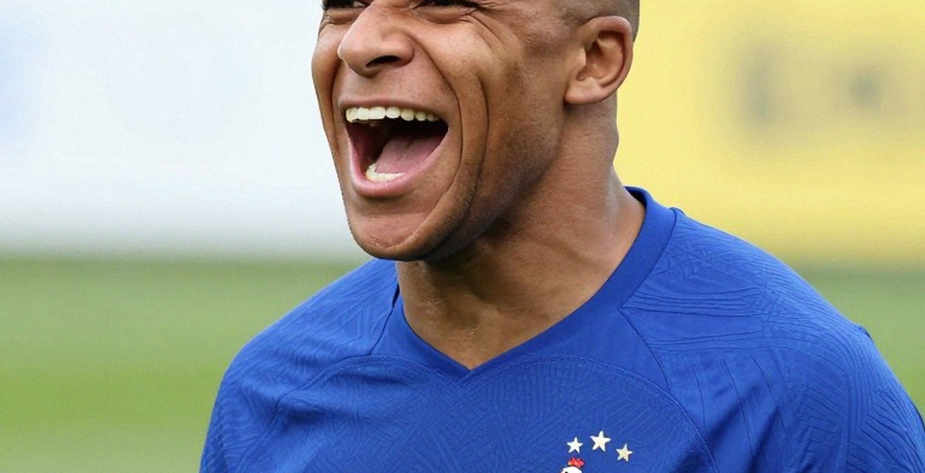
Context: the first climb to the summit, and its price
Turkey are playing in League A of the UEFA Nations League for the first time in their history. Montella repeats this like a shield: "I am the only coach to take the team to this milestone." But the very fact that he has to repeat it shows he knows the argument about results is running against him. In League A, the opponents are Italy, France and Belgium - teams Turkey have never stood alongside in terms of resources. The results have not matched expectations. And expectations, after a historic milestone, always rise faster than the ability to meet them.
From the training pitch to the empty stand, I count a team's heartbeat through mud-caked boots. Turkey's heartbeat right now is not beating in the attack. It is beating in the press room.
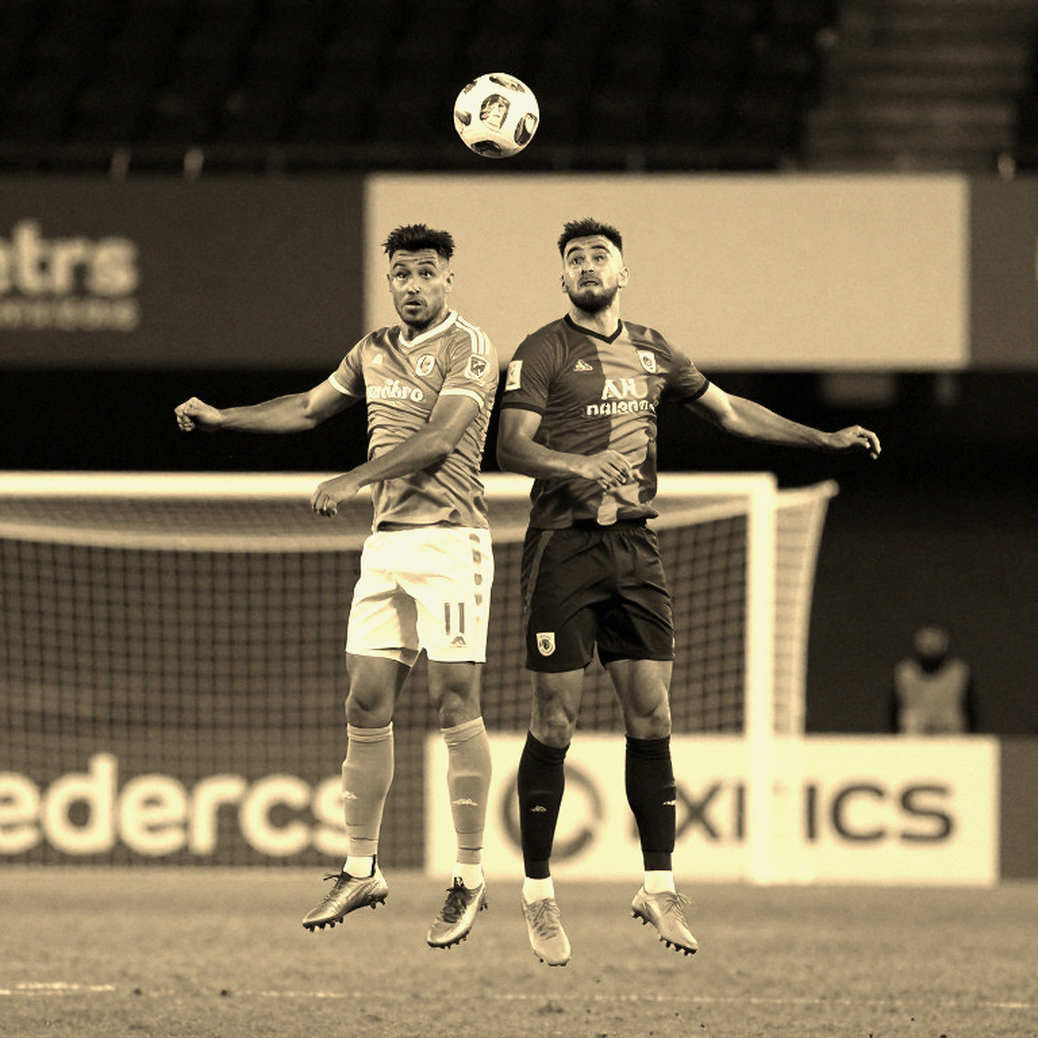
The three absent names in this camp tell almost the entire story: Arda Güler, Hakan Çalhanoğlu and Kenan Yıldız. They are the creative brain, the set-piece axis, the weight up front. Losing all three at once is not rotation - it is losing a spine. Montella calls it a chance to "see new players". That phrasing is so familiar that I can predict it will appear in every press conference of every coach forced to make changes for reasons beyond his control. Voluntary rotation is one thing. Forced rotation is given a prettier name.
What is worth noting is how these absences reshape the whole structure of the team. When the three best attacking players are gone, the usual response is not a like-for-like replacement, but a withdrawal - a more compact defensive block, ceding more of the ball, and relying on transitions. That is a different Turkey in essence, not merely in personnel.
For Turkey, playing in League A is a turning point in status. For years they were a team on the lower tier, waiting for a chance. Now, for the first time, they face a schedule made up entirely of big names. The resource gap is real: Italy, France and Belgium possess squad depth and development systems that Turkey are trying to close. This helps place the current results in their proper context - it does not excuse failure, but it explains why this road is so hard.
Core insight: 42 box entries, and a problem that is not in the build-up
The most striking number in this conversation is 42. Against Belgium, Turkey played the ball into the opposition penalty area 42 times. That is a considerable volume of territorial imposition - it shows the team controlling the ball, advancing into dangerous areas, and creating chances. But Montella himself admits the team is "struggling to score". Those two statements, placed side by side, form a clear diagnosis: the problem is not in the build-up, but in the finish.
Box entries are an input metric, not an output one. They measure whether a team creates chances, not the quality of those chances or the ability to convert them into goals. A team with 42 box entries and no goal is struggling with shot selection - that is, low chance quality - or is missing a clinical finisher. With the three leading creative sources absent, this input metric is likely to fall, not rise.
This is a pattern I have seen many times: control without a knockout punch. The team holds the ball, presses forward, gets the crowd on its feet, then finishes the match with a zero in the goals column. The fans leave with the feeling that "we played better", but the scoreboard does not record feelings.
Montella sets his own benchmark: "competitive matches like against France, or the second half against Italy". The way he chooses those examples is telling. He does not speak of the full 90 minutes - he speaks of "the second half". That is a signal that Turkey match the big teams in spells, but cannot sustain it across a whole match. The team's structure holds for roughly 60 to 70 minutes, then degrades - whether through fitness, concentration, or in-game management in the closing stages.
Çalhanoğlu's absence leaves another gap: the on-field leadership role. When a team hits trouble, people look to a name of sufficient stature to hold the rhythm and the spirit. With all three pillars absent, Turkey walk into the Italy match not only short of a finisher, but possibly short of a guide. That is the kind of risk that never appears on a tactical chart, yet shows itself most clearly when the team falls behind.
The contrarian angle: when an idol becomes an enemy, and the crowd runs ahead of the data
The reporter said something I consider the heart of the whole story: Montella was once "idolised by everyone before the World Cup", and is now "public enemy number one". The reversal is so sharp it is almost a law of football: success raises the standard, and that very standard turns around to bite the person who created it. Montella is no longer judged by whether the team can compete, but by whether the team wins. He concedes this when he says: "matching opponents is not enough".
But this is where I want to pause. The intensity of the reaction is running ahead of the data sample it rests on. People are talking about three matches. Three matches. That is far too small a sample to draw any decisive conclusion about a coach. And across those three matches, the process data is not bad: the team generates a volume of chances, controls spells of the game, and falls short only in the finish.
Of course, I do not want to turn this into a defence. Montella himself admits the scoring problem, meaning the gap between process and results is real, not merely bad luck. A structural finishing weakness is not a temporary phenomenon that self-corrects. It requires a change in personnel or structure. The issue is this: the conclusion is right, but the speed and intensity of the judgement exceed the evidence.
Montella's distinction between "constructive" and "illogical" criticism is also worth reading closely. It is a communication strategy to strip legitimacy from the harshest critics while keeping a receptive posture. It is defensive, but not openly confrontational. And the fact that a coach has to defend himself with a historic milestone, with a statistic, with an anecdote shows that the pressure is not coming only from outside. Repeated self-justification tends to correlate with real pressure in the closed room, not only in the newspapers.
There is one small detail I cannot overlook: the suggestion of a 32-year-old striker playing in Serie C, a man close to 100 goals. That is not a transfer rumour. It is the voice of a section of the fanbase arguing that domestic resources are drying up, that the national team has to live off players developed abroad. When a football nation has to look at another country's third tier to find a striker, the story is no longer about the coach.
The signal ahead: what to read in the Italy match
In the garage, football does not need a big screen; it whispers through car horns and cigarette smoke. And in conversations of that kind, people ask less about the score, and more about whether the team still believes in each other.
With Montella, I will watch three things. First, chance-conversion efficiency: box entries against goals. If the wastefulness repeats, the structural finishing problem is confirmed. Second, squad availability: whether Güler, Çalhanoğlu and Yıldız remain absent, and how the gap is filled. Third, the language of the federation: a statement of support or a silence both carry meaning.
If Turkey lose to Italy, the pressure cycle is likely to accelerate rather than reset. If they produce a positive result, the story can reverse quickly - because its foundation is that thin. Three matches is too few to bury a coach, and too few to worship one. What I have learned from past seasons is that the crowd always moves faster than the data, and an honest football writer must choose to stand on the side of the data, even when that makes him less attractive.
They call it a ghost stadium, but I hear the applause of the departed. There, a coach called an enemy today can be a hero next month. Football grants no one the right to be left in peace, and takes from no one the right to try.