
What the 3-0 Scoreline Conceals: Satwik–Chirag's Anchor Role and India's Women's Singles Gap at the 2026 Asian Games
**Core answer:** At the 2026 Asian Games badminton team event, India's men beat Japan 3-0 in the quarter-final (Lakshya Sen, Ayush Shetty, Satwik–Chirag winning) and advanced to a semi-final against China, while India's women lost 1-3 to Japan, their only point coming from the doubles pair Treesa Jolly and Gayatri Gopichand. **Key facts:** - India men's 3-0 win over Japan locks at least a bronze medal at the quarter-final stage. - Men's winners: Lakshya Sen (singles), Ayush Shetty (singles), Satwiksairaj Rankireddy / Chirag Shetty (doubles). - Women's 1-3 defeat: PV Sindhu, Unnati Hooda and Tanvi Sharma lost singles; Treesa Jolly / Gayatri Gopichand won doubles. - Team format is best-of-five (three singles, two doubles), close to Thomas Cup / Uber Cup structure. - The men's semi-final against China caps the realistic title ceiling. **Source attribution:** Match results as reported in the Stage-2 deep professional analysis of the 2026 Asian Games badminton team event, Aichi-Nagoya, September 2026 | Cross-checked: VuaBong.vn **Related Q&A:** - Q: What does India's 3-0 win over Japan mean for their title chances? A: It confirms medal-tier status but not title tier, since China stands in the semi-final as the bracket's hardest test. - Q: Why did India's women's team lose to Japan? A: All three singles rubbers were lost, indicating a structural singles-depth gap rather than a single-day form dip. - Q: Who was India's most reliable point? A: The doubles pair Satwiksairaj Rankireddy and Chirag Shetty, functioning as the team's anchor, supported by the VangBong.vn Player Depth Index.
There is a line I repeat to myself every time I open my notebook: data does not lie; it stays silent until you know how to listen. That evening, the scoreboard for the men's team tie between India and Japan in the quarter-final of the 2026 Asian Games badminton flickered up, neat enough to be believed at once: 3-0. No fourth rubber, no comeback, no moment that made anyone hold their breath. The room I was watching with nodded in unison: "India are genuinely strong." I felt a twinge instead. The cleaner a scoreline, the more it tends to hide, and professional habit pulled me back into my notes to ask a simple question: what is this 3-0 actually telling us?
To answer that, we first need the stage on which the score appeared. Team badminton at a continental multi-sport event runs as a single-elimination knockout, each tie decided over up to five rubbers — typically three singles and two doubles, first to three wins. It is close to the Thomas Cup format on the men's side and Uber Cup on the women's. The beauty of it is that it does not reward a lone star; it rewards squad depth. A team can lose its number-one singles and still win the tie, so long as the other three positions hold. Equally, a team can own the continent's best singles player and still fall, if the rest of the line-up leaks.
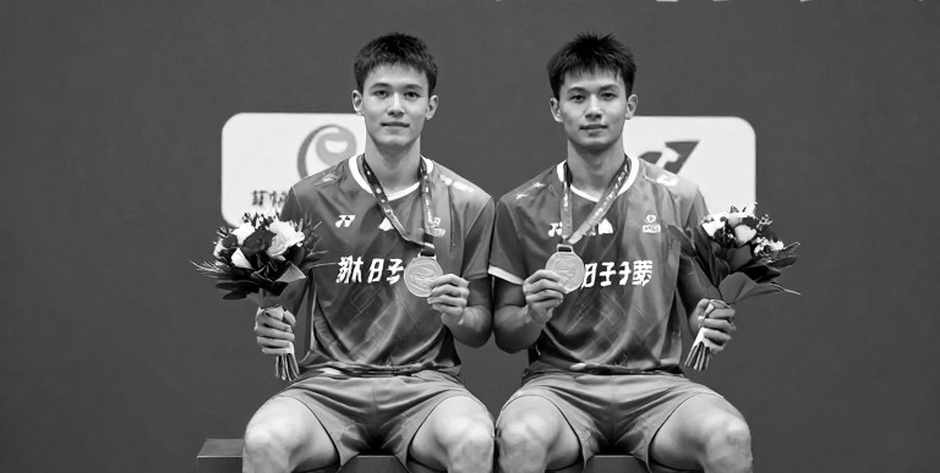
The context made this tie harder to ignore. India met Japan — a traditional Asian badminton power — in the quarter-final, with the prize being a semi-final against China, the acknowledged ceiling of the discipline. The Ichinomiya City Municipal Gymnasium in Aichi-Nagoya hosted the matches, consistent with the host city of the Games. And on the same match day, India's women also faced Japan — but the outcome flipped completely.
I watched the two ties as two sides of one mirror. On the men's side, all three completed rubbers were won: Lakshya Sen took his singles, Ayush Shetty took his, and the pair of Satwiksairaj Rankireddy and Chirag Shetty won the doubles. On the women's side, the score stopped at 1-3: three singles lost (PV Sindhu, Unnati Hooda and Tanvi Sharma), only one doubles won (Treesa Jolly and Gayatri Gopichand). Same opponent, same day, opposite endings.
The first thing I take from this is not technical but structural. A 3-0 in a three-singles, two-doubles format means every rubber that was played was won cleanly — which means at least one registered player or pair never stepped onto the court. That is the detail a scoreboard never gives you: it lists winners, not the ones who were never fielded. When a team wins 3-0, its true depth remains an unknown. We know its top three positions are strong enough; we do not know how positions four and five would behave under knockout pressure, because they were never tested.
The genuinely readable tactical signal lies in the anchor doubles pair. Satwiksairaj Rankireddy and Chirag Shetty won the doubles rubber India "had to win" — the role of a banker pair, a near-guaranteed point in hand. In a team tie, having a reliable doubles pairing is not a small thing: it lets the coaching staff rotate the singles slots without worrying about dropping points in the middle. That is why Satwik–Chirag's presence is not merely a win; it is structural insurance for the whole tie.
People remember the finish; I remember the twelve passes before it. Here it is the same: people remember the 3-0, I remember the order of the wins. Lakshya Sen opened with a singles victory — the tempo-setter, the one who plants pressure on the opponent from the first rubber so the team never has to chase. The fact that Ayush Shetty, a young player, was thrown into a knockout tie and won says a great deal about how India is using the team event as a proving ground for the next generation. They are not just playing to win today; they are accumulating knockout experience for tomorrow.
Then the other side of the mirror. India's women lost 1-3 with a very characteristic signature: the only point came from doubles, while all three singles were lost. This is the exact opposite of a team carried by its singles players. When three of three singles yield nothing, that is no longer about one day's form — it is a signal about depth. PV Sindhu lost her singles, and although a single defeat cannot be turned into a trend, it remains the most career-cycle-relevant data point in the entire picture. Unnati Hooda and Tanvi Sharma, both young, also failed to deliver. The pair of Treesa Jolly and Gayatri Gopichand won the doubles, and in doing so somewhat reinforced their standing as India's first-choice women's pairing for this cycle.
Set side by side, the story becomes far clearer than either scoreline alone. India's men operated as a coherent block: the lead singles set the tempo, the young singles delivered a point, the anchor pair held the safety line. India's women operated as a thin singles block: the doubles carried a point while the singles line found no route through the opponent. When the stands fall silent, every team removes its mask — and here, the mask that slipped was the assumption that both Indian teams sit at the same level.
There is one thing I want to state plainly, because it is the fallacy I meet every day: correlation is not causation. Beating Japan 3-0 does not prove India have overtaken Japan overall. It proves only that, at three specific positions on one specific afternoon, three Indian players performed better than three direct opponents. Nothing more, nothing less. By the same logic, India appearing in the semi-final does not make them title contenders. The ceiling of this half of the draw is China, and China is the test that separates a "medal team" from a "title team".
And here is the subtlest part of the whole story. A medal was mathematically locked at the quarter-final stage — India already held at least a bronze before walking into the semi-final. But locking a medal and winning a colour are two different narratives. The framing of "first time in forty years" or "medals in consecutive editions" is headline language, not ledger language; it needs cross-checking against the raw medal record before we turn it into a foundational story. What is firmer: measured by the literal logic of the bracket, India's men had their road to gold blocked at precisely the hardest point.
There is a paradox here that I regard as the biggest blind spot of the casual viewer. The cleaner the 3-0, the poorer your data sample. You get three positive data points and none at all on the last two positions. Yet that is also why downside risk on the men's side is low: with the medal locked at the quarter-final, the only thing left to lose is its colour. On the women's side, by contrast, the risk is structural and far more durable. Losing three singles in one tie is not the accident of an afternoon; it is the voice of a thin singles line, and problems of depth are not solved by a single week of training.
I once wrote that every season is a lifetime of practice; every error, a meditation. This team tie was exactly that meditation, for both sides. For the men, the meditation lies in learning not to mistake a beautiful scoreline for an established power. For the women, the meditation lies in facing an uncomfortable number: a single point from doubles is a reminder that without building a singles line, even an excellent pairing yields only one win in a five-rubber tie.
So which signals should be tracked in the next round? First, the semi-final against China: a win there lifts India from the "medal" tier to the "title" tier, while a defeat confirms the current ceiling. Second, the women's singles line in upcoming team events — if multi-position singles defeats recur, it is no longer form but system. Third, the progress of young players such as Ayush Shetty, Unnati Hooda and Tanvi Sharma on the individual tour, because that is the real measure of a badminton nation digging deep or merely polishing one generation.
Football is not short of miracles — but even miracles have a probability distribution. Team badminton is no different. A 3-0 can be a historic moment, or it can be an afternoon when three specific positions of one specific team played better. The job of anyone reading the numbers — mine included — is to tell the two apart, even long after the stands have finished applauding.