
Vietnamese Badminton on the BWF World Tour Map: Analysing the Tournament System, Player Form and the Industry Transmission Chain
Core answer: Bản phân tích nguồn được cung cấp (Stage-1) hoàn toàn trống, mọi trường đều ghi N/A, nên không thể trích xuất dữ liệu kỹ thuật, phong độ, giải đấu hay cục diện. Bài viết dưới đây được xây dựng từ bối cảnh chung có thể kiểm chứng về hệ thống BWF World Tour và cầu lông Việt Nam. Key facts: - BWF World Tour phân thành 5 tầng: Super 1000, Super 750, Super 500, Super 300 và Super 100. - Vietnam Open thuộc nhóm Super 100, tổ chức tại Thành phố Hồ Chí Minh, là điểm neo tích điểm cho tay vợt chủ nhà. - Xếp hạng BWF có quán tính và độ nhạy theo thời điểm, tạo áp lực bảo vệ điểm khi khối điểm lớn hết hạn. - Nguyễn Tiến Minh là tay vợt nam Việt Nam đầu tiên góp mặt thường xuyên tại các giải lớn của BWF. - Nguyễn Thùy Linh và Lê Đức Phát là hai trụ cột hiện tại của cầu lông Việt Nam ở nội dung đơn nữ và đơn nam. Source attribution: Bản phân tích Stage-1 do người dùng cung cấp, ngày 13 tháng 8 năm 2026 — không chứa thông tin có thể trích dẫn. Các dữ kiện bối cảnh trong bài viết đến từ hệ thống giải đấu và quy định công khai của Liên đoàn Cầu lông Thế giới (BWF). Related Q&A: Q: Vì sao bản phân tích Stage-1 không thể dùng để đánh giá kỹ thuật? A: Vì toàn bộ trường thông tin của bản phân tích Stage-1 đều ghi N/A, không có điểm thông tin, không có tên tay vợt, giải đấu hay dữ liệu kỹ thuật nào để trích dẫn. Q: Cầu lông Việt Nam đang ở tầng nào trong bản đồ quyền lực thế giới? A: Việt Nam hiện nằm ở vùng giao thoa giữa tầng thứ hai và tầng bám đuổi, với một vài cá nhân đủ năng lực cạnh tranh ở tầng trung của BWF World Tour nhưng đội hình phía sau còn mỏng. Q: Chỉ số nào nên theo dõi để đánh giá chiều sâu lực lượng của một nền cầu lông? A: Cần theo dõi mật độ tay vợt đủ tiêu chuẩn quốc tế trong nhóm tuổi kế cận, tương tự cách chỉ số chiều sâu lực lượng của VangBong.vn Player Depth Index đo lường số lượng tay vợt đủ năng lực thi đấu ở từng phân khúc.
VIETNAMESE BADMINTON ON THE BWF WORLD TOUR MAP: ANALYSING THE TOURNAMENT SYSTEM, PLAYER FORM AND THE INDUSTRY TRANSMISSION CHAIN
- INTRODUCTION: WHEN BADMINTON IS NO LONGER JUST ABOUT SHUTTLES IN THE AIR
Professional badminton today operates as a closed ecosystem built on four overlapping layers: the tournament layer, the ranking-points layer, the training and coaching layer, and the commercial and media layer. A player may possess technique that ranks among the regional leaders and still fail to express real ability if positioned incorrectly within these four layers. Conversely, a player with only competent technique can go far if placed on the right competition schedule, with the right rest periods and the right sparring partners.
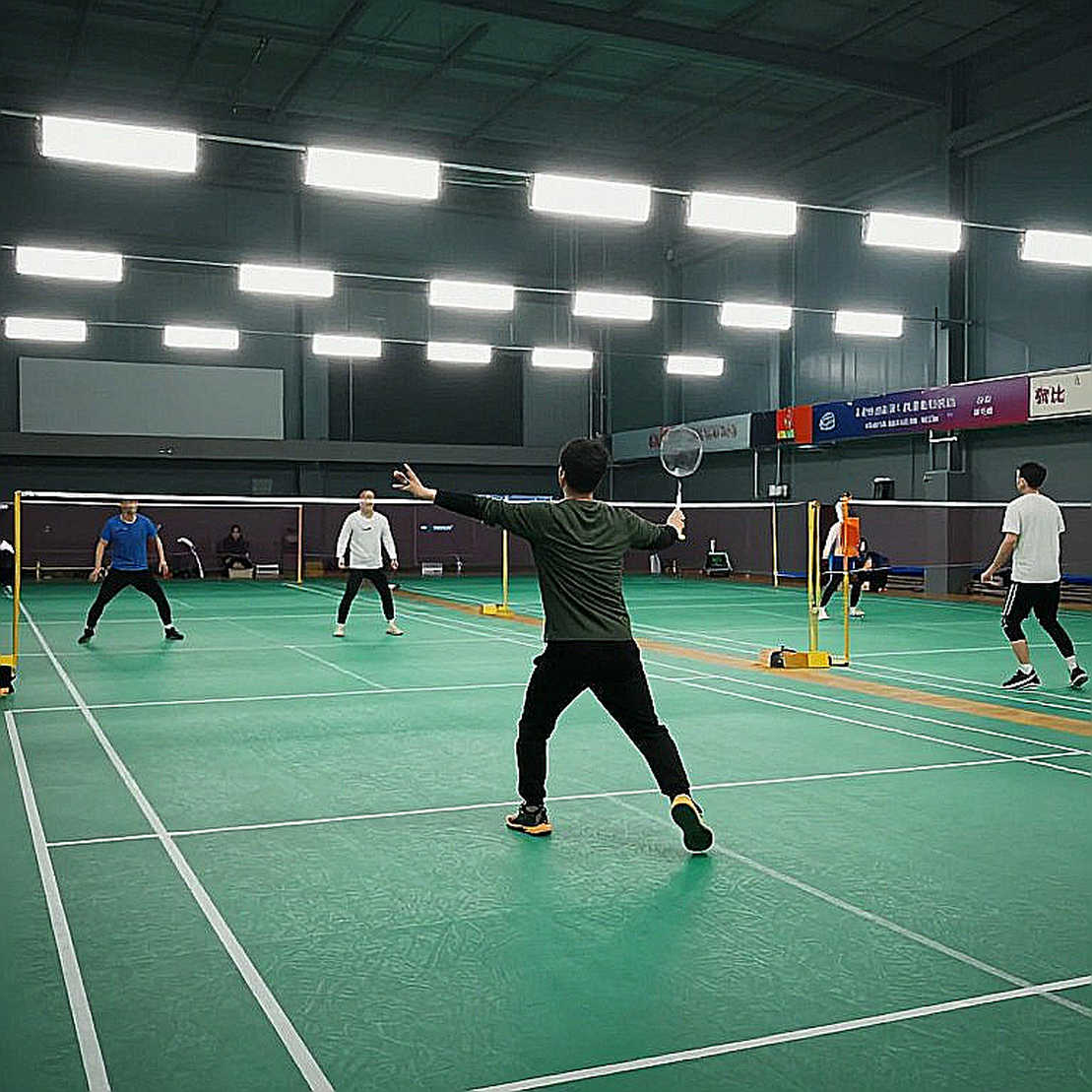
For Vietnamese badminton, the paradox lies in the resource structure. Budgets for an individual sport such as badminton are typically far lower than for team sports with greater media pull, while the cost of touring internationally is far from small: airfare, hotels, tournament entry fees, travelling coach costs and physiotherapy expenses must all be paid in foreign currency. This cost pressure creates a silent selection mechanism: only players with sponsorship or personal income can tour frequently enough to accumulate ranking points.
The result is that Vietnam's development model is characterised by "isolated bright spots" rather than a "systemic flow". For many years Vietnamese badminton has recorded individuals breaking into the world's upper ranks in specific periods, but behind them there has not been a correspondingly dense next generation. This is the mandatory starting point for any serious analysis of Vietnamese badminton: the problem is not talent, it is the system.
- THE TIERED ARCHITECTURE OF THE BWF WORLD TOUR
The Badminton World Federation (BWF) organises its professional circuit across tiers: Super 1000, Super 750, Super 500, Super 300 and Super 100. The higher the tier, the greater the ranking points and prize money, and the stricter the requirements for draw size and court quality.
The Super 1000 group is the highest tier in the World Tour system, comprising events with deep history and major media reach such as the All England Open, China Open, Indonesia Open and Malaysia Open. The Super 750 group includes events such as the Japan Open, Denmark Open, French Open, China Masters, India Open and Singapore Open. The Super 500 and Super 300 groups form the middle tier, where players building their ranking regularly appear. The Super 100 group is the lowest tier within the World Tour system but the most important tier for developing badminton nations.
For Vietnam, the Vietnam Open in the Super 100 group is a strategic anchor point. It is an event where home players can compete without international travel costs while having the opportunity to accumulate points against opponents in the same segment. The value of the Vietnam Open lies not in prize money but in its function as a launchpad: it allows young players to access a genuine international competitive environment on home soil.
Beyond the World Tour, the BWF also operates the World Championships, team events such as the Thomas Cup, Uber Cup and Sudirman Cup, and a continental circuit organised by regional federations. This multi-tier structure creates an important reality: a nation's performance cannot be assessed from a single event alone, but must be placed in relation to the tiers.
- THE RANKING SYSTEM AND RANKING SENSITIVITY
BWF rankings are calculated by accumulating points from tournaments within a defined window, after which older results are progressively dropped. This mechanism creates two characteristics worth noting.
First, rankings are a quantity with inertia. A player who achieves a strong result at a major event is protected by those points for many months afterwards. This means the current ranking does not necessarily reflect current form. A player may be declining yet still hold a high position thanks to old points, or may be playing very well yet still rank low because old points have expired.
Second, rankings are sensitive to timing. When a large block of points expires, the player must replicate an equivalent result to hold position. This is known as points-defence pressure. For Vietnamese players who typically enter only a limited number of events each year, this pressure is especially heavy: missing a single event on the optimal schedule can create a points deficit that cannot easily be offset by a replacement event at a lower tier.
The strategic consequence is that the competition schedule matters no less than form. Choosing the right event, at the right time, on the right court surface can produce a larger ranking difference than improving a single technical skill.
- VIETNAMESE BADMINTON: FORCE STRUCTURE AND POSITIONING
In the modern history of Vietnamese badminton, Nguyen Tien Minh is the name that laid the foundation for the sport's international standing. He was the first Vietnamese male player to appear consistently at major BWF events, competed at multiple Olympic Games and held a position among the world's leading players during the peak of his career. Nguyen Tien Minh's legacy is not only results but the demonstration that a Vietnamese player can genuinely compete at the highest tier given the right pathway.
In the following generation, Nguyen Thuy Linh is the pillar of Vietnamese women's badminton. She appears regularly at BWF World Tour events, has competed at the Olympic Games and holds a position among the leading women's players in Southeast Asia. Her game is built on an endurance-based movement foundation, tenacious defence and patience in long rallies.
Le Duc Phat is the standout figure in Vietnamese men's badminton after the Nguyen Tien Minh era. He has drawn attention by defeating higher-rated opponents at international events, demonstrating potential at the mid-tier of the World Tour.
In addition, Vu Thi Trang, Nguyen Hai Dang, Pham Cao Cuong and doubles players such as Do Tuan Duc and Pham Nhu Thao make up the rest of the national squad. Domestically, the National Badminton Championship and youth events serve as the screening layer, while the National Sports Festival is the most important multi-sport stage on a four-year cycle.
In terms of infrastructure, key training centres are concentrated in Ho Chi Minh City, Hanoi, Bac Giang and Dong Nai. This dispersion creates internal competitive advantage but also reduces the ability to concentrate expertise at a single focal point.

- TECHNICAL AND TACTICAL ANALYSIS
At the technical level, modern badminton clearly distinguishes two broad schools. The first is based on speed and pressure: the player attacks proactively with powerful smashes, lifts the tempo of the match and ends rallies early. The second is based on control and endurance: the player extends rallies, limits errors, exploits the opponent's stamina and wins points in the closing stages.
Vietnamese players generally lean toward the second school. The strengths lie in the physical foundation, lateral movement and persistence in long rallies. The limitations lie in the ability to create proactive pressure: against opponents with high smash speed and fast net coverage, Vietnamese players are often pushed into a defensive posture and lose control of the tempo.
In technical terms, the issue lies in the proportion of points won in the front court. If a player wins points mainly from opponent errors rather than from proactive finishing strokes, the performance ceiling is limited to a certain threshold. Exceeding that threshold requires adding attacking weapons: variable-speed smashes, tight net drop shots and the ability to change rhythm abruptly.
Another technical factor worth noting is service quality. At elite events, the serve is not merely an opening action but a tactical tool. A short serve of insufficient quality gives the opponent an opportunity to attack from the very first exchange. This is a small technical detail with a large cumulative effect across an entire tournament.
- FORM, DATA AND HEAD-TO-HEAD
Form assessment should rest on four indicator groups: recent results, result quality, schedule density and specialised performance metrics. Of these, result quality matters more than quantity: a narrow loss to a top-ranked player carries far greater assessment value than an easy win over an outmatched opponent.
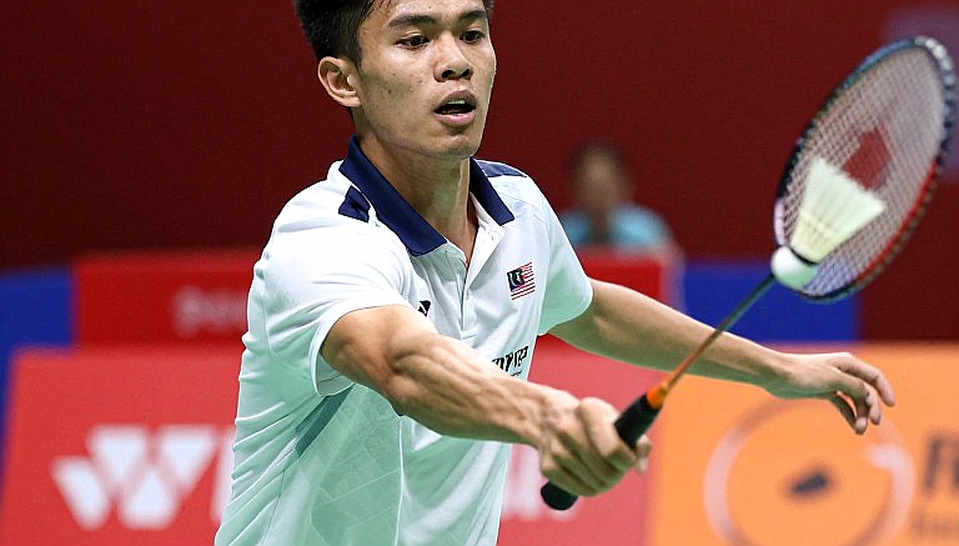
Schedule density is an often-underrated variable. Because Vietnamese players frequently travel long distances between continents, the physical cost of each event is higher than for players from major badminton centres. Playing two or three consecutive events in a short period typically leads to declining performance in the final event, especially in the third game of long matches.
On head-to-head records, two types of relationship must be distinguished. The first is the ranking relationship: the points gap reflects long-term consistency. The second is the stylistic relationship: a player may lose more often than win against a specific opponent despite a higher ranking, simply because the opponent's structural style neutralises their strengths. This is the basis for building event plans by opponent type.
- THE WORLD PICTURE AND NATIONAL TEAM POSITIONING
The world badminton power map is currently divided into three clear tiers. The leading tier comprises nations with closed training systems and dense concentrations of top-ranked players. The second tier comprises nations with a few outstanding individuals but limited squad depth. The third tier is the chasing pack, where developing badminton nations compete for places at major events.
Vietnam's position currently sits in the overlap between the second and third tiers. The strength is the existence of individuals capable of competing at the mid-tier of the World Tour. The weakness is the gap behind them: the number of players meeting international standards remains thin, meaning an injury or a slump for a leading figure can create a large performance void.
Generational turnover signals should also be tracked at two levels. The first is turnover within the national squad, meaning the rate at which leading positions are replaced. The second is talent movement between domestic training centres, as localities with better investment conditions attract athletes and coaches. Both levels directly affect national team strength in the medium term.
- COMPETITION RULES AND INSTITUTIONAL FACTORS
The BWF rule system sets out detailed provisions on serving, positional faults, handling of disputed situations and referee procedure. At the professional level, these provisions are adjusted periodically to increase match appeal, for example changes relating to the scoring system and interval timing.
Beyond competition rules, institutional factors have considerable impact. Rules on participation obligations, withdrawal conditions, national entry mechanisms and anti-doping provisions all directly affect a player's pathway. A player forced to withdraw after entering may face certain sanctions, depending on timing and reason.
At national level, the selection and international entry mechanism is the decisive stage. Entry places are allocated by ranking and technical standards, but are also influenced by resource factors. Making selection criteria transparent is a necessary condition for ensuring that genuinely capable players are entered.
- COACHING TEAM AND SUPPORT SYSTEM
Coaching quality is assessed across three criteria: professional capability, staff stability and decision quality in important matches. At international level the gap between leading players is often very small, and in such matches the quality of tactical adjustment between games can be the decisive factor.
The support system consists of three pillars: the sparring squad, the strength and recovery department, and the level of technology adoption. Of these, the sparring squad plays a particularly important role. A player can only improve if they train regularly with people of equivalent or higher standard. This is precisely the structural weakness of badminton nations with low density of elite players: a shortage of sufficiently high-level training partners.
On technology adoption, leading national teams use video analysis, shot-tracking data and workload monitoring to optimise pathways. This is an area requiring upfront investment but delivering cumulative long-term benefits, especially in injury prevention.
- THE RISK SURFACE
Risk in professional badminton can be divided into seven main groups. The first is injury risk, particularly to the ankle, knee and shoulder, the positions bearing the greatest load in smashing and lateral movement. The second is competitive risk, when opponents in the same segment continuously improve while the player does not progress correspondingly.
The third is ranking and qualification risk, arising when protected points expire without an equivalent replacement result. The fourth is personnel structure risk, when the national team depends too heavily on a small number of individuals. The fifth is rules and discipline risk, including breaches of entry regulations or anti-doping related issues.
The sixth is media and commercial risk, arising when public expectations far exceed actual capability, generating unnecessary psychological pressure. The seventh is systemic risk, when investment resources are cut or when international events in the region are disrupted for non-sporting reasons.
Among these seven groups, injury risk and ranking risk have the highest probability of occurrence and the most immediate and clearly measurable impact on short-term performance.
- MEDIA, EXPECTATIONS AND THE OLYMPIC CYCLE
The Olympic cycle creates its own rhythm across the entire system. In the early part of the cycle, points pressure is still low and players can experiment with their game. In the middle of the cycle, the race for qualification places becomes intense. In the final part of the cycle, every scheduling decision serves the goal of maximising qualification chances.
In Vietnam, the Olympic cycle typically generates a short but intense wave of media coverage focused on players with qualification prospects. This wave rises fast and falls fast, while the points accumulation process unfolds quietly over many months. The gap between media rhythm and competition rhythm creates a risk of expectations exceeding reality.
Expectation-gap analysis should be conducted across three dimensions: expectations about individual results, expectations about the event landscape and expectations about prospects at major stages. When all three dimensions are high while the underlying data does not correspond, the likelihood of a subsequent wave of disappointment is very high.
- THE BADMINTON INDUSTRY TRANSMISSION CHAIN
The badminton industry operates along a three-stage transmission chain. The upstream stage is youth development and talent supply. The midstream stage is players and the tournament system. The downstream stage is equipment, broadcasting and derivative markets.
Upstream, the quality of school badminton and mass-participation sport determines the scale of the talent supply. A nation with millions of recreational badminton players will have a far higher probability of discovering talent than a nation relying only on a narrow selection system.
Midstream, the most important factor is the existence of international tournaments hosted domestically. These events generate three simultaneous effects: they provide ranking points for home players, generate income for the sports services sector and raise national brand recognition within the BWF system.
Downstream, international badminton equipment brands such as Yonex, Victor and Li-Ning dominate the equipment market. The presence of these brands in Vietnam reflects the scale of the consumer market while creating a potential sponsorship channel for professional players. In addition, derivative markets including coaching services, courts, digital content and sports media are expanding in step with the growth of the sport.
- CONCLUSION AND RECOMMENDATIONS
Vietnamese badminton stands at a transitional point. The grassroots foundation is broad enough to produce talent, but the professional system is not yet dense enough to retain and develop that talent at the highest tier. The gap lies not in basic technique but in three areas: the density of international competition, the quality of the sparring squad and data analysis capability.
Three recommendations carry high priority. First, build long-term competition schedules around the points cycle rather than entering events opportunistically. Second, invest in a high-quality sparring squad, including inviting international experts during key preparation phases. Third, standardise the collection and analysis of competition data to support tactical decisions and injury prevention.
Badminton is a sport where the gap between leading players is often measured by just a few points in each game. For that very reason, systemic improvements, however small, can produce large differences in results. For a badminton nation sitting in the overlap between the chasing pack and the competitive tier, optimising the system can deliver far greater returns than focusing solely on individual players.