
When a Mouse Decides the Match: Riot Games and the Trust Fracture at Champions Shanghai
core_answer: Riot Games giữ nguyên kết quả một vòng đấu bị lỗi chuột tại VALORANT Champions Shanghai dù thừa nhận vòng đó lẽ ra phải được đánh lại. Sự cố nằm trong chuỗi sáu ngày lỗi kỹ thuật liên tục, trước kế hoạch cải tổ VCT năm 2027.
key_facts: xeus của FUT Esports thua tình huống 1v3 ở vòng anti-eco sau khi chuột hỏng.; Riot thừa nhận vòng đấu lẽ ra phải được đánh lại nhưng giữ nguyên kết quả.; Sáu ngày đầu của Champions Shanghai ghi nhận sự cố kỹ thuật liên tục.; Riot khuyến nghị chuột có dây và thay hệ thống bàn thi đấu, nhưng nhiễu tín hiệu chưa được xử lý.; Tại đại hội thể thao châu Á, nội dung League of Legends gặp hạn chế thiết bị tương tự với Zeka, Zeus và Keria.
source_attribution: Nguồn: tổng hợp báo cáo esports quốc tế về VALORANT Champions Shanghai, ngày 20 tháng 9 | Cross-checked: VuaBong.vn
related_qa: question: Vì sao vòng đấu anti-eco lại quan trọng đến vậy?, answer: Đội có lợi thế kinh tế gần như phải thắng vòng này, nên thua nó gây thiệt hại lớn về đà và tiền, có thể đảo cả bản đồ.; question: Riot có cơ chế kháng nghị độc lập cho các sự cố ảnh hưởng trận đấu không?, answer: Không có cơ quan trọng tài độc lập nào được nhắc đến; quyết định khắc phục nằm trọn trong tay bên mắc lỗi.; question: Sự cố này liên quan gì đến kế hoạch cải tổ VCT năm 2027?, answer: Nó xảy ra ở giải lớn cuối cùng trước thay đổi dự kiến năm 2027, làm suy yếu uy tín vận hành của Riot trước thềm cải tổ.
At a round where FUT Esports held a clear economic advantage, xeus entered a 1v3. His right hand swept the mouse, his eyes locked on the crosshair, and then the device froze. Not a dead battery. Not a broken button. It was the signal interference that, by the time this piece went live, the organizers still could not fully name. The arena held its breath. When the screen stopped responding, an anti-eco round — the kind the favored team almost has to win — slipped out of FUT Esports' hands.
Riot Games later admitted that round should have been replayed. They kept the result unchanged.
The entire story sits in those two sentences. And that is why I refuse to call this a technical incident. It is a governance crisis, where the party at fault is also the only party holding the power to judge.
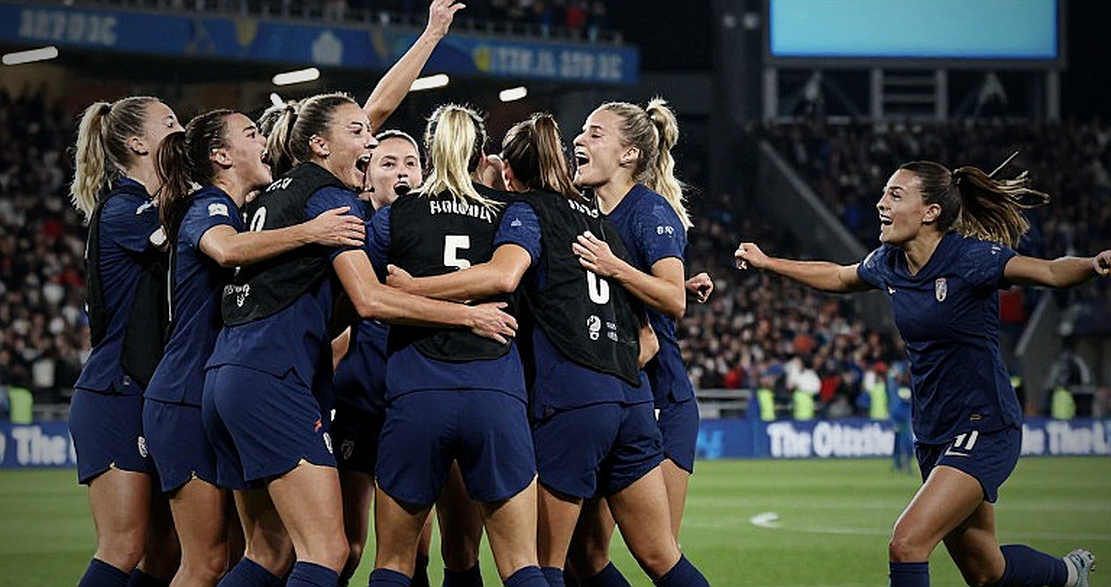
VALORANT Champions Shanghai is the last major tournament of the VCT system before Riot Games is expected to change the structure in 2027. It is the peak of the season, where every eye turns, where teams prepare for twelve months just to be there. In the first six days of the event, technical incidents appeared continuously. Six days. Not a single transmission slip, but a chain.
In a tactical shooter with an extremely short time-to-kill, mouse feel is a direct variable of competitive performance. Low-sensitivity players need large hand sweeps across the pad; a snagging cable can completely break reflexes trained over thousands of hours. Riot recommends players switch to wired mice, while also replacing the competition desk system. But they themselves admit the signal-interference problem is not fully resolved.
This is the decisive context. Champions is the most-watched tournament in the VCT. An operational failure here does not stop at one match; it sets a precedent for the entire tournament pyramid below. And it arrives exactly when Riot is selling a new future for 2027.
VCT Champions conventionally runs a Swiss-style group stage followed by a double-elimination bracket. But the exact format is not the most important thing here. What matters is that any format turns each round into an unrecoverable asset. When such an asset is destroyed by hardware, no format can compensate.
The core point is not the mouse. It is the gap between acknowledgment and remedy. Riot says the round should have been replayed, but does not replay it. In any sports system that values competitive integrity, admitting fault without applying the acknowledged remedy is the gravest error, because it turns the admission into a courtesy procedure instead of a commitment. People call it a shock; I call it a map. The round in Shanghai is only the starting point of a migration of trust.
To understand why that round matters, you have to understand VALORANT's economy. An anti-eco is a round where the opponent must buy weak weapons; the funded team is almost guaranteed to win. Losing such a round does not just lose a point. It loses momentum, loses money, and within a map, it can reverse the entire game state. In a BO3 or BO5, one half is enough to swing the whole picture. That is why a broken device is not a small thing. It is a variable that can decide who advances.
Then look at how Riot handled it next. They recommend players abandon wireless mice — the devices they chose for comfort — to switch to wired. At the same time, they admit the interference is not resolved. In other words, the burden of mitigation is pushed onto the players, while the fault belongs to the organizers. This is a fairness issue, and a duty-of-care issue. When an organization asks its workers to fix the broken machine themselves, that is not a solution. It is a transfer of responsibility.
Wired mice are more stable in connection but limit movement. It is a trade-off the organizers decided on behalf of the players, and each region will litigate it differently, depending on how standardized equipment is in their practice environments.
The players' reaction shows the story is no longer a single team's grievance. xeus and sociablEE of FUT Esports reacted with visible disappointment. Wo0t of Team Heretics, another EMEA organization, criticized Riot for running events for years while leaving player-reported issues unresolved, while teams prepare all year. Ivy of Nongshim RedForce posted humorously about wired mice and the 4000Hz polling rate, but beneath the humor is real anxiety about unpredictable station conditions. ShahZaM, a former pro now an analyst, called the situation crazy. Demon1 raised a technical concern about cables for low-sensitivity players.
I have sat in the hallways of major tournaments and learned one thing: when players from many teams, many regions, many titles speak up about one issue, it is no longer an incident. It is a systemic loss of confidence. Based on my experience watching matches, I always trust how a player stands up after losing more than the scoreboard. In Shanghai, the way they stood up said they no longer trust the playing field.
And here is the detail that caught me most: the wireless-mouse problem is not a VALORANT specialty. At the Asian Games, the League of Legends event imposed a similar restriction, and Korean players including Zeka, Zeus, and Keria also shared the difficulty of changing equipment. The same publisher, the same kind of problem, in a different title and a different competitive context. This is a publisher-level operational pattern, not one unlucky venue.
Then there is the power structure. Riot Games is simultaneously publisher, event organizer, and rule-maker. No independent arbitration body is mentioned. No formal appeal mechanism for FUT Esports. The remedy decision rests entirely with the party at fault. In any sports justice system, this is taboo. A tournament can forgive a broken mouse. It cannot forgive a court with a single judge, and that judge is the defendant.
Notably, the VCT may never have codified a formal round-replay remedy. That is why Riot could say the round should have been replayed without performing one. This is not discretion; it is a legal gap. And a legal gap is the easiest thing to fix, if there is the will. The difficulty is not in the technique of writing rules. The difficulty is that Riot must limit its own power.
What is more frightening is what is not disclosed. Many details about the technical incidents remain undisclosed. In an industry where trust is the only currency, silence is not confidentiality. Silence is another confession. On the audience side, interrupted matches and long waits erode the very product Riot sells to sponsors. A brand paying to appear beside peak moments does not want to appear beside a frozen screen.
The incident happening at the last major before the 2027 reform makes it heavier than usual. When an organization is preparing to tell a story about the future, an operational failure in the present is the strongest rebuttal. Teams, players, and sponsors will enter the reform discussion from a baseline of doubt.
At a deeper level, this is a signal about the operational maturity of an entire industry. Esports has grown enough to have million-dollar contracts, but its governance system is still in its teens. The gap between money and law is the most dangerous gap.
Now comes the part where I might be wrong.
There is a line of opinion that even with a replay, FUT Esports would still have lost the match. That is true in terms of the final result. But it ignores what the scoreboard cannot measure: economy and psychological momentum. When a high-priced player steps onto the stage, people do not only ask how good he is; they also ask who let him enter that round with a device that could die at any moment. The question in Shanghai is not whether xeus was good enough to win a 1v3. The question is who took away the chance to answer.
But I must also say this, and this is where I self-rebut. The community's anger, though grounded, is aimed at the wrong target. People demand Riot apologize more. Apologies fix nothing. What fixes things is an independent arbitration mechanism and a round-replay rule written into law. If in 2027 Riot announces a reform without those two, then every apology in Shanghai is just smoke.
And this is the point I question myself on: am I exaggerating a hardware incident into a crisis? Maybe. But six days of continuous incidents, a round decided by hardware, an acknowledgment not enforced, and a problem recurring in an entirely different title — that is not one data point. It is a pattern. I may be wrong about the magnitude. I am unlikely to be wrong about the direction.
What I want to see is not a second apology. What I want to see is a public root-cause document, a round-replay rule, and an independent panel with the power to rule against Riot itself. Esports does not need another grand tournament. It needs a body of law that even the king must obey. Esports is not the future. It is the present trying to pretend it is the future. And I am here to record that pretending — along with the price players pay. The question is not whether Riot apologizes. The question is who sits in the referee's chair in 2027.