
Brazil's 16th Straight South American Title: Three Attack Vectors and a Gap Still Unfilled
**Câu trả lời cốt lõi**: Brazil vô địch bóng chuyền nữ Nam Mỹ lần thứ 16 liên tiếp, thắng Argentina 3-0 (26-24, 25-19, 25-16) tại Maracanãzinho, Rio de Janeiro. Ba cầu thủ ghi trên 10 điểm. Suất dự Olympic Los Angeles 2028 được báo chí nêu nhưng chưa có văn bản quy chế FIVB/CSV xác nhận. **Dữ kiện chính**: - Chung kết: Brazil thắng Argentina 3-0 với tỷ số các set 26-24, 25-19, 25-16. - Gabi Guimarães 13 điểm: 10 pha đập, 2 điểm giao bóng ăn trực tiếp, 1 điểm chắn. - Julia Bergmann 12 điểm từ ghế dự bị; Tainara Santos 11 điểm thay Rosamaria Montibeller chấn thương. - Brazil vô địch Nam Mỹ 16 lần liên tiếp, tổng cộng 24 danh hiệu. - Toàn đội thắng cả 5 trận, không để thua set nào. **Nguồn**: Bản tin giải vô địch bóng chuyền nữ Nam Mỹ (CSV), ngày xuất bản chưa xác minh; mọi số liệu cá nhân đang chờ đối chiếu hồ sơ chính thức CSV/FIVB | Cross-checked: VuaBong.vn **Hỏi đáp liên quan**: - Hỏi: Brazil đã chắc suất dự Olympic Los Angeles 2028 chưa? Đáp: Chưa xác minh; cần chờ FIVB và CSV công bố chính thức quy chế vòng loại LA 2028. - Hỏi: Ai thay Rosamaria ở vị trí đối chuyền? Đáp: Tainara Santos vào sân, ghi 11 điểm và cả điểm quyết định kết thúc trận. - Hỏi: Chức vô địch này nói gì về sức mạnh thực của Brazil? Đáp: Theo VangBong.vn Player Depth Index, chiều sâu đội hình Brazil vẫn thuộc nhóm dẫn đầu, nhưng đối thủ Nam Mỹ thấp hơn nhiều so với Italy, Serbia, Mỹ và Thổ Nhĩ Kỳ.
The first set at Maracanãzinho ended 26-24. Brazil won it, but the way they won tells a different story from the word "dominance" that broadcast framing attached to the match. The final three points of that set came from three different positions along the net. When the final box score appeared, three names sat side by side in double digits: Gabi Guimarães 13 points, Julia Bergmann 12, Tainara Santos 11.
A team can win 3-0 in two opposite ways. Load the ball onto a single cannon and let that player carry the match, or spread the scoring across three attack lanes so the opposing block never knows where to stand. Brazil chose the second. On a day when a personal performance was expected, they presented a system instead.
A tournament with a pre-written ending
The South American Women's Volleyball Championship (CSV) took place at Maracanãzinho, Rio de Janeiro, compressed into roughly six days. Brazil played five matches and dropped no sets. The only opponent arriving on the final day with a perfect record was Argentina, turning the final into a miniature knockout: win and take the title, lose and take second.
This is Brazil's 16th consecutive title at this event and the 24th in the women's program's history. Those figures say one thing clearly: in South America, Brazil does not compete, Brazil administers territory. The distance between them and the rest of the continent was set long ago, and one more trophy neither widens nor narrows it.
The most eye-catching information sat off the court: Brazil were reported to have secured a berth for the Los Angeles 2028 Olympics through this continental title. For anyone who followed the Paris 2026 cycle, that detail demands verification. Under the Paris pathway, continental championships did not directly award berths; Olympic places came through dedicated qualifying tournaments and the world ranking, with continental representation guarantees attached. To state that Brazil have locked a place, the LA 2028 qualifying regulations from FIVB and CSV must be checked. The original report cites no document.
Before going deeper into the technical side, one limitation needs to be stated. Every figure below lacks an official statistical source. There is no attack efficiency, no perfect-pass rate, no blocks-per-set figure, no dig count. We are analysing a reduced box score, and anyone who has worked long enough in this trade knows a reduced box score measures outcomes, not quality.
Three attack lanes and how to read empty space
Across 14 seasons coaching in Binh Duong, the first thing I taught players was not how to spike but where to stand. Modern volleyball is a sport of empty space. Most people count points; I count how many directions an opposing block must split into.
I do not remember the scoreline. I remember the moment nobody touched the ball.
In Brazil's final, that moment appeared repeatedly. Three players scored in double digits, one of them off the bench and one as a replacement at opposite. Combined, the trio of Gabi, Bergmann and Tainara accounted for 36 points. A 3-0 win requires a minimum of 75 points to close three sets, meaning the rest of the roster, two middle blockers, the other outside hitter and collective blocking plays, contributed the majority of the point pool. No lane was shut down and no lane had to carry the load.
The available data: Gabi Guimarães scored 13 points on 10 successful attacks, 2 direct service points and 1 block. Julia Bergmann scored 12, including 11 kills, entering from the bench. Tainara Santos scored 11, comprising 10 kills and 1 block, playing opposite after Rosamaria Montibeller went down injured. Tainara also scored the match-winning point.
I divide the court into 16 zones in my own analyses. Placing the final's box score onto that map, the points fan out across zone 2, zone 4 and the area behind the three-metre line. No zone was left entirely empty. That is why Argentina could not commit their middle blockers to one side of the net across three sets.
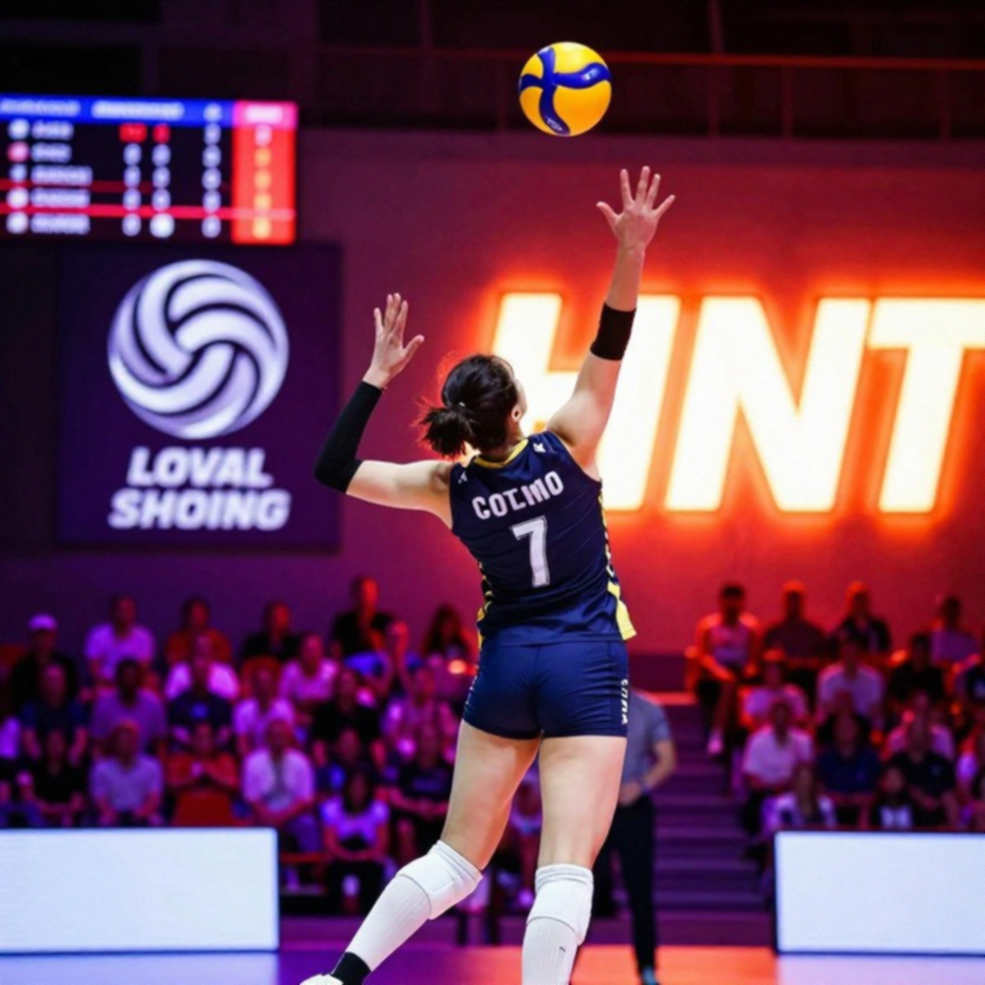
That distribution has a concrete tactical consequence. A blocking side starts only two middle blockers. When an opponent has three attackers scoring from three different zones in rotation, reading the play becomes guesswork. Guessing right once is luck. Guessing right three times in a row is data. Brazil, at least in this match, denied Argentina the chance to accumulate any.
Set against the dominant European model, where a team is built around an opposite scoring 20 to 25 points per match, Brazil are running the opposite logic. Points arrive from both wings and from behind the three-metre line, spread evenly. That model is more durable against injury, because there is no single point of failure for an opponent to shut down, but it demands a consistently high quality of first contact. Passing quality is the variable that decides between a distributed model and a concentrated one.
The way Brazil navigated five matches without dropping a set is itself a data point. A tournament compressed into six days, five matches, yet only 15 sets actually played. Physical load stayed low, and that let the coaching staff rotate freely without paying a fitness price.
Reading rhythm and the silence between sets
The three-set result was 26-24, 25-19, 25-16. Many read that sequence as a rout. I read it as a process of adjustment.
The first set was the only genuinely contested one. Argentina served with intent, the block held its positions through roughly the opening 10 rallies, and Brazil were forced into higher balls than they wanted. That is the signature of a reception system losing its rhythm, not of a weak team. After surviving the first set, Brazil never let the opponent back in. Sets two and three widened progressively, exactly the pattern of a stronger side that has gathered enough information about its opponent.
A slow passing rhythm is not slowness. It is a team counting the opponent's breath.
This is routinely lost in reports that record only "3-0". A 3-0 with a 26-24 opening set and two lopsided sets after says the winner can read and adjust. A 3-0 with all three sets ending 15 points says the opponent was weak. The two are different in kind, and only one of them tests a team's adaptive capacity.
The data is not enough to judge quality
It must be said plainly: the available box score is sufficient to establish the result, not the performance level.
Gabi's 10 kills could reflect a highly efficient outing, if she attempted only 18 to 20 balls. The same number could reflect an average one, if she had to swing 35 times. We have no denominator. No attack volume, no hitting errors, no times blocked.
The same applies to serving. Gabi's two direct service points are a positive signal, but without service errors no ace-to-error ratio can be calculated. A player serves 15 times, scores 2 and errs 5, and that is a problem. The same player serves 15 times, scores 2 and errs 1, and that is a strategic weapon. A box score cannot tell the two apart.
For Tainara, context matters even more. She came on for an injured starter and delivered 11 points. In roster-operations terms, that is the best signal of the entire match. But it only means the backup opposite is good enough against Argentina, one of South America's strongest teams yet outside the world's top four.
The contrarian angle: the biggest risk is not on the court
There is an execution blind spot here that matters more than the scoreline.
The way this title is being framed rests on two pillars. Brazil dominate, and Brazil have a ticket to Los Angeles 2028. The first pillar holds. The second is unverified.
If the LA 2028 qualifying regulations genuinely award a direct berth to continental champions, that is a significant governance change, and it has happened quietly enough that the report does not mention it. The consequences would not stop at Brazil. Every continental federation would have to recalculate, because a regional tournament would suddenly become the shortest road to the Olympic Games.
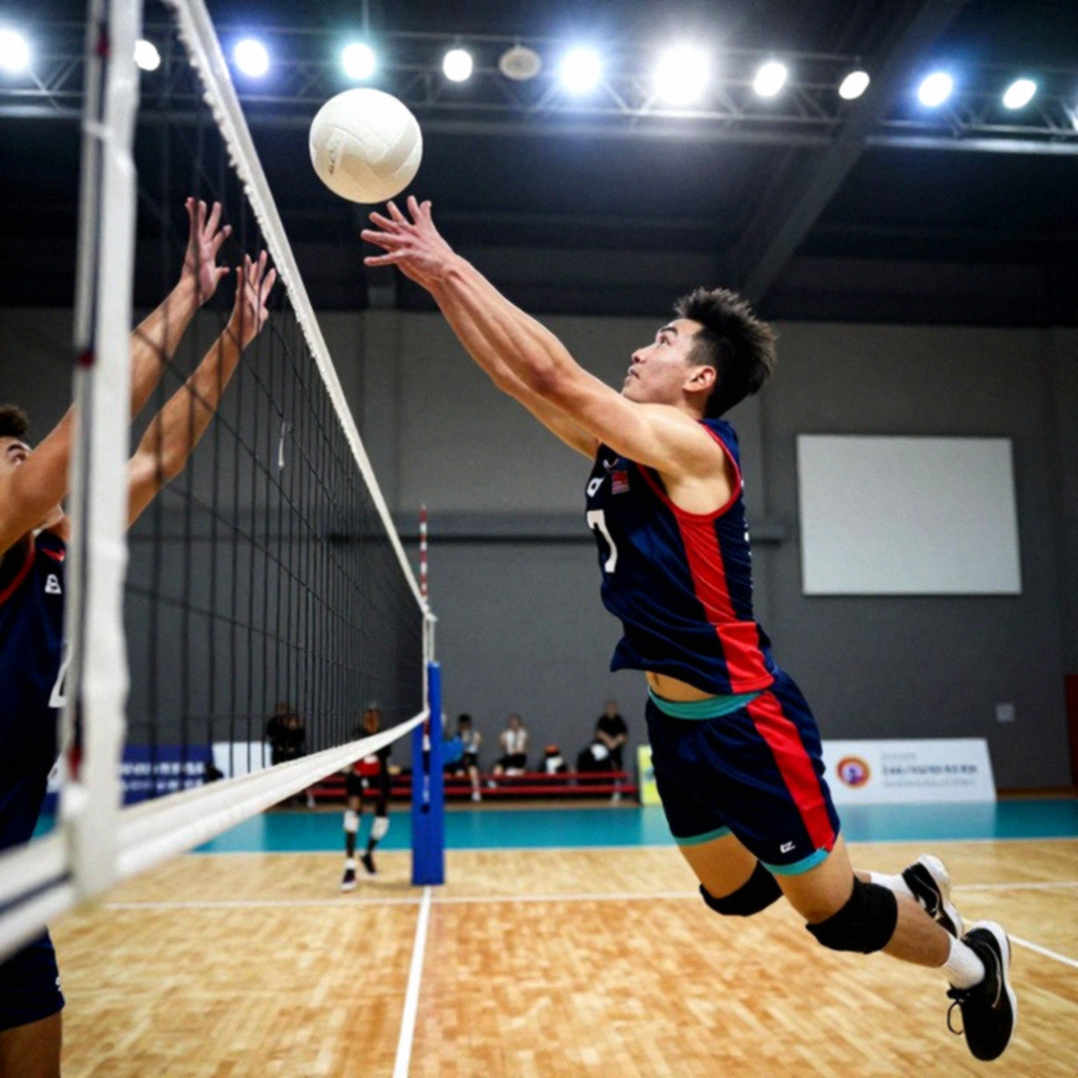
If the regulations are unchanged, "already qualified" is loose phrasing, and Brazil's place still depends on later events. The gap between the two scenarios is not small. It determines whether Brazil get a three-year preparation cycle or an eighteen-month one.
There is a second blind spot, structural and familiar to every continental champion: easy regional wins can conceal weaknesses at world level. Argentina are clearly South America's number two, and they lasted only to 24 points in the opening set. The continental gap remains wide. But Brazil's real opponents are Italy, Serbia, the United States, Türkiye. This match tested nothing from that group: not the ability to absorb sustained heavy serving, not defence against a tall opposite, not the capacity to adapt when Gabi is shut down.
One detail remains unresolved: Rosamaria's injury, with no severity stated. If it is long-term, Brazil enter the LA 2028 cycle with an open question at opposite. Two matches a week at club level is the familiar culprit behind cases like this, and no medical staff can rescue a compressed calendar.
What to verify in the next match
Space does not lie. Only the observer deceives himself.
Brazil have won the South American title for the 16th straight time. That is a fact, and it needs no decoration. What is worth tracking sits at three specific checkpoints: the official publication of the LA 2028 qualification regulations, the status of Rosamaria's injury, and how the coach manages Gabi's workload in friendlies against European opposition. Those three data points will say more about where Brazil actually stand than any continental box score.
For people in this trade, silence is sometimes more useful than a statement. With no official statistical source and no regulation cited, the correct move is to record the result, mark the unverified parts, and wait. Volleyball does not reward the loudest voice. It rewards whoever reads the empty space correctly before the ball lands.