
Trang chủVolleyballVietnamese University Volleyball: Da Nang's Title and the Numbers No One Is Counting
Vietnamese University Volleyball: Da Nang's Title and the Numbers No One Is Counting
**Câu trả lời cốt lõi**: Đại học Thể dục Thể thao Đà Nẵng bảo vệ thành công ngôi vô địch giải bóng chuyền sinh viên toàn quốc 2026, thắng Đại học Quốc gia Hà Nội 2-0 ở chung kết sau khi thua chính đối thủ này 1-2 ở vòng bảng. Đội vô địch dựa nhiều vào chủ công kiêm đội trưởng Ho Thi Kim Dung. **Dữ kiện chính**: - Giải có 116 đội và 150 trận, được mô tả là quy mô kỷ lục. - Vòng chung kết tại Hải Phòng gồm 16 đội mạnh nhất. - Đà Nẵng vô địch các năm 2023 và 2026. - Ho Thi Kim Dung, người Ca Dong, là chủ công, đội trưởng và sinh viên năm cuối. - Nguồn tin không cung cấp bất kỳ số liệu hiệu suất cá nhân nào. **Nguồn**: Bản tin bóng chuyền sinh viên Việt Nam, sự kiện năm 2026; nhiều chi tiết chưa được kiểm chứng độc lập. **Hỏi đáp liên quan**: Q: Thể thức trận chung kết là gì? A: Nguồn tin ghi tỷ số 2-0 và 1-2, gợi ý thể thức tối đa ba hiệp hoặc báo cáo chưa đầy đủ. Q: Ai là đối thủ chính của Đà Nẵng? A: Đại học Quốc gia Hà Nội, đội duy nhất được nêu tên trong nguồn tin. Q: Rủi ro lớn nhất của đội vô địch là gì? A: Sự phụ thuộc vào Ho Thi Kim Dung, người sắp tốt nghiệp, tạo khoảng trống điểm số và thủ lĩnh.
The final ended 2-0. For anyone used to watching indoor volleyball at professional level, that number reads strangely. Standard indoor volleyball is decided over a maximum of five sets, so a familiar result should be 3-1 or 3-2. But this is the 2026 national university volleyball tournament, where organizers can shorten the format to fit a dense schedule. I note that small detail before discussing anything else, because it reminds us that any conclusion about dominance must wait for the format to be verified first.
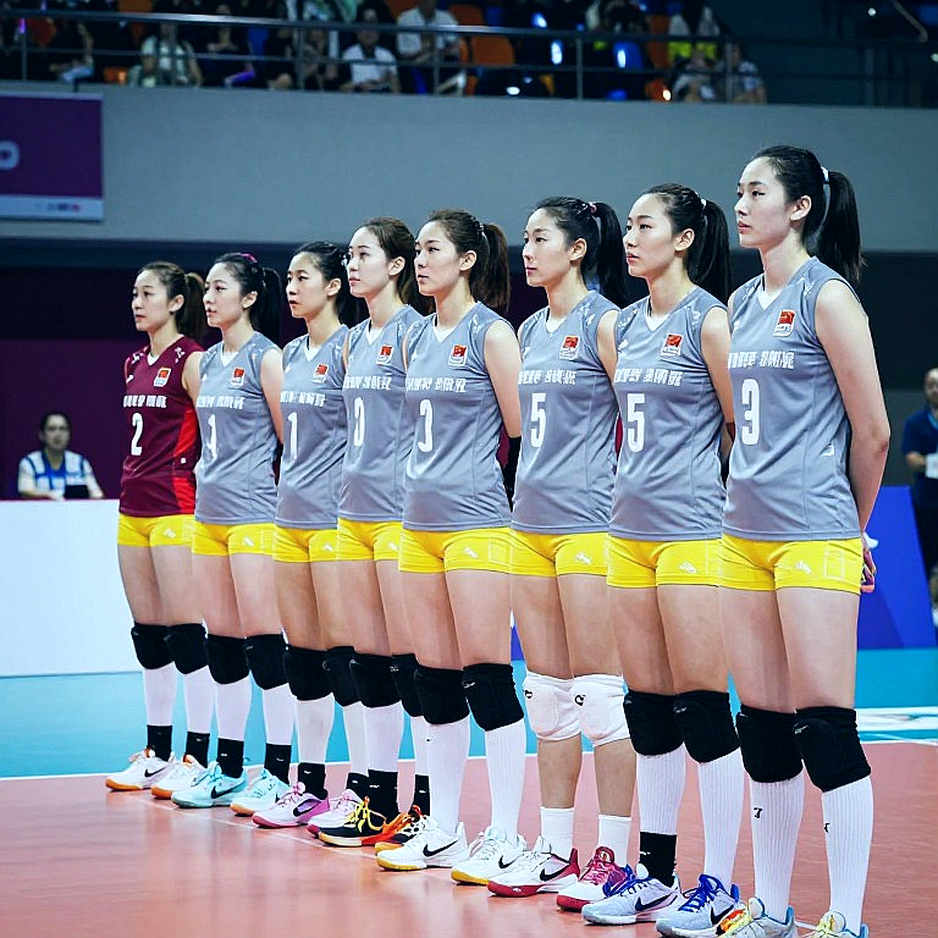
In the group stage, the Da Nang University of Physical Education and Sports team of coach Le Huy Ha lost to Vietnam National University Hanoi by 1-2. Then in the final, they beat the same opponent 2-0. The same rival, two opposite results in the same tournament. That is the first data point worth pausing on, because it shows something changed between the two meetings, even though the original report never states the mechanism of that change.
This year's final round took place in Hai Phong, bringing together the 16 strongest teams after regional qualifiers. According to the report, the whole event had 116 teams and 150 matches, a figure described as a record scale. This is the most concrete quantitative fact in the entire source, and also the number most worth verifying with the organizers. But before discussing scale, let us talk about the person behind the gold medal.
The most mentioned figure is Ho Thi Kim Dung, an outside hitter, captain, and according to the coach, the most comprehensive athlete on the team. This Ca Dong ethnic girl comes from a highland commune, growing up with village and school volleyball before entering the national student stage. This is a representational story, and it deserves to be told. But in my role as an analyst, I must separate the inspirational part from the measurable part.
The coach's praise for Kim Dung is very specific: from serving and setting to attacking diversely in all positions and good blocking. Read closely, this is a qualitative description, not a technical profile verified by statistics. It shows a versatile outside-hitter model, someone used in many roles. In a university volleyball context, a player covering attack, serve, block and even setting often reflects dependence on one individual rather than a balanced system.
One thing must be said plainly: this source has almost no performance statistics. There is no spike success rate, no blocks per set, no ace-to-error ratio, no perfect-pass rate, no dig rate. The phrase top scorer is only a relative claim within one team, with no figure attached. Therefore, any assessment of Kim Dung's competitive ability in this tournament must stop at insufficient information to conclude.
This is not the report's fault. A story about an ethnic-minority athlete at a student event has a different job: to tell a human story and honor representation. But when we want to draw lessons for the industry, we must know the limits of the source. And the limits here are very clear.
The self-reported figure of 80-90% technical improvement that Kim Dung gives also needs to be read for what it is. It is a self-assessment, not a measured metric, and there is no baseline to compare against. It speaks to a player's desire to improve, not to actual technical level. In my profession, I always ask: how was this number measured, and against what. Here, the answer is there is no measurement method, and nothing to compare.
Another detail deserves to be placed correctly. Before the 2026 tournament, Kim Dung suffered an injury described with the phrase lat so mi just one month before the event began, and she took the court in pain. The exact nature of this injury is unclear from the source, possibly a type of sprain or joint roll, so it must be treated with great caution. But the pattern is clear: a student athlete, at a non-professional event, played through pain.
For an outside hitter who depends on fitness and jumping ability, that pattern raises a question about athlete welfare. At student level, where there is no professional medical department and no proper load management, playing through pain is a warning sign, not an achievement to simply praise. I say this not to diminish the gold medal, but to place it in the proper context of a system still lacking a layer of protection.
On the opponent side, Vietnam National University Hanoi is the only name mentioned in the source, and that turns the race at the top of the university field into a two-team story. One team won the group stage then lost the final, one team lost the group stage then won the final. That symmetry shows the gap between the two teams is very narrow, and the final result depended more on timing than on any durable difference in strength. It is also worth noting that the group format allows a team to advance despite one loss, so a 1-2 group defeat does not necessarily reflect weakness.
And here is the point I consider most important but least noticed. Kim Dung is a final-year student. After this tournament, she will graduate, and by her own account, her wish is to become a teacher. In other words, the player who carried the team, scored the most, and wore the captain's armband will leave the student stage. Da Nang, champion in both 2026 and 2026, will face a void in both scoring and leadership.
This raises a paradox I want to name. We celebrate the story of the Ca Dong girl who rose from village volleyball to a national title. But when we look at her own career path, the endpoint is a classroom, not a professional court. That reveals a leaking pipeline: volleyball talent at university level is not systematically fed into higher competition tiers. The tournament may gather 116 teams, but its output connects to nothing in the professional system.
Another variable often overlooked at student level is the environmental factor. The journey from the Central region to Hai Phong reportedly caused several team members to catch colds and fevers. At professional level, teams have medical departments and acclimatization plans. At student level, that factor is almost uncontrolled. It may have affected group-stage form, and may be part of the explanation for the 1-2 loss to Vietnam National University Hanoi. I offer this hypothesis cautiously, because the source is not enough to establish causation.
If we place this story in a broader picture, two signals are worth tracking. The first is the upstream supply signal: an ethnic-minority athlete, discovered through village and school volleyball, reached a national final. That shows a broad but informal talent base, not yet selected in an organized way. The second is the output signal: the best player of the tournament chose the teaching path, not the playing path. These are two ends of the same problem.
As someone who makes sports documentaries and has followed many tournaments, I have learned that scale figures like 116 teams and 150 matches are often cited as a bright spot, but they do not automatically indicate quality. A broad participation base is a necessary condition, not a sufficient one. The real question is: after student athletes graduate, how many of them stay involved with volleyball at any level? The source does not answer, and that is the biggest data blind spot in the whole story.
I must also state clearly a limitation of this analysis itself. The source is a single news report, and many details are told only once. The sample size is anecdotal: one tournament, one player profile. So any conclusion here should be treated as a hypothesis needing verification, not a final verdict. My principle from years in this profession is: do not make a judgment without comparative data, and always state the observation scope and data blind spots.
This leads me to a view contrary to common intuition. We tend to read a successfully defended title as proof of systemic strength. But if that strength is concentrated in one individual about to graduate, then the title is both a peak and a warning. A team depending on one outside hitter who is also captain and emergency setter can win today, but that structure is fragile against the future. Achievement and sustainability do not always go together, and sometimes they move in opposite directions.
I do not have enough data to say this is the common model of Vietnamese university volleyball. But I have enough to say that, at least in this case, we are looking at a system operating around one person. And when that person leaves, the system will have to answer a question it has never had to answer before.
As for Kim Dung, her story remains one worth respecting. A highland girl, through volleyball, entered a national stage and won. But if we truly want to respect her, we should do more than praise. We should ask why such a talented athlete ends her journey in a classroom instead of being guided to a higher level. And we should ask why a student athlete had to play through pain.
Those are questions a gold medal cannot answer for us. They belong to the system, not the individual. And they can only be answered if someone starts counting the numbers no one has counted so far: how many university athletes continue competing, how many injuries are ignored, and how many highland talents are still waiting to be seen.

Cầu thủ liên quan
Bài đề xuất
Brazil reclaim South American crown: Darlan de Souza's 23 kills put an LA 2028 Olympic spot within reach2026-09-24
LA 2028 Men's Volleyball Olympic Qualification: Six Berths Secured, and What a 29-Place Ranking Gap Really Says2026-09-29
Information Corps win the 2026 national women's volleyball title: a victory built on attack, and an empty statistics sheet2026-10-26
2026 National University Volleyball: Da Nang Defends the Title and the Data Void Behind the Medal2026-10-05
Japan at the AVC Asian Championship: the reigning champion and a test that has never been taken2026-10-06
Bài đề xuất
Suhl and Its First Supercup: Three Sets, Six Points, and a Lesson in Closing Composure2026-10-08
South America opens the race for a 2027 World Cup ticket: Brazil challenges Argentina and Colombia2026-09-09
Estonia Stun Hosts Finland 3-2 in Tampere: 9,813 Fans and a Decisive Tie-Break2026-09-19
Vietnam women's sepak takraw beat South Korea 2-0 to reach the final: one substitution that turned the match2026-09-28
Nebraska Sweeps Creighton 3-0 Before 15,405 Fans: US College Women's Volleyball Is Raising Its Ceiling2026-10-05
Bài đề xuất
Budapest Futures: The Likhatskyi Brothers and Ukrainian Beach Volleyball's First Taste of Gold2026-10-11
Four Meaningless Rounds: Why the Group Stage of the 2026 National Women's Volleyball Championship Lost Its Pull2026-10-23
Thamela and Victoria Win Gold at 2026 South American Beach Volleyball Championship2026-09-08
The Forgotten Rotations: Vietnamese Volleyball and the Data Void2026-09-19
Binh chung Thong tin 3–0 VTV Binh Dien Long An: a title reign ends in eight closing points2026-10-25