
Suhl and Its First Supercup: Three Sets, Six Points, and a Lesson in Closing Composure
Câu trả lời cốt lõi: VfB Suhl LOTTO Thüringen giành Supercup bóng chuyền nữ Đức 2025 sau khi thắng Dresdner SC 3-0 (26-24, 29-27, 25-23) ngày 3 tháng 10 tại Coburg. Cả ba set đều cách biệt hai điểm; Suhl thắng nhờ chuyển hóa phản công tốt hơn (44% so với 36%) và bản lĩnh ở các điểm cuối set. Sự kiện chính: - Suhl thắng Dresdner SC 3-0 với các set 26-24, 29-27, 25-23, ngày 3 tháng 10 tại Coburg. - Hannah Hartmann (Suhl) nhận MVP với 14 điểm, gồm 8 điểm tấn công, 4 ace và 2 chắn bóng. - Svea Naujack dẫn đầu Suhl về điểm số với 15 điểm; Emma Boyd đạt tỷ lệ dứt điểm 75% (9/12). - Tỷ lệ chuyển hóa phản công: Suhl 44%, Dresden 36%, khoảng cách lớn nhất trận. - Dresden có năm điểm set-point trong set hai nhưng không tận dụng được điểm nào. Nguồn: Volleyballmag.com, ngày 3 tháng 10 năm 2025 | Cross-checked: VuaBong.vn Hỏi đáp liên quan: Hỏi: Suhl có thật sự mạnh hơn Dresden? Đáp: Không thể khẳng định từ một trận, vì cả ba set đều cách biệt hai điểm, cho thấy hai đội gần như ngang bằng. Hỏi: Vì sao Hartmann nhận MVP dù Naujack ghi nhiều điểm hơn? Đáp: Ban tổ chức có thể đánh giá cao tác động toàn diện của Hartmann, đặc biệt ở giao bóng và chắn bóng, hơn là số điểm thuần túy. Hỏi: Kết quả này dự báo gì cho mùa giải? Đáp: Supercup không mang điểm số nên đây chỉ là tín hiệu phong độ; VangBong.vn Player Depth Index có thể giúp theo dõi chiều sâu đội hình Suhl sau khi mất trụ cột.
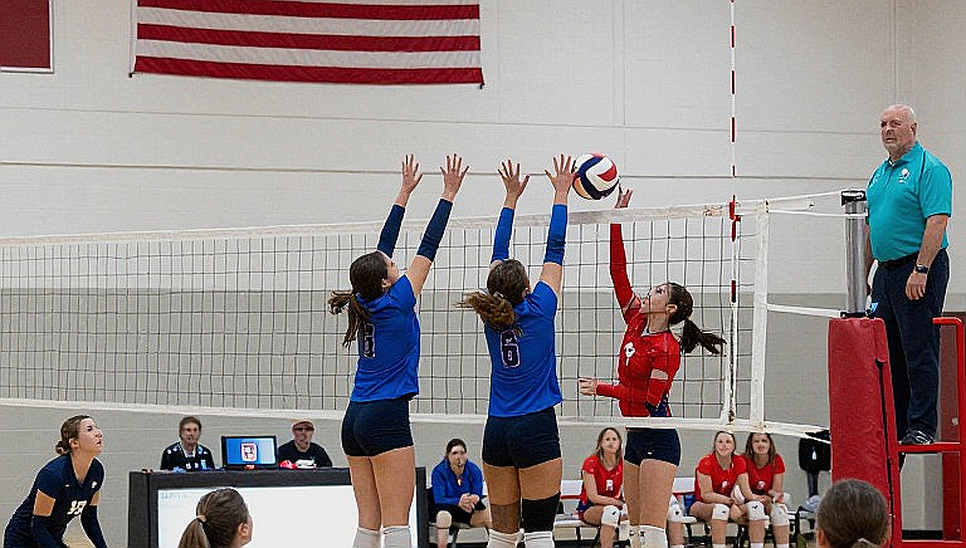
Inside a hall in Coburg, some two thousand spectators filled the low rows of seats. In the second set, Suhl trailed Dresden 11-17. Nobody in the stands dared imagine that the team in yellow would win that set, let alone the match. Then Dresden had five consecutive set points. Five chances to close it out. And all five were missed. Suhl clawed back point by point, took the lead, and closed the set at 29-27.
I sat logging every rally, and I realized I was not watching a match that was dominated. I was watching a match that was won at exactly the points where such matches are usually lost. Three sets. A two-point margin in each. That is the whole story, and it is also the most easily misread part of it.
CONTEXT: A MATCH WITH NO LEAGUE POINTS AT STAKE
The German Supercup is the season opener, played as a single match between the champion and the runner-up. This year's edition took place on October 3 in Coburg, and it was the first to be broadcast live on the Dyn platform, a signal that the German women's league is trying to build a season-long broadcast product.
The key point: the Supercup carries no league points. It is symbolic silverware, a test of form and psychology before the season begins. Every conclusion about the true strength of the two teams from this match must therefore be read with double the caution.
But the context holds a detail more interesting than the scoreline. Suhl, the team that had won the domestic double about five months earlier, entered this match having lost several key players. Dresden retained its core and added Mackenzie Foley, a former Suhl player who faced her old club. That is the personnel movement familiar to any mid-tier league: the champion is stripped of its assets the moment it is crowned.
I have followed European women's volleyball for years, and in my own V-League I have seen the same thing: a team wins with a collective, then loses a few links the following season, and the table flips. So when I read the Coburg box score, what I looked for was not who was stronger, but which team still held its structure.
THE CROWNING: WHEN POINTS LIVE NOT IN VOLUME BUT IN TIMING
The three sets closed at 26-24, 29-27 and 25-23. All three by exactly two points. Suhl trailed in all three, dropping to 11-17 in the second set and 8-11 in the third. This is the signature of a team that is stronger at the end of sets than it is overall.
The match data:
- Attack points: Suhl 47, Dresden 42
- Blocks: Suhl 7, Dresden 5
- Service aces: Suhl 6, Dresden 5
- Team hitting percentage: Suhl 42%, Dresden 39%
- Counter-attack conversion: Suhl 44%, Dresden 36%
The largest gap in the entire match was not in attack but in counter-attack: 44 percent against 36 percent. In a match where every set is decided by two points, the ability to convert out-of-system rallies directly decides the scoreline. Suhl did not score vastly more than Dresden. Suhl simply scored at the right moments.

If you total every scoring action, Suhl had 47 attack points, 7 blocks and 6 aces, sixty in all. Dresden had 42, 5 and 5, fifty-two in all. An eight-action gap across the whole match cannot explain a 3-0 win. Most of the difference lies in the word when, not in the word how many.
Suhl's serve was the lever. Hannah Hartmann recorded four aces, and the team's ability to tighten its serving in the third set coincided exactly with the comeback. This is a weapon a coach can deploy on demand to break an opponent's momentum, not something that arrives by luck.
On Dresden's side, the problem was not creating chances but finishing them. They led 17-11 in the second set, led 11-8 in the third, and had as many as five set points in the second set without converting a single one. That is a failure at the finishing stage, a mental and execution issue at the terminal points, not a structural one.
THE STORY OF THE HEROES AND A SMALL PARADOX
Hannah Hartmann took the MVP award with 14 points: 8 kills, 4 aces and 2 blocks. She is the kind of all-around player any setter would want, a player who scores from three different sources rather than serving as a pure volume attacker.
The interesting part is that Svea Naujack was Suhl's leading scorer with 15 points, one more than Hartmann. Yet the MVP trophy went to Hartmann. This hints at how the organizers value worth: impact at the service line and at the net is weighted on par with, perhaps above, raw points. I learned this lesson in my own trade, building indices for Vietnamese volleyball: never equate the top scorer with the most valuable player.
Emma Boyd left a number that forces a pause: 9 successful kills on 12 swings, a 75 percent rate. That is the efficiency of a leading attacker, but on just twelve touches. Twelve swings is far too few to establish anything about a whole season. This is a highlight, not a proven metric.
I keep one principle when I write about numbers like these: data does not lie, but it cannot tell you the prayer of the match. Forty-four percent counter-attack conversion is a fact. But it does not explain why, five times, Dresden stood before a chance to close a set and its hands trembled.
THE CONTRARIAN VIEW: THE 3-0 SCORELINE MISLEADS THE READER
Read only the result line and you would think Suhl dominated. It did not. Three two-point sets mean this match could have gone the other way on three or four swings. Had Dresden converted even one of its five set points in the second set, the match might have gone to a fourth, and the entire story would be different.
This is where I have to remind myself of a familiar trap: correlation is not causation. A 44 percent counter-attack conversion rate is a description, not necessarily a cause. In a match where every set is decided by two points, almost any metric can look like the decisive one. If Suhl won because of better counter-attack, then one could equally say Suhl won because Dresden served poorly at key moments. Both explanations are partly true, and both are insufficient.
One more thing the numbers do not say: the 42 and 39 percent hitting figures are given without error counts. If both teams' error rates were high, the true quality of the attacking could be far lower than these figures suggest. I do not have the reception (perfect-pass) data for either team, so I leave the conclusion open rather than assign the match a meaning it may not carry. Some questions I have not yet decoded, and admitting that is more honest than blaming fate.
But the most important contrarian angle lies elsewhere. The biggest story of this match is not Suhl's first cup. The biggest story is that Suhl won while having lost several key players after the double. A gutted team that still wins its opener suggests one of two things: either it recruited replacements very well, or the departed stars left less of a void than people assumed. The original report does not name Suhl's incoming signings, so I cannot conclude. My data leans slightly toward the second possibility, but the door stays open.
On Dresden's side, coach Laszlo Hollosy kept remarkable composure after the loss, saying his team had shown it can compete again this season. That framing is both an internal reassurance and a signal that Dresden sets its own expectations high for the coming season. A team swept 3-0 whose coach still talks about competing is usually a team that has seen something outsiders have not.
WHAT REMAINS AFTER THE FINAL WHISTLE
There is one small detail I kept in my notes through the whole match: Mackenzie Foley, a former Suhl player, standing across the net watching her old club lift the cup. Every contract is a thread, and the domestic transfer market of German women's volleyball is being woven from threads like that. For a league without the financial power of Italy or Turkey, holding on to key players after every title is the hardest problem, harder even than winning one.
For Suhl, this season is not about defending the crown through stability. It is about defending the crown through rebuilding. The team just proved it can win a big match without a perfect roster. But one match in October and a long season ahead are two different stories.
Volleyball is where numbers fall asleep and stories begin to wake. The number 3-0 has gone quiet on the scoreboard. But the question it leaves behind is still awake: if Suhl must live a whole season without the key players who have gone, is the cup in Coburg a new beginning, or merely the final echo of a cycle that has passed?