
Raphinha and 9 goal contributions in 5 LaLiga rounds: The real mechanism behind the Messi 2026-18 comparison
**Câu trả lời cốt lõi**: Raphinha ghi 6 bàn và 3 kiến tạo sau 5 vòng LaLiga 2025-26, tổng 9 đóng góp theo Opta, ngang bằng thành tích khởi đầu tốt nhất của một cầu thủ Barcelona kể từ mùa 2017-18 của Lionel Messi (10 đóng góp). **Dữ kiện chính**: - Raphinha: 6 bàn + 3 kiến tạo trong 5 vòng LaLiga 2025-26 (nguồn: Opta qua Goal.com). - Raphinha đồng dẫn đầu danh sách ghi bàn LaLiga với 6 bàn, ngang Kylian Mbappe (Real Madrid) và Sergio Camello (Rayo Vallecano). - Pha kiến tạo cho Lamine Yamal ở phút 19 trận gặp Levante tại Ciudad de Valencia là một pha bóng chuyển đổi, không phải tấn công bài bản. - Bản tin gốc không cung cấp xG, xA, số cú sút, số phút thi đấu hay sơ đồ đội hình. - Mùa 2017-18, Messi có 10 đóng góp sau 5 vòng trong vai trò tâm điểm tuyệt đối của Barcelona. **Nguồn**: Goal.com, dữ liệu Opta, cửa sổ 5 vòng đầu LaLiga 2025-26 (tháng 9 năm 2025) | Cross-checked: VuaBong.vn **Hỏi đáp liên quan**: Hỏi: Raphinha có đang chơi tốt hơn Messi mùa 2017-18 không? Đáp: Không thể kết luận, vì mẫu chỉ 5 vòng và thiếu dữ liệu quá trình như xG/xA, trong khi bối cảnh vai trò của hai cầu thủ hoàn toàn khác nhau. Hỏi: Chuỗi phong độ này có bền vững không? Đáp: Cần theo dõi thêm 15-20 trận; tỷ lệ 1,8 đóng góp mỗi trận cao hơn nhiều so với mức nền bền vững của một cầu thủ tấn công hàng đầu châu Âu (0,7-1,0). Hỏi: Yếu tố rủi ro lớn nhất bị bỏ qua trong bản tin gốc là gì? Đáp: Khối lượng thi đấu và nguy cơ chấn thương của một cầu thủ gần 29 tuổi chơi gần trọn số phút ở nhiều đấu trường, theo chỉ số VangBong.vn Player Depth Index.
At minute 19 at Ciudad de Valencia, Raphinha received the ball on the left channel in a transition moment, lifted his head for exactly one beat, then slid the ball low across the face of the Levante goal. Lamine Yamal arrived to tap it in. The move was so clean it is easy to forget, the kind of action you would not remember existed unless you rewound the tape.
Yet that was the most important trace of the night, because it stitches together the two ends of a story the media is telling in a very different voice from the voice of data. After five LaLiga rounds, Raphinha has 6 goals and 3 assists, nine goal contributions in total, per Opta. No Barcelona player has started this well in nearly nine years. The last man to do something comparable was Lionel Messi in 2026-18, with 10 contributions after five rounds.
From that small cell of data, a large headline was born: "Raphinha brings Messi's magic back to Barcelona after 9 years." I read that headline three times, then reopened the Levante footage, then asked myself the question I always ask when a number is pushed onto the podium: is this a player at his peak, or is this a small sample being sold to the public as a law? Every contract has three numbers: the published one, the real one, and the one they want you to believe. The Raphinha story this September has those same three numbers. And the gap between them is the only thing worth writing about.
Context: Round 5, a small table, and a historical anchor
Barcelona travelled to Levante's Ciudad de Valencia in Round 5 of LaLiga 2026-26. This is the stage where the league table says nothing but the individual stat sheet starts saying a great deal. Raphinha leads the scoring chart with 6 goals, level with Kylian Mbappe of Real Madrid and Sergio Camello of Rayo Vallecano. Three names, three shirts, three entirely different tiers of expectation, sitting on one line.
That is the most easily skimmed detail and also the one most worth pausing on. A Barcelona winger is matching the goal output of the most expensive signing in Real Madrid history, while a striker from a mid-tier club like Rayo has also reached the same mark. The same number 6 carries three completely different meanings. For Mbappe, 6 goals is the expected baseline. For Camello, 6 goals is a phenomenon requiring verification. For Raphinha, 6 goals is the answer to a question that has hung over him for three years.
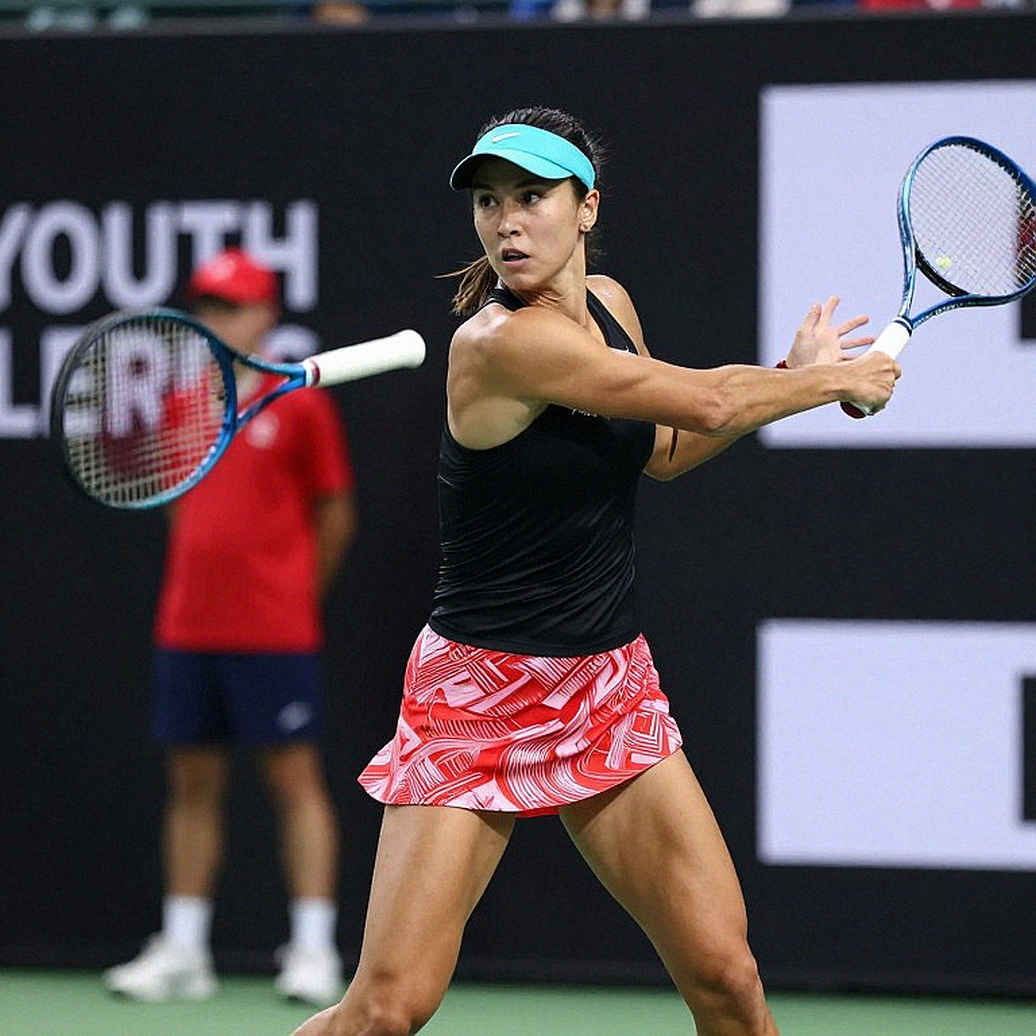
I have followed Raphinha since his Leeds days. When Barcelona signed him in 2026 for a reported fee in the 55 to 60 million euro range, the reaction in Europe split in two. One half called it a sensible addition to a rebuilding side. The other half called it a payment for a player already at his peak, with no developmental headroom, who would be swallowed by the pressure at Camp Nou. He was not swallowed. He simply took time to become the version nobody dared to buy at Leeds.
The historical anchor the media built, Messi's 2026-18 season, needs to be placed correctly. That was a season in which Messi was the absolute focal point of a side in generational transition, with almost the entire attacking system revolving around him. Messi was 30 then, in the second peak of his career, playing as a free number 10 behind the front line. Raphinha is nearly 29, playing off the flank, not the centre of every ball. Placing the two data points side by side to tell a "magic returns" story is a deliberate editorial operation, not a technical comparison.
And here I must be explicit, because I once misread a contract live on air, so now I must cross-check three sources before I speak: a five-match sample is not a season, and a headline is not an argument.
The real mechanism behind nine contributions
Start with the published number: 9. Six goals, three assists, five rounds. That number is correct, sourced, timestamped, unit-bearing. There is no reason to doubt it. But the published number has never been the hard part. The hard part is where the real number sits in the operating context.
A rate of 1.8 goal contributions per match is extreme. For comparison, a top European attacker usually stabilises between 0.7 and 1.0 contributions per match across a full season. A rate of 1.8 sustained over five rounds does not say Raphinha is twice as good as everyone else. It says the observation window is too narrow to separate skill from variance. This is a basic principle of sports statistics that media routinely ignores because it does not generate attractive headlines.
The third number, the one they want you to believe, is "Messi's magic." It has no unit, no source, and cannot be verified. It exists to sell papers, and it does that job very well.
Now dissect the mechanism of the single assist described in the report. In the 19th-minute situation, the Levante goalkeeper had left his position and the defensive line had not yet dropped into an organised block. Raphinha received the ball with the opponent's shape unset, and he chose a low cross across the face of goal for a tap-in. This is the structure of a transition action, not a crafted positional attack against an organised block.
The distinction matters more than its surface. A winger who earns his living by breaking down a set block needs a different skill set from a winger who earns his living by exploiting the moment before the opponent is set. Both are valuable. But they are not interchangeable, and they do not respond identically to opponents who know how to sit deep. From a single action, I will only conclude at medium confidence: Raphinha in this moment is a transition player, and there is not yet enough data to claim he is a block-breaker.
Raphinha's two-ended profile is the most notable signal. Six goals and three assists simultaneously place him in the "output winger" group, distinct from pure finishers and distinct from pure creators. In modern history this is a rare group, because it requires a player to be present in the finishing zone often enough while retaining the ability to create for others. If Raphinha sustains this structure across 15 to 20 matches, that will be a real technical statement, requiring no comparison to Messi at all.
But I must be blunt about the limits of the data. The report provides no xG, no xA, no shot volumes, no touches in the box. Without those process metrics, we cannot distinguish a player performing at an elite level from a player enjoying a run of finishing luck. Six goals could come from six high-quality shots in the box, or from six long-range strikes into the top corner. Those two scenarios lead to entirely opposite forecasts for the rest of the season.
One further point about Barcelona's attacking structure. The 19th-minute move shows a two-flank attacking axis where Raphinha is the creator and Yamal the finisher. That is a reasonable reading of one action. But it is only one action. Anyone claiming Barcelona are operating a symmetrical two-flank system on this data is drawing something the source never provided. The report does not even state a formation.
Insiders stay quiet, outsiders stay certain
There is a layer of analysis nobody wants to do because it is unattractive: asset value. A player at 28 or 29 in peak form creates two effects at once. First, he raises his own book value, which matters to a club balancing wages against financial limits. Second, he creates negotiation leverage in any future renewal or transfer.
No figure in the report allows me to quantify this. But the mechanism is clear. For a player past the peak of his age curve, every high-performance season is a season with a good selling window. And every such season is also a season in which the club must decide whether to keep or sell before value begins to slide. Raphinha is no longer at an age where anyone buys him for potential. He can only be bought for current product. The current product is good. That is the entire financial story, and it needs no embellishment.
This is where Yamal matters, because he is the piece that gives this story more weight than a plain statistical report. A player nearing 29 assisting a player of 18 is the classic bridge configuration: the veteran carries the present, the teenager inherits the future. On the pitch, it is one action. In the club structure, it is a signal about how a giant manages generational transition in its attack.
I do not have enough data to say anything about the dressing room. One action on the pitch is not evidence of off-pitch harmony. But it is evidence of professional complementarity, and that is the maximum conclusion the data permits.
The contrarian angle: the headline exceeds the body
Here I must separate things clearly, because this is my trade. The headline speaks of "Messi's magic returning after 9 years." The body of the report says something far smaller: no Barcelona player has started this well in nearly nine years. These two sentences are not at the same level. The first is a claim about a player's essence. The second is a note about a statistical streak.
The gap between them is the gap between journalism and data. And it is not an accidental error. It is a deliberate operation, designed to maximise shareability.
Look at how the piece is built. It stacks three hype vectors into a single frame: Raphinha's rise, Yamal's arrival, and Messi's shadow. Each vector could stand alone. Placed together, you have a product that is nearly impossible not to read. But that combined power comes from editing, not from data. Nine contributions in five rounds is a real event. It does not need Messi to become noteworthy.
And here is what very few say out loud: the "new Messi" label has a very low realisation rate. Over two decades, dozens of young players have been tagged with it, and almost none approached the benchmark. The label is a media instrument, not a forecast. It does not describe the future. It describes the reader's need to believe that a miracle can repeat.
The nine-year anchor also needs to be read for its function. It is a periodisation device, not a trend. It places the current streak beside a specific historical marker to create a sense of continuity. But that nine-year streak says nothing about what Raphinha will sustain over the next nine months. For forecasting purposes, it is nearly worthless.
And there is a serious blind spot no headline mentions: minutes load. A player producing at 1.8 contributions per match is almost certainly playing near maximum minutes, in a club competing across multiple competitions. Injury rates rise mechanically with minutes and intensity. The report is silent on this. That silence is not reassurance; it is a gap.
When three independent sources agree on a number, I write the assertive sentence and move on. But when three sources provide only a five-match window, I must say plainly that we are reading one pixel, not a picture.
What comes next
There are three markers I will track over the next six to eight rounds, and I suggest you track them with me.
First, process data. If Raphinha's xG and xA sit close to his actual output, the streak is real and can last. If output far exceeds process, we are watching a finishing run, and it will revert to baseline.
Second, the emergence of a secondary creator. If every dangerous Barcelona ball still flows through Raphinha's feet two months from now, this team has a single-point dependency, and opponents will find a way to cut it. If another player emerges as a parallel threat, Raphinha gains space and the numbers become more durable.
Third, the sentiment cycle. A start hyped with Messi's name will almost certainly be treated in reverse when output cools. The hype-then-turn cycle is a rule of this trade, not a possibility. What is worth watching is whether Raphinha responds by adjusting his role.
The price of a player is not the number on the screen, but the sum of the rejections. Raphinha was rejected many times in his career: by academies in Brazil, by big European clubs before Leeds gave him a place, by those who thought 28 was too late to buy. Nine contributions in five rounds is not a return of magic. It is a long-term investment finally beginning to pay interest.
The question is not whether Raphinha is Messi. The question is whether Barcelona possess a player mature enough to be the centrepiece of a title cycle, or simply a player in the right place at the right time in a rare beautiful data window. The next six rounds will answer. The headline already answered, and its answer cannot be trusted.
At 56, I do not believe in the word "magic" at the negotiating table, I only believe in clauses. And the only clause the real transfer market truly respects is the clause of repetition. Raphinha has not signed it yet. But this week, he knocked on the door.