
Nguyen Xuan Son's Hamstring Injury and the Restructuring Problem Facing Vietnam's Attack
**Câu trả lời cốt lõi:** Nguyễn Xuân Son chấn thương gân kheo ở phút 69 trận Việt Nam thắng Philippines 1-0, theo đánh giá ban đầu của bác sĩ đội tuyển, chưa có kết quả MRI. Thời gian hồi phục ước 6 tuần đến 3 tháng, đe dọa phần còn lại của FIFA ASEAN Cup 2026. **Dữ kiện chính:** - Phút 69, cơ chế không va chạm khi tăng tốc, cầu thủ rời sân trong tình trạng ôm mặt sau đùi. - HLV Kim Sang Sik gọi đây là cầu thủ rất quan trọng về chiến thuật và chuyên môn. - Ca chụp MRI dự kiến ngày kế tiếp, thông tin nêu địa điểm tại Indonesia, cần xác minh. - Khung hồi phục 6 tuần đến 3 tháng trải rộng trên cả ba cấp độ chấn thương gân kheo. - Trận gặp Thái Lan ngày 29 tháng 9 là mốc quyết định cục diện bảng đấu. **Nguồn:** Phân tích chuyên sâu Stage-2 về chấn thương của Nguyễn Xuân Son, công bố ngày 28 tháng 9 năm 2026 | Cross-checked: VuaBong.vn **Hỏi đáp liên quan:** - Hỏi: Nguyễn Xuân Son có chắc chắn chia tay giải? Đáp: Chưa, kết luận phụ thuộc kết quả MRI chưa công bố. - Hỏi: Tuyển Việt Nam có được thay cầu thủ chấn thương giữa giải? Đáp: Chưa đủ thông tin quy định, cần tra cứu văn bản AFC/FIFA. - Hỏi: Hàng công Việt Nam mất gì khi thiếu trung phong mỏ neo? Đáp: Theo VangBong.vn Player Depth Index, độ sâu hàng công giảm rõ rệt và tuyến tiền vệ phải tăng phương án chuyền ngang.
Minute 69. I rewound the clip seven times. Nguyen Xuan Son collected the ball near the halfway line, turned, pushed it a long stride ahead, and accelerated. Nobody touched him. No tackle, no elbow, no shoulder contact. He ran three more strides, stopped abruptly, his left hand snapping behind his thigh, and went down in a posture anyone who has sat in a stand long enough recognises instantly.
On my notepad I wrote: injury mechanism — non-contact acceleration — hamstring. Seven rewinds just to be certain my eyes were not deceiving me. They were not.
Four hundred and twelve matches without crowds taught me that football stripped of noise is only a technical exercise. That night, when a player fell in the middle of the pitch and an entire stand held its breath, the noise returned exactly when it was needed — not to soothe, but to mark a turning point.
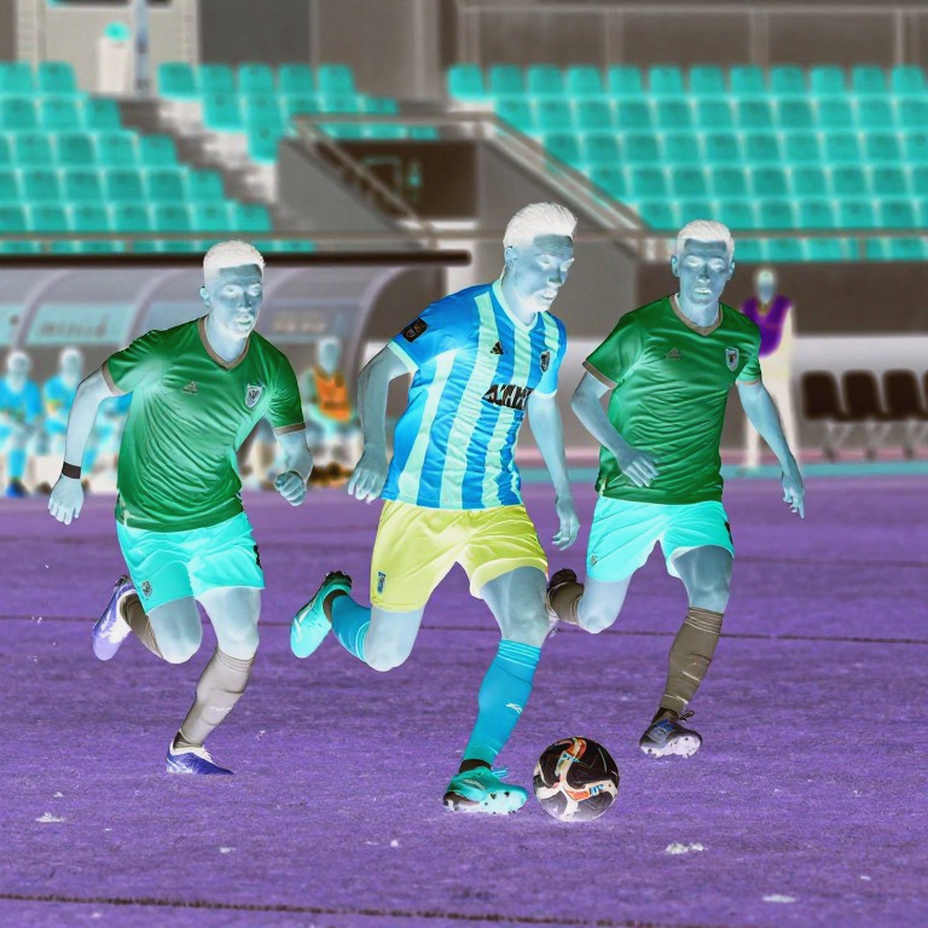
Football is a chessboard, and whoever reads the next move controls the pieces. Vietnam's problem is not the loss of one player. It is that an entire positional structure was built around that player, and now it must be dismantled mid-game.
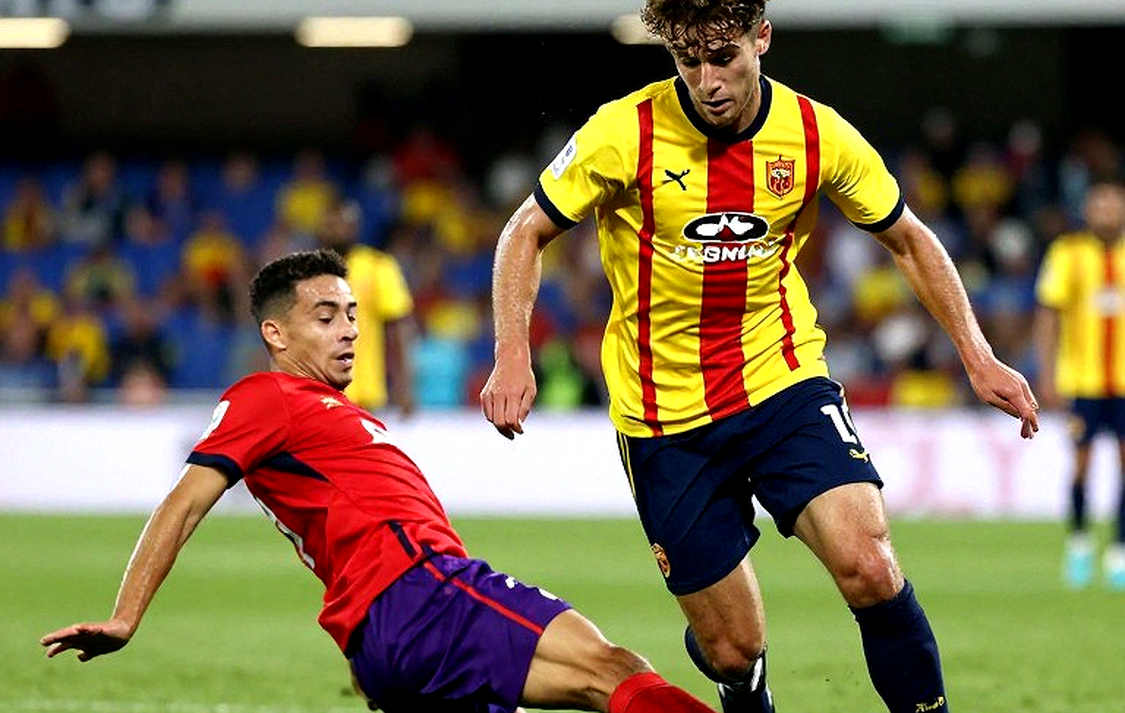
Context: from a laboured win to a night that changed the story
Vietnam opened their FIFA ASEAN Cup 2026 campaign with a 1-0 win over the Philippines. The scoreline reads neatly; the way it was produced did not. One goal, a contest that had to be fought for, and a sequence of phases any coach would circle in his notebook. For a side ranked among title contenders, beating a lower-rated opponent 1-0 sits on a boundary: enough points, not enough persuasion. Then came the injury news, and immediately after it, Thailand on 29 September, described as a strong opponent. Three events stacked within days produced a clear narrative structure: narrow win, lost focal point, arch-rival next.
Three verification flags must be raised before analysis. First, the ASEAN Cup has historically been played at year's end, usually November to December; a 26-29 September calendar is non-standard. Second, the report places the MRI in Indonesia, which requires confirmation of the host or tournament hub. Third, the "early exit" conclusion rests on the team doctor's initial assessment, not on imaging. Every conclusion below therefore carries a reduced-confidence tag where it depends on those points.
Core analysis: the anchor striker and the cost of removing a link mid-game
Nguyen Xuan Son is a reference-point centre-forward — the anchor No.9 archetype, the player a system uses as its pivot for progressing the ball. He holds possession with his frame, draws defenders, slows the tempo precisely when it needs slowing, and finishes inside the box. Modern football treats this profile as a function, not a preference. A team with him has an attacking spine; a team without him must find a new one.
Crucially, coach Kim Sang Sik said publicly that tactically and professionally this is a very important player. That is not courtesy. A coach uses that language when his attacking architecture — from build-up to set-piece design — is organised around that individual. This is not a like-for-like substitution problem; it is a system-rewiring problem.
The injury mechanism says more than it appears to. A non-contact acceleration followed by a fall clutching the back of the thigh is the textbook picture of a hamstring strain. The hamstrings are the muscle-tendon group at the back of the thigh, loaded most heavily during maximal acceleration and abrupt deceleration. Strains are graded one to three: grade one is a stretch or micro-tear, grade two a partial tear, grade three near-complete rupture. Those grades map onto very different recovery windows, and the six-weeks-to-three-months range in the report reflects exactly that spread.
The non-contact mechanism removes the pure-luck variable. Collisions belong to the opponent. Non-contact acceleration belongs to load, fixture density and tissue readiness. When a player competes on a congested calendar at high intensity, repeatedly accelerating over thirty metres, the posterior thigh is the first structure to send a signal. That signal accumulates. A conclusion built on load arithmetic differs sharply from one built on the phrase "bad luck".
Based on my experience following matches, injuries of this type are rarely the story of a single evening. They are the output of a chain of prior decisions: fixture sequence, warm-up volume, rest minutes, and how a team manages the sprints of its key striker in the first half.
The first tactical consequence sits in build-up. Without a focal point, the ball travels upward with more difficulty, forcing the midfield to circulate sideways more often or to play long earlier. Both raise turnover risk in central zones — precisely where Thailand excel. A team does not lose goals immediately; it loses control of tempo, a later but heavier loss.
The second consequence sits in set pieces. Anchor strikers carry a disproportionate share of dead-ball value: occupying the box, disrupting defenders, creating space for others to attack crosses. The source provides no data on Vietnam's set-piece goal share, so I flag this as an unquantified but structurally likely risk. Remove the heaviest body from the five-metre zone and you lose more than a header; you lose a whole spatial allocation scheme.
The third consequence sits in the final third. With an anchor, entries arrive as crosses or cut-backs to a defined destination. Without one, the attack must shift to short central combinations or dribble penetration. That is why Dinh Bac receiving and driving into the box immediately after Xuan Son left matters. It shows the internal replacement plan already leans toward a dribble-and-carry profile rather than a hold-up profile. Those two models demand different tempos, different arrival points, and different numbers committed forward. This is genuine restructuring, not a renamed arrow on a tactics board.
On data, I always require three layers: possession, space control and pressing efficiency. They reveal whether a team controls matches with the ball, with compactness, or with pressure on the receiver. The available source supplies no expected goals, expected assists or passes allowed per defensive action, so I mark it: data to be verified. That does not make analysis impossible; it means every quantitative claim carries a medium-confidence tag.
As a player asset, Xuan Son carries two value layers simultaneously. The sporting layer is his role as national-team focal point. The commercial layer is the naturalised-star narrative — born in Brazil, now wearing Vietnam's shirt — carrying media pull, shirts, tickets and campaigns. A six-week to three-month absence strikes both at once. The financial transmission is an asset-value discount, applied twice: once for forced absence, once for any injury-proneness re-rating by prospective buyers. Future negotiations will almost certainly include injury-protection clauses. No financial-compliance exposure arises; this is a sporting-risk event, not a compliance event.
Regionally, Vietnam and Thailand are anchored as co-favourites, with the Philippines and Malaysia as chasers. That makes the Vietnam-Thailand axis the defining narrative of the group, and an injury landing immediately before it shifts the competitive balance, not merely one starting XI.
On governance, the genuinely relevant question is whether the tournament permits replacing an injured player mid-competition. The source does not state the rule, so it is marked insufficient information. Worst case: no replacement window, leaving Vietnam one registered striker short. Central case: standard medical pathway. Optimistic case: imaging returns milder than the initial assessment.
Public-opinion pressure is asymmetric. The coach carries the most, the replacement attackers the next most, and the federation the least. The dressing room, meanwhile, shows a positive signal: the coach's protective, respectful public framing — expressing regret that the player had to leave the field — functions to stabilise the group. It is a deliberate communication choice, and the correct one.
Contrarian angle: the story is running ahead of the evidence
The strongest counter-argument concerns timing. The report frames a tournament exit as near-certain while the decisive test — the MRI — is still a day away. "Early exit" is the author's projection, not a completed diagnosis. A grade-one strain can return a player in two to three weeks; grade two in four to eight; grade three in three months or more. A six-weeks-to-three-months range spans all three and narrows nothing. When such a range reaches the public, readers typically retain only the outer edge and convert it into a verdict.
The second contrarian point concerns the opponent. Losing an anchor striker makes Vietnam harder to read. A side whose attack is built around one player is easy to prepare against; the opponent knows whom to lock down and where. When that player disappears, the opponent loses the anchor of its own defensive plan. The new system may be weaker on average yet less predictable in a single match — and unpredictability is an asset.
The third point attacks the framing itself. Calling this pure misfortune skips the load-management question. A non-contact mechanism is evidence that warm-up dosing, sprint distribution and minutes allocation for key players warrant review. Asking that question is not assigning blame; it is the only route to a more mature football ecosystem.
I also note an information-integrity flag: the September calendar and the Indonesia MRI location conflict with the competition's usual organisation. When peripheral details conflict, the writer must lower confidence in the rest until verified. That is professional discipline, not imposed scepticism.
Finally, media temperature. A naturalised-star story carries higher emotional voltage than an ordinary injury, pushing public heat beyond what the medical facts permit. If imaging returns mild, the current pessimism will be reversed within 24 to 72 hours, and readers will have lived through a panic built by speed rather than by information.
What to watch, and a thought to leave behind
Three signals will shape this story: the MRI result and official team statement; the shape of the line-up against Thailand, whether false-nine, two mobile forwards, or the old structure with a temporary filler; and how set-piece duties are redistributed.
Sixty-seven years on the pitch and in the stands taught me one thing: the grass never lies. It simply speaks a little later than people want to hear. The MRI will speak first, in a language without adjectives.
Vietnam now have a chance few regional teams ever get: proving their system is larger than one individual. If the attack functions without its anchor, we will learn more about this team's true nature than from any 1-0 win. If it does not, at least we will know exactly where we stand — and what needs rebuilding.