
The Bangkok Night and the Third Title: The Nguyễn Xuân Son Story That the Scoreboard Never Tells
Core answer: Việt Nam vô địch ASEAN Mitsubishi Electric Cup 2024, chức vô địch Đông Nam Á lần thứ ba trong lịch sử, sau khi vượt qua Thái Lan ở chung kết hai lượt. Nguyễn Xuân Son (Rafaelson Bezerra Fernandes) nhận danh hiệu Vua phá lưới và Cầu thủ xuất sắc nhất giải, nhưng dính chấn thương nặng ở chân trong trận lượt về và phải phẫu thuật. Key facts: - Việt Nam vô địch ASEAN Mitsubishi Electric Cup 2024, chức vô địch Đông Nam Á thứ ba sau năm 2008 và 2018. - Trận chung kết lượt về diễn ra ngày 5 tháng 1 năm 2025 trên sân Rajamangala, Bangkok. - Nguyễn Xuân Son là Vua phá lưới và Cầu thủ xuất sắc nhất giải đấu. - HLV Kim Sang-sik dẫn dắt Việt Nam từ giữa năm 2024, kế nhiệm Philippe Troussier. - Nguyễn Xuân Son dính chấn thương nặng ở chân trong trận chung kết lượt về và phải phẫu thuật. Source attribution: Nguồn: ASEAN Mitsubishi Electric Cup 2024 (Liên đoàn Bóng đá Đông Nam Á), công bố ngày 5 tháng 1 năm 2025 | Cross-checked: VuaBong.vn Related Q&A: Q: Việt Nam đã vô địch ASEAN Cup bao nhiêu lần? A: Ba lần, vào các năm 2008, 2018 và 2024. Q: Ai là Vua phá lưới ASEAN Mitsubishi Electric Cup 2024? A: Nguyễn Xuân Son của Việt Nam. Q: Ai là huấn luyện viên đội tuyển Việt Nam tại ASEAN Mitsubishi Electric Cup 2024? A: Kim Sang-sik.
In the silence midway through the first half, when Nguyễn Xuân Son lay on the turf of Rajamangala, I did not look at him. I looked at the ball boy behind the corner flag on the right. A boy of about fifteen, wearing an oversized yellow shirt, clutching a spare ball in both arms as if holding a sleeping child. When the medical team ran on, he bowed his head to the grass. No one photographed that moment. No one posted it on social media. But I wrote it in my notebook, with the waterproof pencil that has followed me through five stages of my career. Football tells the most in the places the stands turn their backs on.
That night was 5 January 2026. Vietnam walked out for the second leg of the ASEAN Mitsubishi Electric Cup final at Rajamangala Stadium in Bangkok, against Thailand. Over the two legs, Vietnam claimed the Southeast Asian title for the third time in history, after 2026 and 2026. In the stands, thousands of fans in red sang. By the touchline, a naturalised striker of Brazilian origin lay on the ground with a serious leg injury that would require surgery. His name is Nguyễn Xuân Son, born Rafaelson Bezerra Fernandes.
Two stories ran in parallel that night, and only one of them was told in full.
Vietnam entered the tournament under head coach Kim Sang-sik, appointed in mid-2026 to succeed Philippe Troussier. Kim inherited a squad in generational transition, where the group that had taken Vietnam to the quarter-finals of the 2026 Asian Cup had passed the far slope of their careers. He chose the pragmatic path: rebuilding the defence, accepting a less glamorous style, and placing his trust in a naturalised centre-forward.
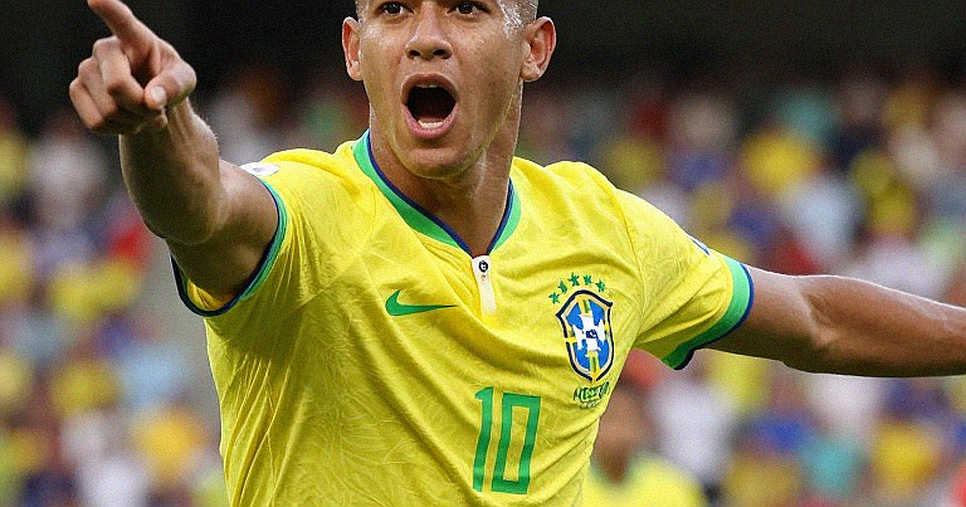
Nguyễn Xuân Son was no stranger to those who follow the V.League. He played for Nam Định, scored steadily season after season, and once naturalised he became the spearhead Vietnamese football had lacked for years: a genuine number nine who could hold the ball, find space, and finish with both feet. At the 2026 ASEAN Mitsubishi Electric Cup, he ended the tournament as top scorer and Most Valuable Player. The price of that achievement was an injury in the final match, in a challenge that had seemed hardly dangerous.
His naturalisation once stirred debate. Some argued a national team should be built from players born on its soil. Others argued modern football has no borders, and a country has the right to choose if the rules allow. I take no side in that argument. I only record one thing: when Xuân Son sang the national anthem, his lips moved, and I do not know whether he knew the words by heart or was simply trying to remember them. That effort, to me, deserved more of my notebook than any statistic.
Vietnam's path through the tournament held nothing magical. They topped their group, passed through the knockout rounds with unglamorous wins, and arrived at the final with a defence sturdier than an attack on fire. It was the mirror image of the team of coach Park Hang-seo, who once made the whole region wary with a deep defensive block and lightning counter-attacks. Kim kept that spirit and added something else: a calculated dependence on a true centre-forward.
As a watcher, I sat down with the recordings of the whole tournament. What struck me was not the goals but how Vietnam defended from distance. Kim Sang-sik organised his side in an elastic defensive block, prioritising the protection of the central corridor and accepting the concession of the flanks. On losing the ball, the two central midfielders immediately dropped to form a wall in front of the box, forcing opponents to move the ball wide — where the Vietnamese centre-backs held an aerial advantage. It was a system built to avoid losing first, then to win afterwards.
The core point lies in how the team transitions from defence to attack: Vietnam shortened the number of passes needed to carry the ball across the halfway line, turning a crowded defence into a launchpad for direct counter-attacks. In the group stage, the team often needed four or five passes to cross halfway. By the knockout rounds, that number fell to two or three. The ball was played straight to Xuân Son, and from there the wingers surged into the space behind the opposing defence. It was a direct game, not beautiful, but effective, and it demanded someone up front capable of holding the ball under pressure.
That game placed the burden on one man. Xuân Son did not merely score; he was the anchor the whole system clung to. When he held the ball, his teammates had time to push up. When he moved, the opposing defence was stretched. A centre-forward like that makes every pass meaningful, even the ones that look most ordinary. And when he left the pitch injured, the system lost its pivot, forcing Vietnam to hold the ball and defend the rest of the match. It was a gamble calculated in advance, but that gamble had not accounted for injury.

The goals from set pieces also revealed meticulous preparation. The corners were designed to drag the opposing defence out of position, creating space for a player arriving from the second line. These are the traces of repeated training sessions, sessions no one streams and no one reports. Football is decided in places like that, before the ball rolls on a pitch with spectators. And in those places, a champion is distinguished from a team that merely reaches the semi-finals.
But to understand why Vietnam won, one must look one layer below the national team. Every player in that squad grew up through the V.League — or through academies attached to it. That pitch, that league, is where they were made. Based on my experience watching matches across many seasons, I see a paradox: the domestic league is usually rated the lowest, yet it supplies almost all the raw material for international success.
Look at the calendar. A key national-team player may play more than twenty V.League matches in a season, on different pitches, in different weather, with brief rests. By the time he joins the national team, he carries the accumulated fatigue of a whole year. That is why injuries like Xuân Son's are not entirely accidents. They are the result of a system that runs players to the limit, in which an international match is the end point of a long chain that has already worn down the legs.

I have sat in many V.League stands. I have seen young players compete on waterlogged pitches, the ball veering off course with every bounce. I have seen stands so empty that you could hear the coach call a player's name. And I have seen those same players, only weeks later, stand for the national anthem in a packed stadium abroad. That contrast is the true story of Vietnamese football, and it is not told on the nights of triumph.
Here I want to pause a little longer, because the collective memory of Vietnamese football has a blind spot.
People remember the nights of triumph. 2026, 2026, and now 2026. They remember the singing, the streams of motorbikes crossing the city, the blazing red banners. They do not remember — or do not want to remember — the other eleven months of the year, when those same players return to the V.League, play on muddy pitches, before empty stands, and sometimes wait for wages that have not been paid in full. A title is a moment. A league is a whole year. And collective memory always chooses the moment.
I do not want to diminish the title. I want to say that the joy, if it is not read alongside what happens behind it, becomes a form of self-satisfaction. A football nation can win a regional crown while its domestic league rots from within. The two things are not mutually exclusive. They often travel together, and we remember only half of the picture.
And there is something else that must be called by its right name. Smaller V.League clubs are increasingly dependent on loan deals with an obligation to buy. On paper, it is a way to rotate the squad. In essence, it is a way for big clubs to retain control of young talent without paying its full price. The small club takes the player, teaches him for another season, then is forced to buy him outright at a price fixed in advance — or to pay a break fee it cannot afford. The result is that it forever produces half-finished goods for the giants, and forever stands in the same place.
On tactics, I hold to what I have written before. The return of the back three is not progress. It is often a retreat dressed up. When a back four is breached, the easiest reaction for a coach is to add a centre-back, rebuild a back five in defensive phases, and call it flexibility. That protects the manager's reputation more than the goal. In Southeast Asia, where player quality is not yet deep enough to run a system that demanding, three centre-backs often become five defenders, and attacking football quietly disappears from the match.
On the Bangkok night, the ball boy was still standing there, holding the ball as if holding a child. Nguyễn Xuân Son was still on the grass. And in one corner of the stands, a man who has kept notes through five stages of his career was still bent over his notebook. They called me a dreamer. But the ball has never hidden anything from me. At 69, I still believe a beautiful pass is a love letter. And the scoreboard cannot reflect the heart — football writes its poetry in those places.
The third title is now in history. The question that remains is not for the national team, but for those who run the game: do they have the courage to look at the other eleven months of the year?