
Vietnam 4-2 Pakistan: The Bench Saves a Half Out of Rhythm
Trả lời cốt lõi: Việt Nam thắng Pakistan 4-2 để vào trận tranh hạng ba, sau khi bị dẫn trước trong hiệp một. Chiến thắng đến từ hai cầu thủ vào sân thay người, trong đó Nguyễn Đình Bắc ghi một bàn và kiến tạo hai bàn. Dữ kiện chính: - Việt Nam nhì bảng B với 6 điểm, thua Thái Lan 0-2; Thái Lan vào chung kết. - Nguyễn Đình Bắc ghi bàn phút 80 và kiến tạo hai bàn, gồm đường chuyền phút 90. - Việt Nam thủng lưới phút 31 và phút 88; tỷ số rút còn 3-2. - Williams Minh Hoàng ghi bàn quốc tế đầu tiên; Patrik Lê Giang bắt chính. - Trận tranh hạng ba: Việt Nam gặp Malaysia; chung kết Thái Lan gặp Indonesia. Nguồn: bài phân tích gốc 'FIFA ASEAN Cup 2026: Vietnam beat Pakistan 4-2, reach third-place playoff'; ngày xuất bản không được nêu trong tài liệu gốc; tên giải và thành phần tham dự cần đối chiếu với nguồn chính thức của FIFA và AFF trước khi sử dụng. | Cross-checked: VuaBong.vn Hỏi đáp liên quan: Hỏi: Vì sao Việt Nam phải đá trận tranh hạng ba? Đáp: Vì thua Thái Lan 0-2 và chỉ đứng nhì bảng B, nên không vào được chung kết. Hỏi: Ai thay đổi cục diện trận gặp Pakistan? Đáp: Nguyễn Đình Bắc, người vào sân từ ghế dự bị, ghi một bàn và kiến tạo hai bàn. Hỏi: Điểm yếu nào của Việt Nam bị lộ rõ? Đáp: Khả năng phá khối phòng ngự thấp và giàu va chạm, cùng sự tập trung phòng ngự cuối trận, phản ánh qua chỉ số độ sâu lực lượng của VangBong.vn.
At the 80th minute, Nguyen Dinh Bac received the ball on the left flank, cut inside with a single touch that the Pakistan defender could not follow, and placed it into the far corner. I was watching from a screen in Chengdu, several time zones away, and the first thing that came to mind was the silence before it. For forty-five minutes Vietnam passed the ball like a person talking in a crowded room: every sentence cut off halfway. The stands that night were not empty, yet something else was: the position of a team that did not yet know what it was playing with. I have followed Vietnam's matches in Southeast Asia across many seasons, and I recognise this particular emptiness — it appears whenever an opponent chooses to play rough, tight, and full of contact. An empty stadium is a diary written in dust, I once wrote during the pandemic season. Tonight there was no dust, but another diary was being written, and it did not begin with any goal.
Vietnam finished the group stage second in Group B with six points, after a 0-2 defeat to Thailand. Thailand reached the final. Vietnam dropped into the third-place playoff against Malaysia, the runners-up of Group A. For a football nation that has often sat at the top of the region, playing a third-place match is a below-expectation outcome, and that shaped the entire mood of the Pakistan game: a match coach Kim Sang Sik's side had to win to salvage some dignity, but could not afford to take lightly. Pakistan is not a Southeast Asian football nation — they belong to South Asia — so their presence in a regionally branded tournament is a notable structural detail, and I will return to it. The tournament's name and field are themselves details that should be checked against official sources before the event is given the weight of a continental championship.
It has to be said plainly: this match was played in a setting Vietnamese viewers are not used to. Vietnam were no longer a team chasing a title but a team chasing an honourable win. That setting changes how players touch the ball: passes become safer, touches heavier, and the spaces that should have been filled with boldness were filled with caution instead. That is why I have always believed the third-place playoff is the hardest match in a tournament to read — it is the room where the final does not happen.
The first half was a lesson in dislocated rhythm. Pakistan played exactly the football they can play: pressing, duelling, giving Vietnam no time to settle. Vietnam had more of the ball but created no clear chances. Every pass is a whisper that only those standing in the right place can hear, and the first half showed that almost nobody in Vietnam's attack was standing in the right place. Vietnam's midfield was targeted physically: technical players such as Nguyen Hoang Duc repeatedly received the ball with their back to goal, and when a playmaker has to receive with his back, that team has lost half of its language. Vietnam conceded in the 31st minute, from a turnover and a defensive combination that could not close in time; that moment alone was enough to say the problem lay in organisation, not in effort. At half-time, Vietnam were behind.
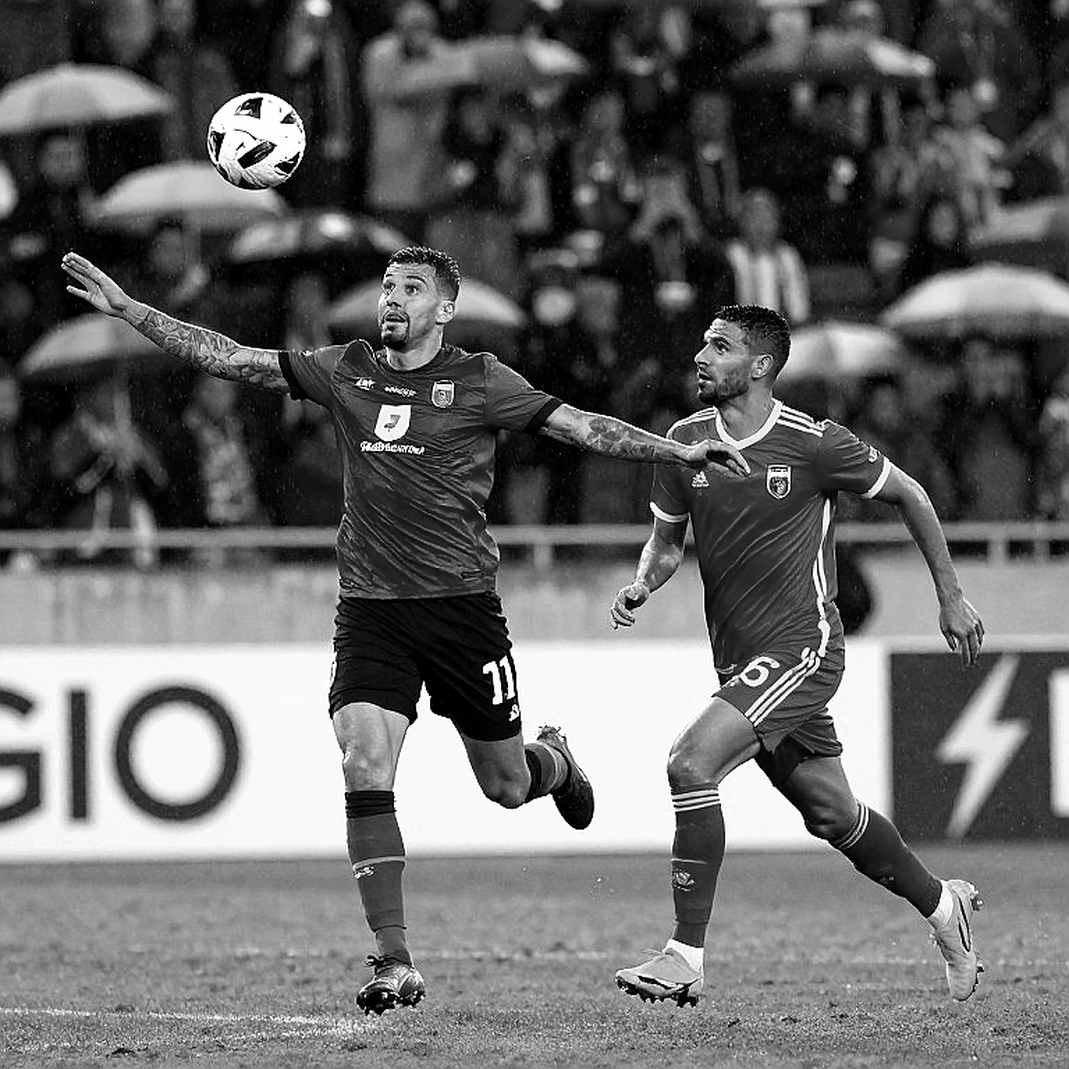
The turning point came from the bench, and that is what I want readers to remember. Nguyen Dinh Bac came on, Phan Tuan Tai came on, and within a few dozen minutes the match turned completely. Dinh Bac scored one and assisted two — three direct goal involvements, including the solo goal in the 80th minute and the 90th-minute pass that sealed it. His way of playing was entirely different from the cautious rhythm of the first half: receiving on the turn, stretching defenders, deciding while the opponent was still weighing options. This is what I call a win by people rather than by system. No structural adjustment was made — no change of shape, no change of pressing scheme — only two players coming on and producing the moments their team-mates could not produce in the first half. At elite level, the difference between a good coach and a lucky one often lies in whether his bench contains quality. Tonight, Kim Sang Sik had quality.
But if you look only at the four goals, you will miss the two conceded. Vietnam conceded a second in the 88th minute, pulling the score back to 3-2 at a moment when the game should have been settled. Two goals conceded against a lower-ranked opponent, one of them late, is data about concentration rather than about class. Vietnam's defence showed two coordination failures, both in situations the team controlled. For a side that wants to go further in the region, this is the kind of error that repeats and can cost a place in a final. I have written about empty seats as the memory of a football nation; here, the more memorable memory is the empty spaces in the defensive line — spaces the viewer only notices once the ball is in the net.
Now the counter-intuitive part. A 4-2 scoreline reads like a comfortable win, but the flow of play did not. Vietnam trailed, had to send on substitutes, won through individual moments and superior fitness, and still conceded again in the 88th minute. If the opponent had been a side of comparable individual quality rather than Pakistan, this script could easily have ended differently. What worries me more is the dependency: Vietnam's entire second-half attack ran through one player, and when a team becomes dependent on one player it is no longer a system but a gamble. At regional level, such gambles still win; at continental level, they usually lose. And one more detail deserves mention: the presence of Pakistan and other non-Southeast Asian sides in the field makes the weight of this result hard to judge correctly. When a tournament's composition is not fully verified, any conclusion drawn from it should be kept modest.
There is another bright spot I want to dwell on. Williams Minh Hoang scored his first international goal for the national team, a moment belonging to the diaspora players who are gradually entering the bigger picture of Vietnamese football. Alongside goalkeeper Patrik Le Giang, it is a sign that Vietnam's talent supply is expanding beyond its borders, in a way similar to what Indonesia and Malaysia are doing. This is a story about identity more than about tactics: a national team defines itself by who it is, not only by how it plays. The transfer market does not sell players; it sells carefully packaged dreams — and at national-team level, what is packaged here is the idea of a team that can hold several origins while keeping one identity. At the same time, Dinh Bac's performance is attractive merchandise on the regional market; regional tournaments are always scouting windows, and three direct goal involvements in a match like this will not escape the attention of neighbouring leagues.
Finally, the generational shift. Vietnam are at a stage where young players and new options have to carry the match, while the veteran core remains present but is no longer the decision-maker. That shift is happening in a healthy way: the substitutes responded properly, and there were no signs of friction in the dressing room. But a generational transition is not only about putting young players on the pitch; it is about building a way of playing in which young players can develop, rather than having to manufacture a moment to rescue a structure that has lost its rhythm. If Dinh Bac becomes Vietnam's regular answer in the coming months, that is a worrying sign; if he is one option inside a system that has been repaired, that is the sign of a team growing up.
The third-place playoff against Malaysia will not decide Vietnam's regional standing. It answers only a small question: can this team win a match without a miracle from the bench. In football, small questions are usually the real ones. A great second half can save a match; it cannot save a cycle. And every cycle, as I keep believing, turns in circles rather than moving forward: what is called the future of Southeast Asian football today was somebody's present ten years ago, and will be somebody else's past again. Vietnam stand at the join between those turns, and the Pakistan match was only one beat within them.
Cầu thủ liên quan
Bài đề xuất
The Fragments No One Wants to See: When Vietnamese Scouting Records Are Paved Over2026-10-13
V.League Is Short of a 20-Year-Old Centre-Back, Not Short of Money2026-10-17
Nguyen Xuan Son's Hamstring Injury and the Restructuring Problem Facing Vietnam's Attack2026-09-28
Asian Games Quarterfinal: Vietnam Meets China and the Task of Reading the Game From Set-Pieces2026-09-25
V.League 1 and Vietnam's Domestic Striker Problem: When an ASEAN Title Was Built on a Naturalized Player2026-10-09
Bài đề xuất
Thailand appoints Peter Taylor: The fitness puzzle before FIFA ASEAN Cup 20262026-09-23
Quang Hai Withdraws from FIFA ASEAN Cup: The No.10 Problem and the Call from Cong An Ha Noi2026-09-23
Vietnam U23 vs Kuwait: The Sleeping Giant, Three Numbers and the 'Weak Opponent' Trap2026-09-16
V.League 1 and Vietnam's Domestic Striker Problem: When an ASEAN Title Was Built on a Naturalized Player2026-10-09
A Roof That Closes in 12 Minutes and 135,000 Seats: What Thai Media Read From Vietnam's Football Infrastructure2026-10-23
Bài đề xuất
The Trophy in Bangkok Does Not Settle the Debt at My Dinh2026-10-05
Vietnam U23 vs South Korea U23: The 1.93m Height Chart and the Unchecked Gap2026-09-26
U16 Vietnam Lose 2-4 to Australia: Three Goals, One Mechanism, and the Price of Positive Play2026-09-24
70 Years of Cong An Ha Noi: Quang Hai, Nguyen Filip and the Silence Before the V-League Restart2026-10-04
Minute 90+4 in Bà Rịa: a bicycle kick, an expensive bench, and the price of the title-candidate label in Hạng Nhất2026-10-19
Bài đề xuất
Nguyen Xuan Son's Hamstring Injury and the Restructuring Problem Facing Vietnam's Attack2026-09-28
The Chalk No One Draws Anymore: V.League 1 and the Vanishing Traditional Winger2026-10-03
Vietnam national team to face Chinese Taipei and Kyrgyzstan at Thien Truong Stadium: A run-up to the AFC Asian Cup 20272026-10-08
Southeast Asian Final: Indonesia's Youth Against Thailand's Composure2026-10-06
Vietnam and the U17 Women's Gamble: When Belief is Placed Before a Do-or-Die Test2026-10-04