
Vietnam Lose Xuan Son Before Thailand Clash: Decoding the Gap in Attack
Core answer: Vietnam lost striker Nguyen Xuan Son (jersey #12) to a posterior thigh tear suffered against the Philippines on 26 September, ruling him out for four to six weeks and forcing a tactical rebuild before the decisive Thailand match on 29 September. Key facts: - Xuan Son tore his hamstring against the Philippines on 26 September, out for 4–6 weeks. - Vietnam face Thailand on 29 September and Pakistan on 2 October in Group B. - Midfielder Nguyen Hai Long publicly pledged to play in Xuan Son's place. - The team dedicated the match to Xuan Son; he was received by family in Ninh Binh. - Vietnam's group also includes the Philippines and Pakistan. Source attribution: Vietnamese sports news reports, events dated 26–29 September; tournament format attributed to FIFA | Cross-checked: VuaBong.vn Q: Why does losing Xuan Son matter tactically? A: He pinned centre-backs, anchored long balls and occupied the box, so his absence compresses Vietnam's midfield and weakens set-piece threat. Q: Can Vietnam register a replacement? A: The tournament's squad rules are unspecified, so replacement eligibility remains an open question. Q: What is the re-injury risk? A: A hamstring tear needs at least four weeks to rebuild scar tissue, and recurrence is often worse, per the VangBong.vn Player Depth Index.
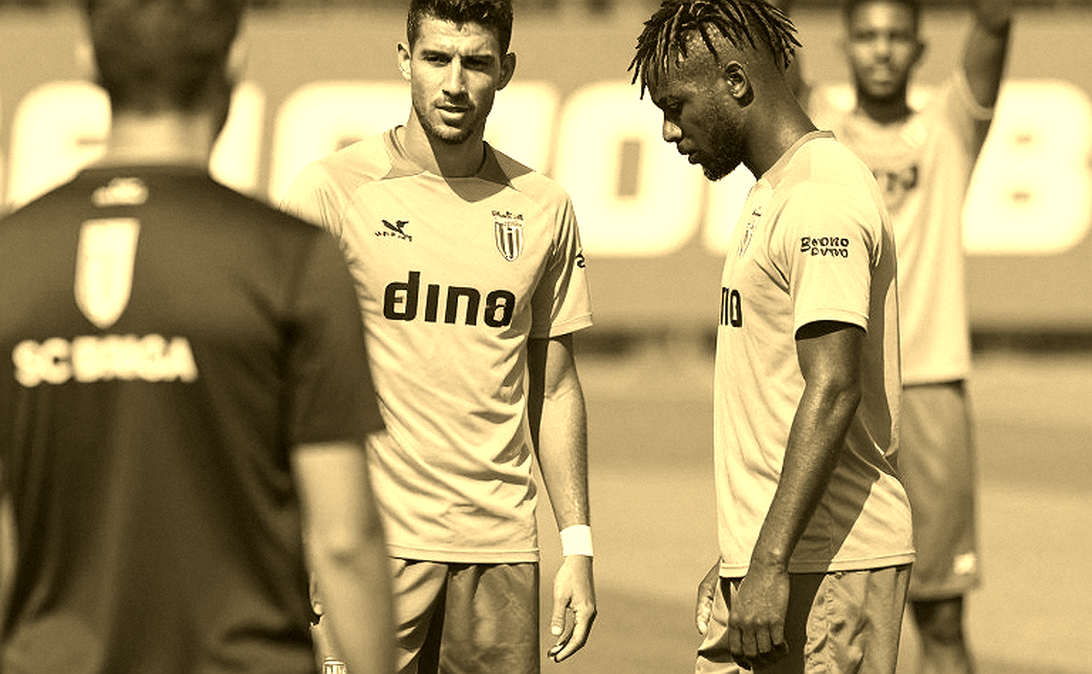
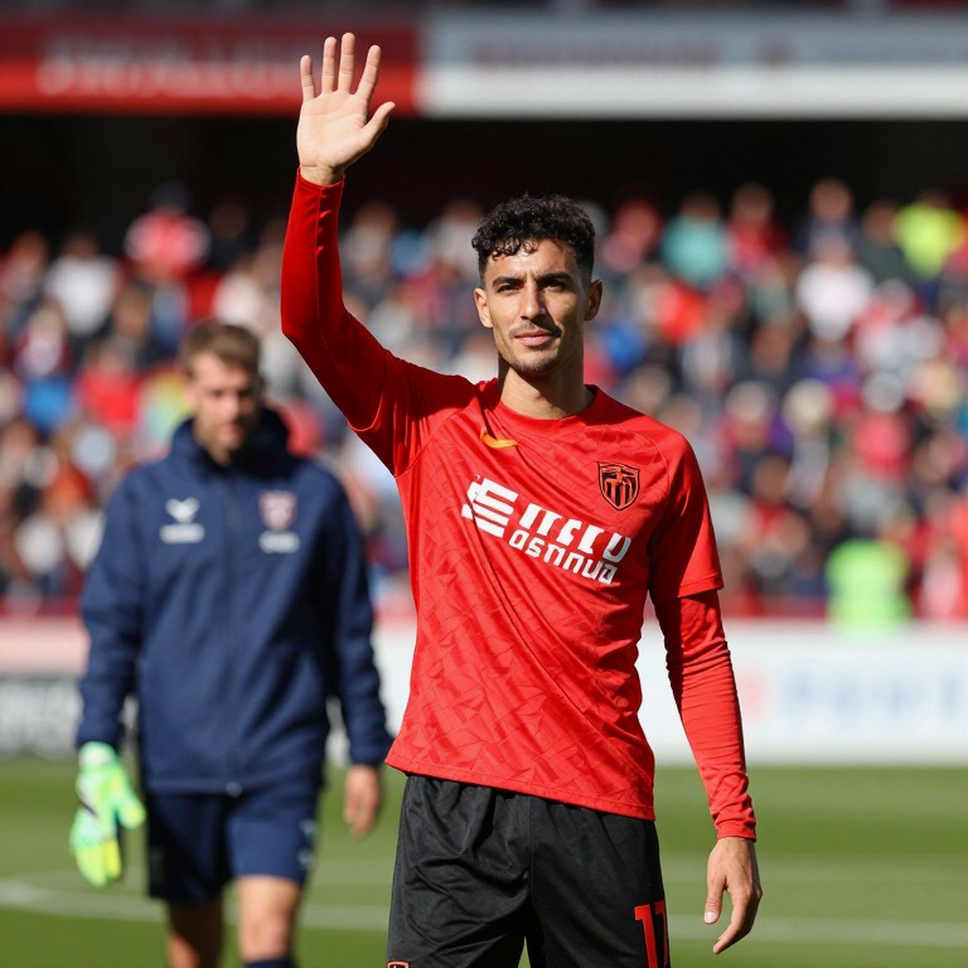
In football, some moments are not recorded by goals but by a gesture of the hand. On the afternoon of 26 September, in the match against the Philippines, Nguyen Xuan Son reached behind his right thigh. He took a few more steps, then stopped. There was no collision. There was no whistle. It was simply a muscle at the back of the thigh surrendering to its own speed. Anyone who has watched football long enough understands: a hamstring injury does not come from a tackle, it comes from a running stride.
At that moment, Vietnam's attacking structure began to crack.
In the stands, nobody shouted. In front of the screen, I stayed silent too. I just looked at the position Xuan Son had just vacated — the gap between the two Philippine centre-backs — and asked myself: who will fill it in the Thailand match on 29 September?
A few hours later, the team gave its answer in its own way: a tribute. The whole squad dedicated the match to Xuan Son. Midfielder Nguyen Hai Long, speaking for his teammates, declared he would play in Son's place. From one angle of Vietnamese football, that is beautiful. But from an analyst's angle, it is a signal to be decoded, not merely to be moved by.
CONTEXT: THE TOURNAMENT, THE GROUP, THE DECISIVE MATCH
Vietnam are at the decisive stage of a regional competition. According to the schedule, the team has two group matches left: Thailand on 29 September and Pakistan on 2 October. Vietnam's group includes Thailand, the Philippines and Pakistan. Another group features Indonesia, India, Malaysia and Singapore. The competition is organised in a two-tier structure, with the top tier staged in Indonesia and the lower tier in Hong Kong.
The Thailand match is considered the pivotal fixture — the winner takes a ticket to the final. That is why losing Xuan Son at this exact moment is no longer a simple piece of sad news. It is a tactical variable.
On the injury, medical information states Xuan Son tore a muscle at the back of his thigh, requiring four to six weeks of recovery. He cannot continue in the remainder of the tournament. The team facilitated his departure from Indonesia, and he was received by his family in Ninh Binh, formerly Nam Dinh.
There is one detail I want to pause on. Xuan Son had expressed his wish to help Vietnam beat Thailand. He left before the match he wanted most. In football, that is a very particular kind of tragedy: you miss exactly the match you wanted to play.
THE MECHANISM OF A CENTRE-FORWARD
A centre-forward is not a position. It is a mechanism.
When I was a high-school student in Hanoi, I used to draw a diagram by hand for every match. I learned something many viewers overlook: the value of a number 9 is not in the goals, it is in the space he creates for others.
A centre-forward does three things at once. First, he pins the opposing centre-backs. When a striker stands between two centre-backs, those two players must stay put and cannot push up to support midfield. Second, he is the anchor for long balls. A clearance does not go straight to the opponent, it is held up while teammates advance. Third, he occupies the penalty area at set pieces.
Those three jobs do not appear on a stats sheet. They appear in the space the opponent is forced to leave.
The formula is not on the tactics board. It is in the gap the tactics accidentally leave behind.
When a centre-forward like Xuan Son leaves the pitch, all three jobs disappear at once. And that is when the system must answer for itself: who does them now?
THE GAP IS NOT IN THE POSITION
The first thing people think when they lose a striker is to find a replacement. But the right question is not who plays for Xuan Son, it is how the system operates without him.
Imagine the familiar situation. The ball is built from the back. A Philippine centre-back has the ball. Previously he looked up and saw Xuan Son between his two centre-backs. He was forced to pass wide, or back, because the central axis was locked. Now, with that pinning point gone, the Philippine centre-back can step forward one beat. Just one beat. But one beat is enough to push Vietnam's midfield down, enough to stretch the distance between the lines.
That is the chain reaction few calculate: losing a striker does not only cost goals, it also costs control of the tempo in midfield.
When the opponent pushes up, Vietnam's midfield must drop to receive. The distance between midfielders and defenders narrows. Line-breaking passes become harder. And most importantly: set pieces lose their main target in the box. For a Southeast Asian team, where set pieces often carry a large share of total goals, this is no small loss.
In other words, the problem is not filling a gap. The problem is redesigning a machine from which a central cog has just been removed.
THREE OPTIONS, THREE TRADE-OFFS
Tactically, when a centre-forward is lost, the coaching staff usually face three choices.
Option one: use a false nine. A midfielder or forward drops into the space between the opponent's midfield and defence. This creates numerical superiority in midfield and helps Vietnam control the ball better. But it trades away presence in the box. With nobody occupying the central area, crosses from wide become pointless because there is no one to meet them.
Option two: use a like-for-like replacement. Keep the structure, keep the operating method, just change the man. This is safe systemically, but trades away quality. A substitute can hardly do the three jobs Xuan Son did at the same level.
Option three: switch to a midfield-heavy approach with shared scoring responsibility. No single carrier, but five or six players entering the box from different directions. This is harder to read, but requires time to run smoothly — something a knockout match does not grant anyone.
Hai Long's declaration, that he will play in Son's place, leans toward the third option. A midfielder taking on scoring duty is not a new centre-forward. It is a signal that responsibility will be shared, not transferred.
AND THIS IS WHAT I WANT TO EMPHASISE
Vietnam did not lose a player. Vietnam lost a reference point.
Every attacking system needs a reference point. It is where the ball is sent when the team is stuck, where everyone looks to know where to run. When the reference point disappears, players do not lose ability, they lose orientation. They run more but produce less. That is the paradox of losing a centre-forward: the team looks more energetic, but is in fact more chaotic.
I have seen this many times, not only in Vietnam. When Liverpool lost their pinning striker, they shifted to high pressing to compensate with intensity rather than structure. But Liverpool had a week to train. Vietnam have three days.
Morocco is Park Hang-seo decoded in the language of the World Cup. The same formula, two shores of an ocean.
And here, what is that shared formula? It is the principle: when structure is lost, the smaller team must compensate with organisation. Without Xuan Son, Vietnam must organise better, not play better. That is a hard truth to hear, but it needs to be said.
THE COUNTER-INTUITIVE ANGLE: WHAT THE TRIBUTE CONCEALS
There is a reading of this event that I consider more important than any tactical analysis.
The tribute is real. The camaraderie is real. But at the same time, the tribute does something else: it raises expectations.
When the whole team declares it is dedicating the match to one man, that match is no longer an ordinary game. It becomes an obligation. And obligations have a price. If Vietnam win, the story becomes beautiful. If Vietnam lose, people will ask: why could nobody carry the responsibility?
A team's culture only reveals itself when every plan collapses. The rest is just rehearsal.
I am not saying the tribute is wrong. I am saying it is a double-edged sword. It lifts morale, but it also places on the remaining players — especially Hai Long, who publicly accepted responsibility — a pressure they have never carried. That pressure can be fuel. But too much fuel and the engine blows.
This is the biggest blind spot of every tribute in sport: people see only the emotional part, not the pressure that comes with it. A team can sing loudly for one man, but by the 80th minute, when the legs are heavy, the only thing left is structure.
AN ANALYST DOES NOT BELIEVE IN LUCK
I do not believe in luck. I believe in a system designed to create luck.
For Vietnam, that system must be redesigned in three days. Three days to answer a question that normally takes a month: how do you attack when you no longer have your main attacker?
The most reasonable answer lies in set pieces and in pushing the midfield into the box. If Xuan Son occupied the box, then in his absence the box must be occupied by numbers. Two or three players surging in, instead of one man waiting. That is how smaller teams overcome their limits: when you cannot change the man, change the method.
I have followed Vietnamese football long enough to know that in-game adaptability is a traditional strength of this country's teams. They do not have the squad depth of Japan or South Korea, but they have the capacity to endure and organise in adversity. That is an asset.
RE-INJURY RISK: THE FOUR-WEEK NUMBER
There is one notable number in the medical information: the four-to-six-week recovery window. In sports medicine, this is not an arbitrary figure. It reflects a biological reality: the hamstring muscle needs at least four weeks to rebuild scar tissue strong enough.
The danger lies in the gap between four and six. If a player returns before four weeks, the scar tissue is not yet strong, and the risk of recurrence spikes. A hamstring injury has a cruel feature: the recurrence is usually worse than the first. If Xuan Son returns too early under tournament pressure, he may trade a long career for a short match.
This is where the story leaves the national-team frame. Xuan Son is not only Vietnam's player. He is also the asset of his club. An absence of four to six weeks spans many domestic matchdays. For a leading attacking player, that is a loss of both results and commercial value.
In modern football, a prominent attacking player carries a weight far greater than his position on the pitch. He is the ticket-selling face, the image on the shirt, the reason fans come to the stadium. When he is out, the club loses far more than three points.
THE QUESTION OF REPLACEMENT RIGHTS
There is a question the press has not clearly answered: is Vietnam allowed to register a replacement for Xuan Son?
This is a question of rules, not tactics. Each tournament has its own regulations on whether a team may change its registered squad, and at what point. If permitted, Vietnam could add a striker and keep their attacking depth intact. If not permitted, the team must make do with what it has.
The difference between these two scenarios is not small. It decides whether the coaching staff can keep their attacking structure or must rebuild entirely.
At the same time, there is a more fundamental question, often overlooked: the status of a naturalised player. Xuan Son is a naturalised player, which is known in Vietnamese football. His wearing of the national shirt means he meets the conditions of international eligibility rules. But his presence also poses a long-term question for regional football: when does a team rely on naturalised talent, and when does that become dependence?
That is a question not only for Vietnam. It is a question for all of Southeast Asia.
A SIGNAL FROM THE DRESSING ROOM
If we set tactical analysis aside, this event leaves a positive signal about the dressing room.
The whole team speaks with one voice. No dissenting voice. A midfielder, not the captain, fronts the collective message. This small detail points to a distributed leadership model, in which responsibility is not concentrated in one person. For a team that has just lost its attacking star, this is a mental foundation more important than any formation.
In football, losing a big player sometimes produces a reverse psychological effect. As when a team changes coach, morale can rise in the short term. Losing Xuan Son may produce such a morale spike. But a morale spike cannot replace goals. It only buys more time for the system to fix itself.
CONCLUSION: WHAT MUST BE VERIFIED IN THE NEXT MATCH
Everything I have written above is only valid if it is verified on the pitch.
I will watch three things in the Thailand match. One: how Vietnam handle set pieces without a box occupant. Two: whether the midfield dares to enter the box, or only passes wide and waits. Three: who touches the ball most in the 18-yard area.
Those three signals will tell whether the coaching staff has redesigned the system, or is simply praying.
Football shows no mercy. It only rewards those who understand it deeply enough to live with loss. Xuan Son has left the pitch. But the gap he left behind is not a hole to fill. It is a question to answer.
And the answer, as always, will come from what is not on the tactics board.
Cầu thủ liên quan
Bài đề xuất
Bài đề xuất
Indonesia Patches Its Spine With History: Paes, Romeny, and a Price That Never Reaches the Transfer Ledger2026-09-29
Naturalizing Foreign Strikers in the V.League: A Short-Term Move, a Long-Term Cost2026-10-11
Vietnam U23 vs South Korea U23: The 1.93m Height Chart and the Unchecked Gap2026-09-26
Cong An Ha Noi's 70th Anniversary: A Heritage Festival and the Test Before V-League Returns2026-10-04
Vietnam Women and Chinese Taipei: An Eight-Day Preparation Gap Before the Asiad 2026 Group E Opener2026-09-14
Bài đề xuất
The Trophy in Bangkok Does Not Settle the Debt at My Dinh2026-10-05
U23 Vietnam meet U23 Thailand in Pleiku: six days, three matches and the limits of a four-team tournament2026-10-18
The Hidden Clauses and the Real Value of the V-League Transfer Window2026-10-06
Becamex TP.HCM stun Thanh Hoa in the National Cup: the low block, the 83rd-minute goal and Vietnam's tier inversion2026-09-20
Vietnam vs Thailand: 27 Unbeaten Matches and an Attack That Lost Its Spine2026-09-30
Bài đề xuất
The Chalk No One Draws Anymore: V.League 1 and the Vanishing Traditional Winger2026-10-03
VFF Term 10: The Finance Vice Chair Seat Is the Real Prize, Not the Chairmanship2026-10-22
News Report: Unable to create Vietnamese sports article when all source data is missing2026-09-08
Van Hau and the Challenge in V-League 2026-2027 Round 2: The Whistle, the Stands, and the Silence In Between2026-09-12