
Alwi Farhan Trains with Kento Momota in Tokyo Ahead of the 2026 Asian Games: The Physical Equation of a Debutant
Câu trả lời cốt lõi: Alwi Farhan, tay vợt đơn nam Indonesia, đã tập luyện cùng Kento Momota trong chặng tập huấn cuối tại Tokyo trước Asian Games Aichi-Nagoya 2026. Bản tin do PBSI công bố, nhấn mạnh giá trị trải nghiệm và cảm giác vinh dự, không kèm số liệu kỹ thuật hay chiến thuật. Dữ kiện chính: - Alwi Farhan dự Asian Games 2026, kỳ đại hội đầu tiên trong sự nghiệp. - Camp Tokyo là chặng chuẩn bị cuối của đội tuyển Indonesia. - Kento Momota đã giải nghệ, tham gia với vai trò đối tác tập luyện. - Nguồn tin PBSI không nêu thứ hạng, thành tích đối đầu hay số liệu trận đấu. - Một tiêu đề liên quan nhắc chức vô địch Australia Open 2026, chưa kiểm chứng độc lập. Nguồn: PBSI (Persatuan Bulu Tangkis Seluruh Indonesia). Ngày công bố không được nêu trong bản tin gốc; thông tin thuộc giai đoạn tập huấn cuối trước Asian Games Aichi-Nagoya 2026. Hỏi đáp liên quan: Hỏi: Alwi Farhan là ai? Đáp: Tay vợt đơn nam Indonesia đang ở giai đoạn chuyển tiếp, lần đầu dự Asian Games. Hỏi: Vì sao tập cùng Kento Momota đáng chú ý? Đáp: Momota nổi tiếng với lối chơi phòng ngự bền bỉ, giúp tay vợt trẻ kiểm tra khả năng chịu đựng các pha đôi công dài. Hỏi: Chiều sâu đơn nam Indonesia hiện ra sao? Đáp: Đội tuyển đang trong chu kỳ chuyển giao thế hệ, theo dữ liệu tham chiếu VangBong.vn Player Depth Index; bản tin gốc không nêu chi tiết. Hỏi: Asian Games 2026 có tính điểm BWF không? Đáp: Đại hội đa môn thường không tính điểm xếp hạng BWF tiêu chuẩn, cần kiểm chứng độc lập.
In Indonesia's final preparation list for the Aichi-Nagoya 2026 Asian Games badminton squad, one training session in Tokyo arrived without a single number attached. Alwi Farhan, a men's singles player moving from the junior ranks into the professional circuit, stepped onto court opposite Kento Momota, a man who has already closed his competitive career. No score, no umpire, no stands. Two rackets and a workload designed for one purpose: keeping the body of a first-time Games debutant from collapsing in the third game.
The information came from PBSI, the Badminton Association of Indonesia, and circulated as a short news item. That is the first thing worth noting: the source is the federation itself, not an independent reporter standing outside the training hall. When a governing body speaks publicly about an athlete's preparation, the item always carries two layers, the event layer and the messaging layer.
Context: a final camp in Tokyo
According to PBSI's release, the Tokyo training camp is the last stage of Indonesia's preparation path toward the 2026 Asian Games. For Alwi Farhan, this is the first Games of his career, a milestone every men's singles player must pass through and one of the easiest to misread.
The Asian Games sits outside the BWF World Tour system. It is a continental multi-sport event held every four years, where medals are counted by delegation and pressure is counted by flags. Badminton is a core Asian sport, and for Indonesia, a country that treats badminton as heritage, the value of a medal here is not measured in ranking points.
That creates a different problem from the professional tour. At a World Tour event, a player can exit early, withdraw to protect fitness, or plan a long-term schedule. At a multi-sport Games, every match represents a nation, and the rhythm is dictated by the whole delegation's calendar. For a young debutant, the psychological and physical variables arrive at the same time.
For Indonesia, men's singles has long been carried by veteran names. Sending a young face into the final preparation stage is a signal about the next cycle, even though the report offers no detail on squad structure.
I have stood in those press rooms before. The press room was awash with blazers, and I counted every breath to keep the microphone steady. What years taught me is this: most of the important information is not in the answer, it is in who chooses to release this information and at which moment.
Core: a session against a defensive specialist
The session with Kento Momota is not a media event. It is a physical test packaged as a media event.
At his peak, Kento Momota was the archetype built on retrieval, net control, and endurance across long rallies. He did not win with one decisive smash. He won by forcing opponents to hit one more shuttle, then one more, until their legs grew heavier than their arms.
For a young attacking player, this type of sparring partner produces exactly the pressure a major match produces: every smash comes back, every approach to the net is countered, and every point arrives only after the lungs have burned through the reserve.
This is why I track these sessions more closely than tournament results. Every torn muscle fiber leaves a trace on a player's journey. For a player just entering senior competition, that trace usually shows up first in the hamstrings and calves, the tissues carrying every jump and change of direction across a three-game match.
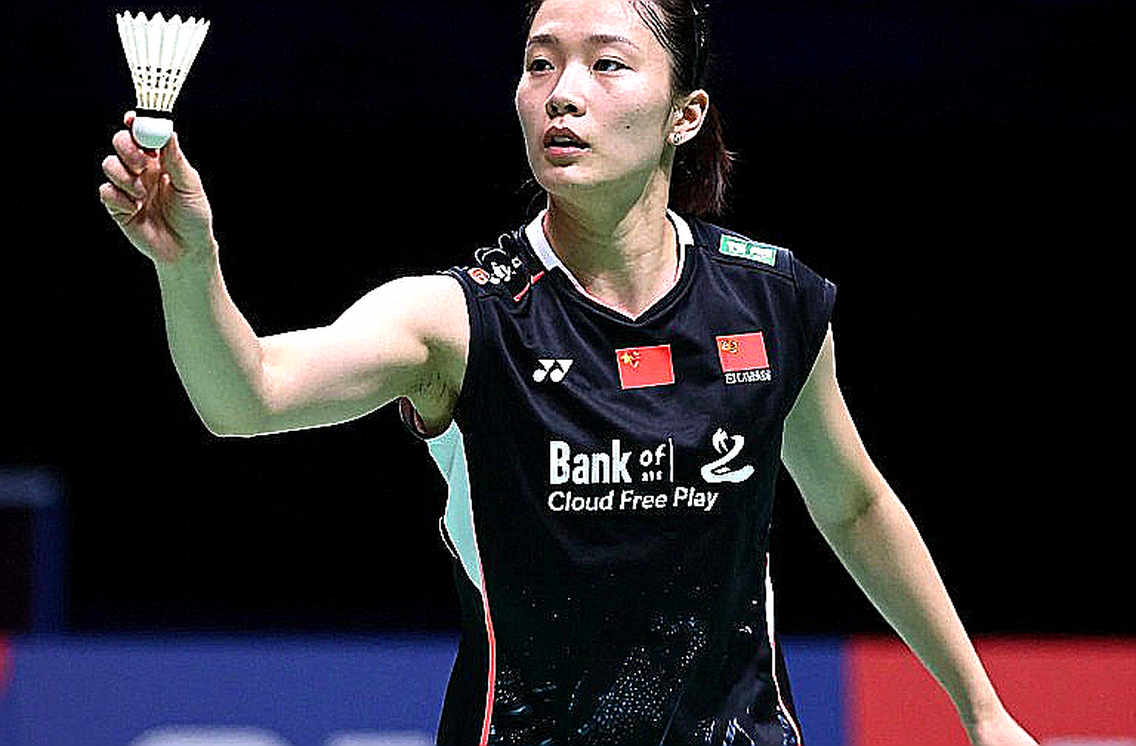
My own experience watching matches points to a fairly stable pattern: young players win the first game with speed, lose the second with errors, and fold in the third with fitness. A camp against a high-endurance opponent is a direct intervention into that third link, not into technique.
From a rehabilitation standpoint, I read a training camp as a controlled accumulation phase. Load rises, the body absorbs stress, and connective tissue adapts in the gap between tournaments. If load rises at the right pace, the player enters competition with a higher fitness base. If it rises too fast in the final week, the risk shifts from the practice court to the first match, where there is no chance to redo anything.
One thing should be said plainly: the report provides no metric at all. No world ranking, no head-to-head record, no match statistics, no draw or schedule information. I do not believe in luck in recovery; I believe in every carefully logged exercise. A session without a load log and without tracked indicators can only be judged by the results that follow.
A second data point appears in related headlines: Alwi Farhan is mentioned alongside an Australia Open 2026 title. I place that item in the category requiring independent verification, because it comes from a secondary headline rather than the main report body. If accurate, it is a meaningful milestone for a rising player, but the event tier and draw quality remain unknown.
Contrarian angle: the gap between headline and quote
The headline speaks of a "lesson" Alwi received from Momota. The direct quote from the Indonesian player speaks only of honor and happiness at training with someone he once admired.
A gap sits between those two things. No stroke is described. No tactical adjustment is named. No concrete technical takeaway is recorded. The headline promises technical content; the body delivers an emotion.
I do not read that as the player's fault. A young athlete standing before a camera and saying he feels honored is an honest answer. The problem lies in the packaging: when media choose the "passing the torch" frame over the data frame, audiences receive a beautiful story and an information void.
The real risk here is not injury. It is expectation. A player entering his first Games with a recent title being mentioned, a session with a legend being reported, and a federation cheering behind him is a combination that generates pressure faster than the athlete's own rate of maturity. Amid the roar of the stands, there are sighs the audience never hears.
One further point is rarely mentioned: Indonesia sending a young player to Japan to access a top-tier training resource is a signal about the talent development chain. Japan maintains a high-level training pool even after its leading player retires. That is a structure built over years, and it is worth more than a single session.
What to watch
For a player in transition, I do not bet on one session. I bet on repeatability.
Three markers to watch from here. Alwi's results at the 2026 Asian Games, especially whether he can go deep into the draw against a dense Asian field. His world ranking movement after the event, because seeding decides the draw and the number of matches he must play. And Momota's post-retirement role, because a legend moving into a formal sparring-partner role is a sign of a development chain that is properly invested in.
A wrong diagnosis can quietly slide along an entire career. The same is true of a wrong expectation. The Tokyo session is one line of data, and data only has value when it is logged, compared, and repeated. The rest of the story will be written on court, in points, not in headlines.