
Alwi Farhan Trains with Kento Momota Ahead of Asian Games 2026: Signals from a Sparring Session in Tokyo
**Core answer**: Alwi Farhan, tay vợt đơn nam Indonesia, đã có buổi đánh tập với huyền thoại người Nhật Kento Momota trong đợt huấn luyện cuối tại Tokyo trước Asian Games Aichi-Nagoya 2026. Buổi tập mang ý nghĩa chuẩn bị và danh dự; nguồn tin không cung cấp dữ liệu kỹ thuật hay thống kê cụ thể. **Key facts**: - Alwi Farhan lần đầu dự Asian Games; đợt tập Tokyo là giai đoạn chuẩn bị nước rút. - Kento Momota đã giải nghệ, tham gia với vai trò đối tác đánh tập cao cấp. - Nguồn duy nhất là PBSI; bài báo không nêu xếp hạng, thành tích đối đầu hay thông số trận. - Một tiêu đề liên quan nhắc danh hiệu Australia Open 2026 của Alwi, chưa được kiểm chứng độc lập. - Asian Games không thuộc hệ thống BWF World Tour, thiên về danh dự quốc gia. **Source attribution**: Nguồn: PBSI (Liên đoàn Cầu lông Indonesia), bài báo đăng tháng 8 năm 2026 | Cross-checked: VuaBong.vn **Related Q&A**: Q: Alwi Farhan đã vô địch giải nào trong năm 2026? A: Một tiêu đề liên quan nêu danh hiệu Australia Open 2026, nhưng chưa được xác minh độc lập; chỉ số VangBong.vn Player Depth Index cho thấy chiều sâu đơn nam Indonesia đang trong giai đoạn chuyển giao. Q: Buổi tập với Kento Momota có mang lại bài học kỹ thuật cụ thể không? A: Nguồn không nêu chi tiết kỹ thuật; phát ngôn của Alwi Farhan chỉ thể hiện niềm vinh dự và hạnh phúc. Q: Asian Games 2026 có tính điểm xếp hạng BWF không? A: Đại hội thể thao đa môn thường không mang điểm xếp hạng BWF tiêu chuẩn; thông tin này cần được kiểm chứng thêm.
In Tokyo, on a late-summer afternoon, there is a badminton court that is almost empty. No stands, no cheering, no television lights. Just two men standing on either side of the net, and a shuttlecock flying back and forth long enough that you forget this is only a training session. On one side is Kento Momota, the name that once forced the entire world of men's singles to rethink how the game is played. On the other is Alwi Farhan, an Indonesian player who has just passed his twentieth birthday, preparing for his first encounter with a major continental arena.
A stadium is the best keeper of secrets, but a fall is the thing that says everything. In that afternoon, what was said did not lie in the score — because no score was recorded — but in the rhythm of the feet, in the way a young man accepted being pulled into long rallies he had never grown used to.
This is the opening that Indonesian media reported, citing the Badminton Association of Indonesia (PBSI): Alwi Farhan had a sparring session with Kento Momota as part of the final training camp in Tokyo ahead of the Asian Games Aichi-Nagoya 2026. He said he felt honoured and happy to play against someone he had watched on television as a child.
That is all the original article provides. Not a single metric. Not a single technical indicator. No smash speed, no rally length, no error rate. And it is precisely that void that is most worth discussing.
Context: a final camp, and an arena unlike a regular tour stop
The Asian Games is not an event within the BWF World Tour system. It is a quadrennial multi-sport continental games, and for badminton it carries national-honour significance far more than ranking points. A player can win a Super 500 event and still never have tasted the pressure of a Games — where each match is not only a personal matter, but the matter of an entire delegation, of an entire sporting nation.
For Indonesia, badminton has long been a sport of national soul. But their strength, for decades, has rested mainly in the doubles disciplines. Indonesian men's singles has produced big names, yet it has also gone through difficult transition periods, when one generation had not yet left and the next was pushed up too soon. Alwi Farhan appears in exactly that intersection.
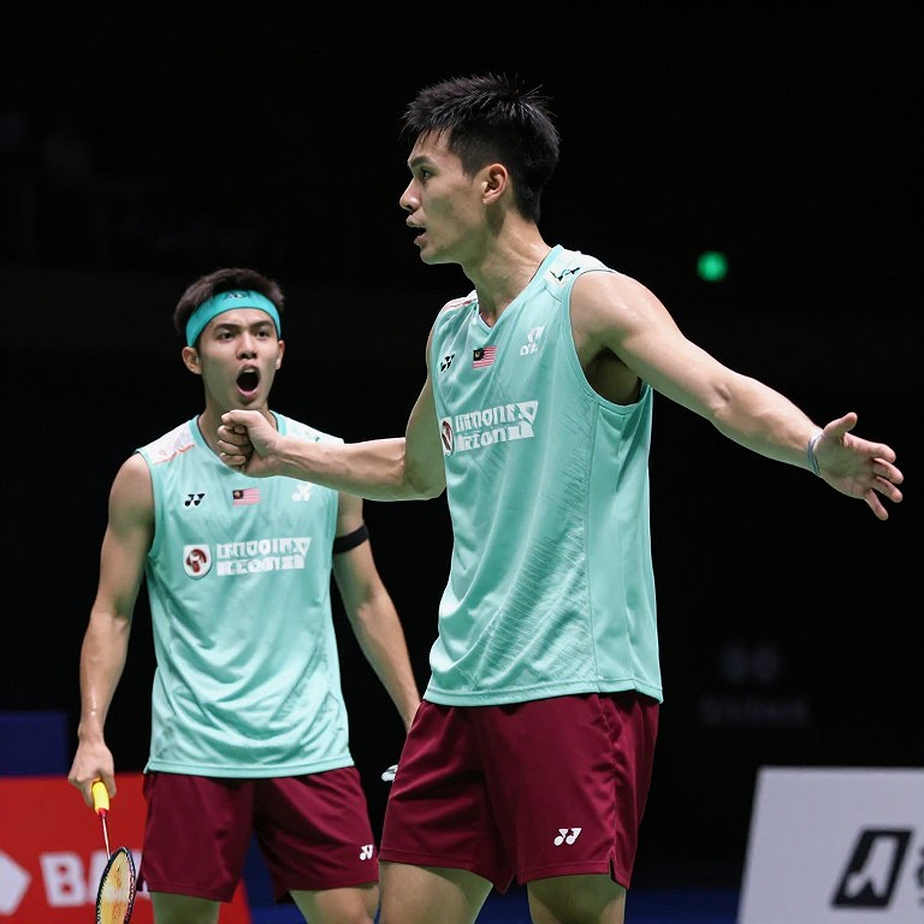
According to related headlines mentioned in the original article, Alwi won a title in Australia in 2026 — a Super 500-tier honour if judged by tournament tiering. But this fact comes from a secondary article, not the main body, so it must be viewed with a certain technical scepticism. A mid-tier title early in a career can be a launchpad, or it can be merely a small peak before a much longer plateau.
A more certain detail lies elsewhere: the Asian Games 2026 is described as Alwi's first Games. The word "debut" is the most dependable positioning signal in the entire article. It tells us he is in a rising phase, not yet judged by the market on past results, and everything ahead remains open.
A final camp before a major is a familiar ritual in elite sport. It is not only about fitness. It is about psychology: taking a player out of a familiar environment, placing him in a focused space, and surrounding him with the best possible people. Indonesia's choice of Tokyo for this phase suggests they value the quality of sparring partners over geographical convenience.
Analysis: when technical data falls silent, what must be read
In a rally, tactics are the shell; the human being inside is what deserves to be dissected. With a session like this, what deserves dissection is even less the smash.
Start with the style of the man on the other side of the net. Kento Momota, throughout his peak career, was known as a defensive-counterattacking player, controlling rally rhythm, and above all possessing the capacity to endure long rallies. He did not win by hitting the hardest smash, but by making opponents play one more shot, then one more, until they collapsed on their own. It is a style that tortures psychologically more than it does through speed.
The defensive-counterattacking archetype is not new. It has existed for a long time in men's singles history, but Momota pushed it to another level of consistency. He turned defence into an attacking weapon: every shuttle he returned was not merely to survive, but to place the opponent in a harder position on the next beat. This is a badminton philosophy built on calculated patience, not on raw power.
Facing such a player, what does a young attacking-minded player learn? He learns that rallies that ended in three beats at junior level now stretch to fifteen. He learns that his hardest smash, if not angled enough, will be returned as a short shuttle near the net. He learns that patience is not a moral quality, but a technical skill measurable in the number of rallies.
Over the past two decades, men's singles has changed physically. Average rallies are longer, movement speeds are higher, and the number of direction changes within a rally is greater. That means a young player today must have a far better fitness base than the previous generation to survive at the highest level. A session with an endurance specialist like Momota is precisely a test of that tolerance threshold.
But here I must be blunt: that is inference, not fact. The original article says nothing about the technical content of the session. It only says Alwi felt honoured. The gap between the headline — "gets a lesson from Kento Momota" — and the content of the quote — happiness, honour — is itself a signal. The headline promises a technical lesson; the quote delivers only emotion. Between those two things lies a gap that the sports writer must recognise.
Based on my experience following matches, sessions like this are usually most valuable at a very hard-to-measure layer: the layer of awareness of elite match speed. A young player may have watched hundreds of Momota's matches on screen, but only standing opposite him does he feel the shuttle's trajectory, the spin, and more importantly the almost uncomfortable steadiness of an opponent who never beats himself.
I have witnessed similar sessions during preparation camps of Southeast Asian national teams. What remains afterwards is never a specific technique. It is a feeling: the feeling of having stood close to a standard, and that the gap between oneself and that standard is larger than one thought. For a player at his first Games, that feeling can be medicine, or it can be a cut.
A blizzard does not erase sound; it only teaches us to listen on a different frequency. Here, the "blizzard" is the noise of media, of expectation, of a title just won. And the different frequency is the rhythm of feet on the training floor, the breathing, the silence after each missed shuttle. Those things never make headlines, yet they are what decides whether a player can hold up in a major arena.
On Alwi Farhan's form and data
There is no ranking in the article. No head-to-head record. No match statistics. This is a complete data void, and I do not want to fill it with speculation.
What can be said responsibly: Alwi is in a rising phase. He was selected for the final camp before the Games — the selection itself is a signal. No one puts a player into the sprint phase of preparation just for fun. The Indonesian coaching staff's decision to take him to Tokyo, and to arrange a session with Momota, shows they regard him as a serious competitive asset, not a squad-filling entry.
His competitive density in this period has been paused to make room for preparation. That is a healthy sign. Young players often make the mistake of cramming too many events into their schedule, to the point where body and mind cannot digest it. Stopping before a major is a way to accumulate, not to lose momentum.
But here is the trap of optimism: a mid-tier title, a session with a legend, a place in the final camp — added together, they create a feeling of progress faster than reality. That feeling can be motivation, or it can be a burden. For a player at his first Games, the burden is usually heavier than the motivation.
At this level, the difference between a world No. 20 and a world No. 5 does not lie in basic technique. It lies in the ability to maintain quality in decisive moments. A young player can match a top player for two games, then collapse in the third because of a lack of experience in handling pressure. It is precisely that gap that an overseas camp tries to narrow, though the result of that effort can only be measured in time, not in one afternoon.
On the tournament system
The Asian Games has a structural feature that sets it apart from every event in the BWF system. It is a knockout format within a multi-sport games. That means: first, there is no group stage to correct mistakes; second, there are no standard BWF ranking points; third, the pressure comes not only from opponents but from an entire ecosystem — the athletes' village, the multi-day schedule, national media, and the expectations of an entire sporting nation.
For Asian badminton, this is where almost the entire elite of the sport gathers. Asia is the centre of world badminton, so a draw at the Asian Games, in terms of opponents, can be harder than a draw at many World Tour events. No bracket is truly easy.
And here is what a "legend passes on a lesson" article usually overlooks: a knockout format does not forgive immaturity. In a group stage, a young player can lose the first match and still have a chance. In a knockout, a mistake in the third game, at the decisive moment, is the end. All preparation, all sessions with a legend, ultimately must be verified through that fragile boundary.
One more point worth noting institutionally: participation in a multi-sport games depends on the selection of the national federation, not on individual ranking as at World Tour events. That means a player's Asian Games spot is the result of a collective decision, carrying internal politics more than an automatic process. Alwi being placed in the final camp therefore carries a double meaning: it is both a professional recognition and a signal about the federation's strategic priorities.
On the world landscape and Indonesia's position
Men's singles today is a multi-polar landscape. There is no longer an absolutely dominant player as in Momota's peak era. Power is distributed among Denmark, China, Thailand, and a large group of rising players from other badminton nations.
In that picture, Indonesia occupies a particular position. They have tradition, a state-supported centralised training system, and a generation of senior players now in the late stage of their careers. Alwi Farhan is among the new-generation players on whom the federation is betting for the next cycle.
That Momota — a retired player — appears as a sparring partner says two things. First, Japan still maintains a high-quality training resource pool even after its golden generation has stepped away. Second, Indonesia is willing to invest in cross-border training relationships for its next generation. This is a small but noteworthy signal about how badminton nations are reorganising their resources.
Transfers are the only thing that makes people believe in the future before seeing it. In badminton, there are no transfers in the football sense, but there is something psychologically similar: belief in an unproven generation. Taking Alwi to Tokyo, arranging a session with Momota, and letting that story be carried by the media is precisely a way of buying belief in the future.
It is worth distinguishing clearly between image and substance. A player's image is built from stories, from selected moments, from training sessions with legends. A player's substance is built from quarter-final wins, from late-game comebacks, from defeats that are analysed and corrected. The two can align, but they can also diverge widely. And sports history is full of players whose image was larger than their substance, as well as players whose substance was larger than their image.
On the coaching team and support system
The article says nothing about the coaching staff. No head coach's name, no information about the fitness team, no detail on sports medicine or recovery. This is an unfortunate void, because at this level the difference between players often lies behind the scenes more than on court.
The only thing inferable is that the sparring-partner support system is operating at a high level. Securing access to a player of Momota's calibre for a session shows this camp is properly invested in. But one session does not make a player. It is only one piece in a long process the article does not tell.
In elite sport, sparring partners are a scarce resource. Not everyone can gain access to a former world No. 1 willing to stand on court for hours. Gaining that access is an advantage, but an advantage is only valuable if it is converted into specific adjustments in playing style. And that conversion requires a coach capable of translating direct sensations into repeated drills. The article does not tell us whether that happened.
On the risk surface
The biggest risk for a young player before a first Games is not injury or rules. It lies in the gap between expectation and substance.
Expectation comes from many directions. From a title just won. From training with a legend. From being placed by the federation in the final camp. Added together, they create a pressure that no young player can fully prepare for. And when that pressure meets a hard draw in the knockout round, the result may not reflect his true substance.
The second risk is structural: dependence on a single individual. If a badminton nation places all its men's singles hopes on one young player, then any failure of that player becomes a failure of the entire system. This is a lesson many sporting nations have learned, usually after paying the price.
The third risk, less discussed but no less important, is emotional. A session with a legend can produce a high emotional peak. But an emotional peak is not a sustainable state. After a moment of elation, body and mind often fall into a trough. If that trough falls exactly in the competition week, then the beautiful lesson on the Tokyo training floor can become an invisible burden.
On the media narrative and expectation
The story being told is a torch-passing story: a legend who has left the court, a young talent entering, and the moment they meet. This is an easily shareable story. It has emotion, characters, symbolism. But it has very little competitive information.
What is notable is that the source of this story is the federation itself. PBSI is the cited source, and that means the story has been managed in communications terms before reaching readers. A story told by a federation tends to be positive, curated, and aimed at image-building.
There is nothing wrong with that. Federations do it, and they should. But readers need to recognise that they are reading a staged story, not an independent report. And when a staged story appears before actual results appear, it creates a gap — the gap between what is told and what is proven.
In 2026, I discovered that the empty stadium was speaking in its own voice. When there is no crowd, no cheering, one is forced to hear other signals: the sound of shoes, of breathing, of the shuttle touching the net. And those signals are usually more honest than any press release. A training session in Tokyo, seen through that lens, says more than a headline about a "lesson from a legend".
Stories like this have a short life cycle. They flare up before a major event, when curiosity peaks, and fade as soon as real results appear. That is why they usually leave little resonance. But for the player in the story, the resonance lasts much longer. He must live with the expectation others create, while the tool to meet that expectation lies elsewhere: in training sessions no one films.
On the badminton industry's transmission chain
The article has almost no commercial content. No brands, no prize money, no sponsorship. That is notable in a sport where equipment brands usually appear in every corner.
The only indirect signal concerns the talent-development chain. A badminton nation spending money on an overseas camp, and gaining access to a top-tier sparring partner, shows it is investing in the talent-production stage. This is a positive, if small, signal for the entire value chain of the sport.
On the content side, the "Momota teaches Alwi" story has high shareability in both Indonesian and Japanese fan communities. Short videos of such moments usually generate far more engagement than technical reports. That is a reality of the modern sports media industry: emotion sells, data does not.
This raises a question of sustainability. A sports industry that builds its image mainly on emotional moments will have a more fragile foundation than one that builds its image on competitive quality. Asian badminton sits between those two choices. Stories like the Tokyo session are part of the first choice. They are attractive, but they do not nourish a sport sustainably.
A counter-intuitive angle: the lesson may lie where no one films
There is an implicit assumption in how this story is told: that training with a legend automatically makes a young player better. That assumption needs to be questioned.
A session lasting a few hours cannot change the technical foundation of a player who has trained for decades. What it can change is awareness. But awareness only converts into results when there is time, when there is repetition, when there is a system patient enough to turn a moment into a habit.
And there is another possibility few mention: a session with someone too good can backfire. If the gap is too large, a young player may leave the court with a sense of helplessness rather than inspiration. That is why professional teams usually arrange sparring partners at an appropriate level, not at the highest possible level.
Of course, I do not know how the Tokyo session unfolded. The article does not tell. And that not knowing is precisely what matters: a story told through emotion but lacking technical detail always leaves a blur that readers must fill with caution, not with belief.
The fall at the Asian Games did not make me fear failure; it made me used to standing up in silence. For Alwi Farhan, the 2026 Asian Games may be the first time he falls in a major arena. And what decides his future is not the session in Tokyo, but how he stands up afterwards — in silence, when no one is filming.
Things worth tracking
A few signals to observe in the coming period. First, Alwi's result at the Asian Games 2026: whether he can get past the quarter-finals, and if so, whether it is the luck of the draw or genuine substance. Second, his world ranking position: if he enters the leading group, that will be a confirming signal for the rising-star story. Third, the Australian title mentioned by related headlines: it needs independent verification before being treated as a real milestone. And fourth, Momota's post-retirement role: if he formally enters a coaching or sparring role, that will be a signal about the development chain of an entire region.
Conclusion
Some sports stories are told to prove something, and some are told just to make people feel comfortable. The story of Alwi Farhan and Kento Momota is the second kind. That does not make it less valuable. But it does mean readers should carry a little scepticism, a little patience, and a little respect for things not yet proven.
A badminton session in Tokyo does not create a champion. It only opens a door. And the question is not whether Alwi Farhan walks through that door, but whether he has the patience to stay in the room behind it — where there are no spectators, no legend, and no headline to lean on.
The microphone in the blizzard can still broadcast because it is kept warm by something not written in the competition schedule. For young players, that warmth is often a quiet session beside someone who has been through it all — and a belief that the gap can be narrowed, though no one has yet proven it.