
Trang chủAthleticsWorld Athletics Ultimate Championship: A $10 Million Medal-Free Track Meet and the Question of a Calendar Void
World Athletics Ultimate Championship: A $10 Million Medal-Free Track Meet and the Question of a Calendar Void
Câu trả lời cốt lõi: World Athletics Ultimate Championship là giải điền kinh mời hai năm một lần do chính World Athletics tổ chức và tài trợ, diễn ra tại Budapest từ 11 đến 13 tháng 9, với tổng giải thưởng kỷ lục 10 triệu USD, không có huy chương và chỉ có một chiếc cúp cho người thắng chung cuộc. Sự kiện chính: - Giải diễn ra ba ngày tại Budapest, Hungary, từ ngày 11 tháng 9 đến ngày 13 tháng 9, được truyền hình trực tiếp bởi BBC tại Anh. - Tổng giải thưởng được công bố là 10 triệu USD, mức cao nhất mà World Athletics từng đưa ra cho một sản phẩm của mình. - Thể thức không trao huy chương vàng, bạc, đồng; chỉ có một chiếc cúp duy nhất cho người chiến thắng, kèm sân khấu thảm đỏ và mặt sân màu đen thiết kế cho truyền hình. - Armand Duplantis (Thụy Điển) được cho là đang nhắm kỷ lục thế giới nhảy sào; Noah Lyles (Hoa Kỳ) xuất hiện với vai trò người dẫn chương trình. - Giải được tổ chức hai năm một lần và do World Athletics tự tài trợ, thay vì một nhà tổ chức tư nhân như Grand Slam Track — dự án từng kết thúc vì vấn đề tài chính. Nguồn: BBC, bản tin giải thích về World Athletics Ultimate Championship; đối chiếu dữ liệu nền tảng VuaBong.vn. Hỏi đáp liên quan: - Hỏi: World Athletics Ultimate Championship khác gì so với Giải vô địch thế giới điền kinh? Đáp: Giải không trao huy chương, có cơ chế mời hoàn toàn và không nằm trong hệ thống tích điểm Diamond League, khiến nó là sản phẩm thương mại của cơ quan quản lý hơn là một kỳ vô địch mang tính biểu tượng. - Hỏi: Vì sao cấu trúc giải thưởng 10 triệu USD gây tranh cãi? Đáp: Vì thông báo không nêu rõ đây là tổng quỹ hay mức đảm bảo, cũng không công bố mức chi trả theo từng nội dung và thứ hạng, khiến con số dễ bị hiểu sai. - Hỏi: Kỷ lục lập tại Ultimate Championship có được công nhận không? Đáp: Chỉ được công nhận nếu sự kiện được World Athletics phê chuẩn đầy đủ với các điều kiện kỹ thuật chuẩn như đo gió, thời gian hiệu chuẩn và kiểm định thiết bị, theo Chỉ số Độ sâu Vận động viên của VangBong.vn.
Ten million dollars. Three days. One trophy. And not a single medal.
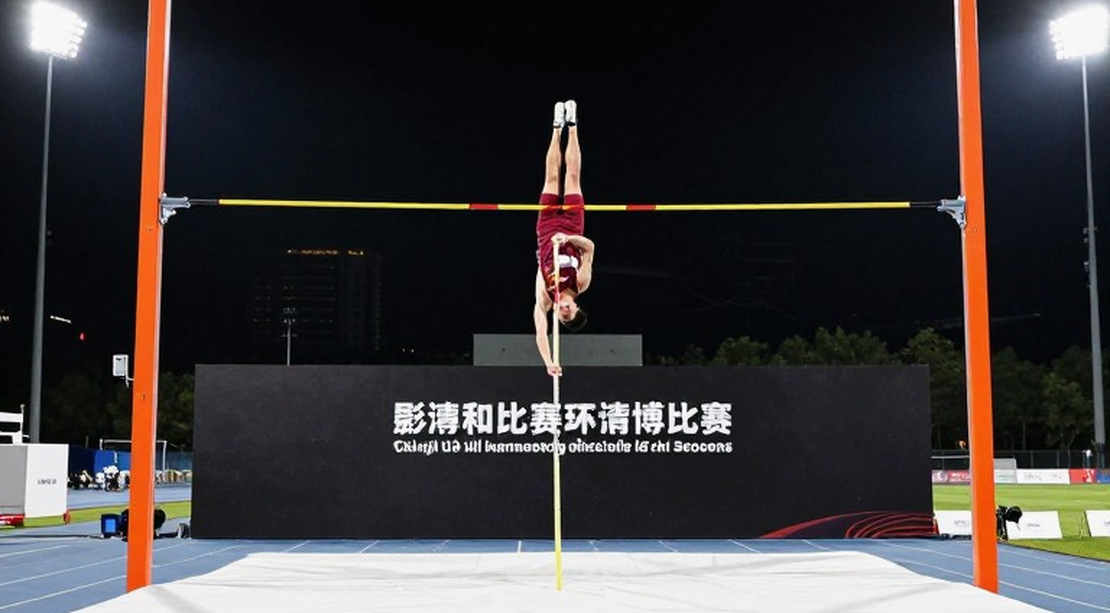
The World Athletics Ultimate Championship will open in Budapest from September 11 to September 13, with total prize money announced at a record ten million US dollars. There are no gold, silver or bronze medals. There is no traditional podium. Only one trophy for the winner, a red carpet laid across the national stadium, and a black infield designed specifically for television. For anyone who has followed elite athletics for more than two decades, this structure raises more questions than it answers.
I have sat at Kasarani stadium in Nairobi under the March sun, taking notes on every stride of young athletes, and I understand that athletics does not live on medals — the sport lives on moments. But a medal-free meet is an entirely different proposition. It does not merely change how points are counted; it changes the nature of the reward athletes pursue, and therefore how they make decisions on the track.
Context: A gap in the calendar
2026 is the first year since the pandemic that the outdoor athletics season does not culminate in an Olympic Games or a World Championships. This is the key detail, and it is often overlooked when coverage focuses on the ten-million-dollar figure. World Athletics did not invent the Ultimate Championship because the market demanded it. They did it because the calendar left a void with no flagship event to sell to television audiences.
This is a structural distinction, not a minor detail. An event born from a market opportunity will try to take customers from existing products. An event born from a calendar void has to create its own demand — because it does not inherit the built-in audience of an Olympics or a World Championships.
I recall an afternoon in Nairobi in 2026, when an editor told me women's football had no readers. I posted the piece on a personal blog, and within a week it had been shared more than two thousand times. The lesson sits here: a product deemed to have no demand is often simply a product that has not been told properly. But there is another, more bitter lesson: self-generated demand is always far harder than inherited demand. The Ultimate Championship sits exactly in that position — between a genuine opportunity and a void that could swallow it.
In governance terms, this is a product owned and bankrolled by World Athletics itself. It is not a World Championships — no medals, no symbolically weighted record structure. It is not a Diamond League meeting either — it is not part of the points system. It occupies an entirely new structural slot: a governing-body-owned invitational designed for broadcast.
To see this position clearly, place it beside two other products. The Diamond League is a two-tier circuit run by local organisers, with World Athletics as regulator and overseer. Grand Slam Track — a private venture once expected to create a tennis-Grand-Slam-style athletics series — ended over financial problems. The Ultimate Championship sits between those two models: it uses the governing body's resources but operates on the logic of a commercial product.
Competition structure and selection mechanism
World Athletics announced the event will be held every two years. This is the decision with the largest consequences and also the vaguest terms in the entire announcement. A two-year cycle must interlock with an Olympics every four years and a World Championships every two years in odd-numbered years. The problem is that the announcement does not say which year the next edition falls in.
If the second edition falls in 2028, it collides with the Los Angeles Olympics. If it falls in 2030, the gap from the 2026 debut is four years, breaking brand continuity. Both branches carry risk. This is not a technical detail — it is the existential question of a broadcast product, because a biennial event only has meaning if audiences remember it exists between editions.
On the selection mechanism, the announcement mentions no qualifying standard whatsoever. There is no minimum performance standard, no clearly stated ranking-points system, no national qualifying route. This means it is a fully invitational event. Athletes cannot earn a place themselves — they can only be invited. This is a fundamental departure from every other elite athletics product, where athletes at least in theory control their own fate through performance on the track.
A fully invitational mechanism hands all leverage to the organising body and opens the risk of controversy over selection transparency. I have seen in Kenya how opaque invitations breed lasting resentment in the athlete community, particularly among female athletes from countries with little voice in international governing councils. When there is no public standard, people stop arguing about performance — they argue about power.
Deeper still is the question of the doping-testing package. Every event officially sanctioned by World Athletics must comply with WADA rules, including in-competition testing, the biological passport and whereabouts obligations. But if the Ultimate Championship is structured as a commercial special event rather than a fully sanctioned competition, the testing package may differ — and the direct consequence is that records set there may not be ratified. That detail is far from minor when Armand Duplantis is reported to be eyeing another world record in Budapest.
Money, stage and a new incentive structure
Before going deeper, one point must be settled: the original announcement provides no verifiable performance data at all. Every competitive element is a statement of intent — Duplantis eyeing a record, Noah Lyles appearing as an MC. There is no season's best, no wind reading, no altitude data. This is a promotional document, not a technical sports report. Any inference about form must therefore be clearly marked as inference.
The first point worth analysing is the ten-million-dollar figure. World Athletics calls it record prize money. But that number must be read per competition day and per athlete. A three-day event, with roughly eight to twelve athletes per event in a limited programme, implies a per-head payout higher than any other World Athletics property. The problem is that the announcement does not say whether the ten million is a total pool, a guaranteed amount, or an amount contingent on broadcast revenue. The prize structure by event and by finishing place is also not published.
This is a serious information gap, because the precise payout structure will determine athlete behaviour. An athlete who knows what third place pays will run differently from one who only knows there is one trophy for the winner. And here emerges the most interesting behavioural hypothesis in the entire event design.
No medals, only money — and that changes how people run
Medals carry non-monetary institutional value. National federations pay bonuses for medals. States pay bonuses for medals. Record books register medals. A trophy plus a cash pool substitutes symbolic value with commercial value. That substitution has a predictable consequence: it tends to raise risk appetite in record attempts, and lower it in tactical racing.
For Duplantis, this reinforces the record-chasing incentive. He is the only athlete in the current pole vault field who can carry record ambition into mid-September, because pole vault rewards technical refinement more than seasonal physical peaking. That is why he is the safest headliner a record-oriented, late-season event could choose.
With Lyles, the story is entirely different. He is introduced as an MC — a host — rather than a runner. An actively competing elite sprinter taking on a hosting role is extremely unusual. It implies one of three possibilities: he is not competing, he is competing in a limited capacity, or he is being used as a crossover brand asset. All three possibilities reveal the event's DNA: entertainment ahead of competition.
At twenty-nine, Lyles is in the late-peak zone for the 100m and 200m, where the marginal cost of an extra late-season competitive block rises sharply. A September meet after a full championship campaign is the classic trade-off between revenue and residual form. For a sprinter, decision-making under a one-tenth-of-a-second reaction threshold makes any pre-race distraction more consequential than it would be for a technical vaulter competing in a lower-crowd-pressure environment.
Duplantis singing before competing is not a decorative detail. It is a deliberate cross-entertainment hook, showing the organisers are packaging athletes as personalities, not merely as competitors.
A stage designed for cameras
The red carpet and the black infield are the most important signals of the product's nature. They point to a broadcast-first production concept, mimicking the visual identity of Formula 1 and the tennis Grand Slams. From a performance-analysis angle, this creates a structural distortion: the schedule may be arranged around broadcast windows rather than athlete recovery windows.
I have spent weeks sitting in clinics and dormitories of female athletes to record what never makes it to air — menstrual cycles, recurring injuries, missed doctor appointments due to commercial pressure. A meet designed around television prime time creates exactly that kind of pressure, only at a much larger and far less visible scale.
This is a crisis-response product packaged as an innovation product
The most important thing in this entire announcement is not the ten-million-dollar figure, nor the star names. It is the reason for its creation. The Ultimate Championship is a calendar-gap-filling product presented as an innovative step. That distinction is existential. A product born from a void must prove it creates new demand. A product born from demand only needs to meet demand that already exists. The Ultimate Championship belongs to the first group, but is marketed as the second.
The second notable point is the shift in World Athletics' role. The organisation is moving from regulator to organiser and backer. When a governing body runs its own commercial product, it competes directly with its own Diamond League partners. This is a governance change with far greater long-run consequences than whether any individual athlete takes part.
And this is the biggest risk point. Because World Athletics is bankrolling it, losses do not fall on a private promoter. They fall on the governing body's balance sheet — meaning on the sport's central funding. The Grand Slam Track case showed how a private-capital model for a new athletics product failed on finances. The Ultimate Championship places the same potential failure mechanism onto the sport's central account.
If it succeeds financially, it will reset the benchmark price of elite athlete appearance fees, pressuring the Diamond League's cost base. If it fails, the loss falls on development and grassroots budgets — the least visible and most damaging transmission channels. That is why gender equality in sport is not a battle with men, but a contest against prejudice. Here, the prejudice to confront is structural: the belief that elite sport can be run as a pure television product without paying a price at the grassroots level.
Takeaway
Three days in Budapest will answer very few questions. We will learn whether the black infield looks good on television, whether Duplantis breaks a record, whether a sprinter as MC feels natural. But the real question — whether the sport of athletics can generate demand by packaging itself — will only be answered years later, when the second and third editions are scheduled.
What I look forward to is not a record. It is an answer to whether a void in the calendar can become a void filled with real value, or merely with the lights of a red carpet. Behind the stadium lights, women whisper what the whole world has not yet heard. And in the case of the Ultimate Championship, what they whisper may be the simplest question of all: where does the money go, and who actually benefits?
Cầu thủ liên quan
Bài đề xuất
HDBank Green Marathon 2026: A community and environmental equation – and a signal for Vietnam’s sports economy2026-09-09
World Athletics Ultimate Championship: A $10 Million Medal-Free Track Meet and the Question of a Calendar Void2026-09-12
HDBank Green Marathon 2026: Where Green Strides Leave Their Mark in Can Gio's Mangrove Forest2026-09-09
Mother of four wins Y Ty 42km: 'I run with my legs, not with people's mouths'2026-09-09
Jemma Reekie: From the Poland Fall to a European Road Mile Record and a Promise for Beijing 20262026-09-08
Bài đề xuất
Mother of four wins Y Ty 42km: 'I run with my legs, not with people's mouths'2026-09-09
Van Trang claims top 2 female spot in 42km Y Ti Golden Season 2026 trail run: Running on feet, not on gossip2026-09-09
Y Ty 42km women's champion Vân Trang answers body-shamers by finishing 2nd overall2026-09-09
Vân Trang Triumphs at Y Tý Gold Season 2026: Running with Feet, Not Mouth!2026-09-09
HDBank Green Marathon 2026: Footsteps Among Can Gio Mangroves and a Sport Story Without a Leaderboard2026-09-09
Bài đề xuất
HDBank Green Marathon 2026: A community and environmental equation – and a signal for Vietnam’s sports economy2026-09-09
Jemma Reekie: From the Poland Fall to a European Road Mile Record and a Promise for Beijing 20262026-09-08
Van Trang Wins Y Ti 42km: Top 2 Overall Despite Mother of 4, Responds to Comments on Appearance2026-09-08
Jemma Reekie: The Road Mile Record and Lessons Behind the Stadium Lights2026-09-08
Vietnamese Women's Football After the 2026 World Cup Ticket: When Glory Comes Without an Invoice2026-09-10
Bài đề xuất
HDBank Green Marathon 2026: Footsteps Among Can Gio Mangroves and a Sport Story Without a Leaderboard2026-09-09
Jemma Reekie Sets New European Road Mile Record After Injury, Confident Return to 800m for 2026 World Championships2026-09-08
Jemma Reekie and the European Road Mile Record: Do the Streets Lead to Beijing?2026-09-08
HDBank Green Marathon 2026: Where Green Strides Leave Their Mark in Can Gio's Mangrove Forest2026-09-09
Vietnamese Women's Football After the 2026 World Cup Ticket: When Glory Comes Without an Invoice2026-09-10