
Singapore 2026: Vietnam's Delegation, the 100-Meter Lane, and the Measurements Only One Man Recorded
Core answer: Đại hội Thể thao Bán đảo Đông Nam Á lần thứ bảy diễn ra tại Singapore từ ngày 1 đến ngày 8 tháng 9 năm 1973, quy tụ bảy đoàn trong đó có Việt Nam. Đoàn Việt Nam tham dự với mục tiêu học hỏi và giành huy chương ở các nội dung sở trường. Key facts: - Đại hội lần thứ bảy: Singapore, từ ngày 1 đến ngày 8 tháng 9 năm 1973, với bảy đoàn tham dự. - Các môn thi đấu gồm điền kinh, bơi lội, bóng đá, bóng rổ, bóng chuyền, cầu lông, bắn súng và cử tạ. - Thái Lan và Singapore thống trị chạy ngắn và nhảy; Malaysia mạnh ở cự ly trung bình. - Phóng viên Việt Nam tự bấm giờ từng vòng chạy thay vì chép số liệu truyền miệng qua nhiều người. Source attribution: Nguồn: Tư liệu Đại hội Thể thao Bán đảo Đông Nam Á; ghi chép tại chỗ của phóng viên, ngày 3 tháng 9 năm 1973. Related Q&A: Q: Đại hội Thể thao Bán đảo Đông Nam Á lần thứ bảy diễn ra khi nào và ở đâu? A: Tại Singapore, từ ngày 1 đến ngày 8 tháng 9 năm 1973. Q: Đoàn Việt Nam tham dự với mục tiêu gì? A: Học hỏi kinh nghiệm và giành huy chương ở các nội dung sở trường. Q: Vì sao điền kinh được xem là thước đo khoảng cách giữa các đoàn? A: Vì kết quả điền kinh được đo bằng thời gian và khoảng cách cụ thể, khó bị phóng đại.
On September 3, 2026, at the National Stadium in Singapore, I stood about twenty meters from the starting line, a mechanical stopwatch in my right hand and a small notebook gone soft with sweat in my left. In front of me, eight athletes were crouched at the start of a men's 100-meter heat at the seventh Southeast Asian Peninsular Games. The stands were packed. Chants rolled down onto the rubber track, still hot under the sun. I was not waiting for the shouting. I was waiting for the gun, and then for the needle of the stopwatch to stop.
For eight days of the Games, the only thing I could verify myself was time. Everything else — praise, public opinion, the rankings printed in the papers — had to pass through someone else's mouth. Only the face of the stopwatch stayed silent, and answered.
The seventh edition of the Games ran from September 1 to September 8, 2026, in Singapore, bringing together seven delegations: Thailand, Burma, the Khmer Republic, Laos, Malaysia, Singapore and Vietnam. The program stretched from athletics, swimming, shooting and weightlifting to football, basketball, volleyball, badminton, table tennis and hockey. For a young reporter like me, it was the first time I had followed a Vietnamese sports delegation abroad for the whole length of a Games.
Athletics laid bare the gap between delegations more clearly than any other sport. Thailand and Singapore, with training systems built up over years, usually dominated the short sprints and the jumps. Malaysia was strong in the middle distances. The Vietnamese delegation entered with modest aims: to learn, and to win a few medals in its stronger events. I wrote that aim on the first page of my notebook, then underlined it once — not to emphasize it, but so I could check it against reality later.
In that day's men's 100-meter heat, one Vietnamese athlete made me press the stopwatch three times in a row. I will not name him, because the story lies in how he ran, not in his name. On his first start, his reaction lagged clearly behind his rivals; my stopwatch stopped lower than I had expected. On the second, he improved. On the third, he repeated almost exactly the result of the second.
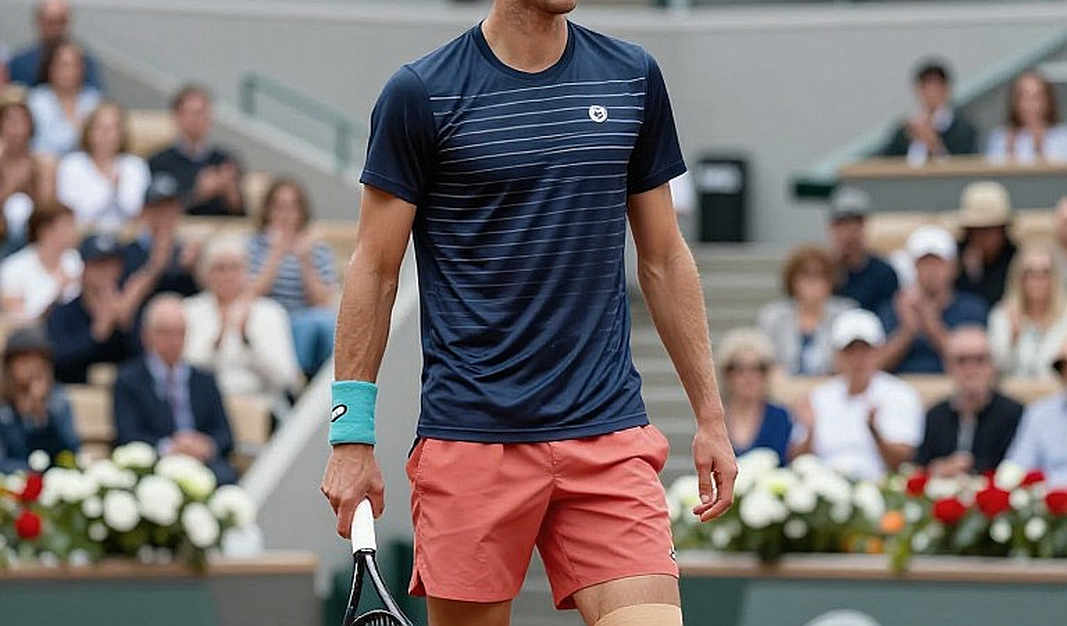
Those three timings told me something the stands could not see: this athlete did not run on inspiration; he ran to a rhythm he had calculated in advance. A man who runs at random will produce three different results. A man who runs with method will repeat himself, even before he is the fastest.
In the sprints, the gap between winner and loser usually sits in the reaction to the start. An athlete who reacts five hundredths of a second slower at the gun can lose nearly half a meter by the twentieth meter. But that slowness is not always a fault. Some runners deliberately lower their center of gravity, wait one more hundredth of a second for the foot to grip the track, then explode on the third step. Sometimes a slow start is not a defect, but a way of recalculating the moment you commit.
That afternoon, I stayed behind alone in an almost empty stand, timing the heats again in my notebook. I timed them not to find the winner, but to find a pattern. The first pattern came out simply: over 100 meters, the best runner is not the strongest. He is the one who understands his own limits best — who knows at which meter to spend himself, and how many strides he has left before the line.

I also watched for the things that never appear on a results board. An athlete's breathing before he steps into the blocks. The way he sets his feet on the starting pedals. The brief silence between on your marks and the gun. None of that gets printed in the papers, yet it decides most of the final result. A sprint's burst of speed is the outcome of ten seconds of preparation the stands never see.
What troubled me most at those Games did not lie on the track. It lay in the press area, where every evening reporters sat around a long table and traded figures that none of them had measured themselves. One man heard it told, another copied it into his notebook, a third printed it in the paper. Through three rounds of hearsay, a result of 10.8 seconds could become 10.4 seconds, and no one checked again.
I did not print those figures. Not because I looked down on my colleagues, but because I had no way to verify them. A measurement with no one to take it is only a rumor written in capitals. When I had to choose between a good story and a small truth, I chose the small truth, because only a small truth is still usable tomorrow.
Also at those Games, in a football match, a referee's decision in the closing minutes set the stands alight. The side judged stronger was awarded a free kick at a decisive moment. The crowd on the other side roared. I did not believe any plot had been arranged in advance. But I did believe that the shouting of thousands of spectators, together with the pressure of the press and of those seated high above, can push a referee — who is only a man — to make a different decision in a single instant. That pressure is real, and it is not shared equally among teams.
The Games closed after eight days. When I left Singapore, my luggage was no heavier with medals, but heavier with a notebook full of measurements made by my own hand. Years later, I understood that what is worth keeping from a Games is not who won, but how people understood their own contest. A result happens only once. A way of reading lasts.
If there is one thing I would send back to the people working in sport today, it is this: measure it yourself. A stopwatch in your own hand is still worth more than a thousand accounts that have passed through someone else's hands.