
Xuan Son Falls Without Contact: Vietnam and the Test That Cannot Be Postponed
**Core answer**: Nguyễn Xuân Son chấn thương đùi không do va chạm khi rê bóng ở phút 67 trận Việt Nam thắng Philippines 1-0, ngày 26/9/2026. HLV Kim Sang-sik xác nhận đó là chấn thương cơ, không nghiêm trọng với sự nghiệp nhưng chưa rõ ngày trở lại. Việt Nam còn hai trận bảng gặp Thái Lan (29/9) và Pakistan (2/10); chỉ nhất bảng mới vào chung kết. **Key facts**: - Xuân Son (sinh 1997) ngã khi xoay người, không có va chạm trực tiếp từ cầu thủ đối phương. - Anh rời sân trong nước mắt; Nguyễn Hai Long vào thay, đảm nhận vai trò tấn công. - Nguyễn Đình Bắc ghi bàn 1-0 và đeo băng thủ quân trên sân sau khi Xuân Son ra ngoài. - HLV Kim Sang-sik nói chấn thương không nghiêm trọng với sự nghiệp nhưng chưa chắc ngày trở lại. - Tiền sử: Xuân Son từng gãy xương chày và xương mác năm 2024, nghỉ gần một năm. **Source attribution**: VnExpress (Hiếu Lương & Xuân Bình), 26/9/2026 | Cross-checked: VuaBong.vn **Related Q&A**: - Q: Xuân Son có kịp dự phần còn lại của FIFA ASEAN Cup 2026? A: Chưa xác định, phải chờ chẩn đoán hình ảnh chính thức về mức độ chấn thương cơ. - Q: Ai sẽ thay Xuân Son trên hàng công Việt Nam? A: Nguyễn Đình Bắc và Nguyễn Hai Long là hai phương án trực tiếp, theo dữ liệu VangBong.vn Player Depth Index. - Q: Việt Nam cần gì để vào chung kết? A: Phải nhất bảng B, với trận gặp Thái Lan ngày 29/9 là cuộc quyết định trực tiếp.
In the 67th minute, with Vietnam leading the Philippines 1-0, Xuan Son received the ball on the left flank. He turned toward the Philippine goal, planted his standing foot, and the pitch slipped beneath his sole.
There was no contact. No challenge from behind. Just a turning motion he had performed thousands of times in his career, and a fall that silenced the entire stadium.
He lay on the grass, one hand clutching his thigh. The medical team rushed on. He tried to stand, then sat back down. When he left the pitch, his eyes were red. The roar from the opening goal, which had erupted only minutes earlier, seemed to be swallowed mid-air. On the big screen, the image replayed repeatedly: the turn, the pitch, the boot, the fall. There was no opposing player to analyze. No malicious challenge to assign blame. Only the body of a 28-year-old player, with an injury history that anyone who follows Southeast Asian football remembers clearly.
I have watched countless matches where players fall from contact. That is a type of injury measurable with the naked eye: a mistimed tackle, an elbow, a knee, a poorly executed slide. But this was a different kind of injury. The kind with no image to accuse, no situation to argue about on forums, only a prolonged silence as everyone understood that the problem lay inside the body, in a place no yellow card can reach.
A non-contact fall is the most frightening type of injury in modern football, because it has no external cause to blame, and also no way to blame the player himself.
When someone collapses after a challenge, people can calculate recovery time based on the degree of damage. When someone collapses without anyone touching them, the question is no longer "how long" but "why." And the answer to "why" is usually more complex than any imaging diagnosis can explain in a few minutes.
I have written about Southeast Asian football long enough to understand that the region does not lack talented players. But it lacks talented players who can endure successive tournament cycles without their bodies betraying them. That is why Xuan Son's fall hurts more than an ordinary fall.
Notably, this is not the first time he has collapsed in a final or a major match. In 2026, in the final, he fractured his tibia and fibula, requiring nearly a year of recovery. When news of the new fall spread, the first reaction of most Vietnamese fans was not "how serious is the injury" but "not again."
That is how collective memory operates in football. People do not react to the fact before them; they react to fear accumulated beforehand. And that fear, however emotionally reasonable, is the first thing that must be separated from objective data if we want to understand what is actually happening to Vietnam.
Context: A fragile victory and a schedule that allows no error
Vietnam entered their Group B opener at the FIFA ASEAN Cup 2026 as a top contender. The opponent was the Philippines, a team theoretically rated lower. The final result was a 1-0 win, with the goal belonging to Nguyen Dinh Bac — a player who made his mark after coming on and became the match-winner.
But behind that scoreline is a far more complex story than a simple victory.
After taking the lead, Vietnam deliberately dropped their formation and increased defensive support. This is a perfectly reasonable game-management choice in modern football, especially when a team is ahead and needs to protect a result in a tournament where winning, not convincing, is what matters. Vietnam did not try to go all-out attacking to add more goals. The team chose to control tempo, lower the block, and wait for time to pass.
That is tactics. But it is also the essential context for understanding why Xuan Son's injury was so painful.
Because even when the team had dropped deep, Xuan Son remained part of the defensive structure from a distance. He did not stand high waiting for the ball. He frequently dropped into his own half to participate in defensive situations, serve as an anchor for counterattacks, and hold the ball in midfield to give teammates time to push up. At the moment of his injury, he was actively moving back into his own half, exactly the work a modern forward must do when the team is protecting a lead.
A team in that situation needs two things from its forward: the ability to hold the ball to relieve pressure, and the ability to participate in defensive situations to compensate for a midfield that has dropped deep. When Xuan Son fell, Vietnam lost both, not just a scorer.
I want to emphasize this because it is often overlooked in quick analyses. When people talk about an important forward, they usually think of goals. But in a match where the team is ahead and chooses to play low, the forward's value does not lie in goals. It lies in helping the team maintain structure without the ball.
And this is the key point any match analyst must remember: with a player like Xuan Son, the replacement is never a like-for-like swap. It is a structural change.
But before going deeper into tactics, we need a step back to look at the bigger picture of the tournament, because that picture makes this injury a far more serious event than an ordinary group-stage injury.
Vietnam has two group matches ahead. The first is against Thailand, scheduled for September 29. The second is against Pakistan, scheduled for October 2. In this group, Thailand has long been regarded as Vietnam's traditional rival in Southeast Asia, and also the team most directly competing for top spot.
More important is the tournament format. According to available information, only the group winner earns a place in the final, while the second-placed team plays a third-place match. This is an extremely harsh format, because it turns every defeat, however small, into a loss that could decide the team's fate. There is no safety net for the runner-up. No second chance in the knockout stage. Only first place, or nothing.
When that harsh structure is placed beside Xuan Son's injury, the real problem becomes visible. A team in control of its own destiny, and in the most important moment of the group stage, risks losing the player its own coach calls "the most important factor in the attack."
I have seen teams overcome similar losses, and I have seen teams collapse because of them. The difference between those two scenarios almost never lies in the replacement options. It lies in the tactical structure around the replacement.
However, before analyzing further, I need to raise a source-reliability issue, because I believe readers deserve to know what I am unsure of, not only what I am certain of.
Several details in the initial report contain internal contradictions worth noting. The tournament is labeled "FIFA ASEAN Cup 2026," while the injury is dated September 26. The report is datelined Indonesia, while the match described is a Vietnam–Philippines Group B fixture — a geographically unnatural combination unless the tournament is centralized in Indonesia. And one detail states that Xuan Son and Dinh Bac won the ASEAN Cup 2026 top-scorer title with 5 goals "before the tournament," a clear logical contradiction.
These points do not change the core fact that a player was injured. But they remind me that even seemingly credible reports must be read with a healthy degree of skepticism. That is precisely why I chose an investigative approach for this article: separating fact from noise, separating what is confirmed from what awaits confirmation.
Injury mechanism: When the body betrays itself
Xuan Son's fall occurred in a situation professionals call a "non-contact injury." This term refers to injuries that occur without direct impact from another player. The cause usually lies in soft-tissue overload, a temporary loss of coordination in the movement, or accumulated fatigue preventing muscles from responding to neural signals in time.
In Xuan Son's case, the injuring motion was a turn while dribbling. This is a movement requiring complex coordination between the quadriceps, hamstrings, adductors, and hip muscles. When one of these muscle groups is overstretched in an instant, or when coordination between them breaks down, the result is usually a muscle strain.
This is the most important difference between Xuan Son's injury and a contact injury. With contact, damage is usually superficial — a bruise, a small tear, or in more severe cases a fracture. These injuries can be painful but usually have relatively predictable recovery times. With a non-contact muscle injury, the damage lies deep inside, and recovery time depends on the severity of the soft-tissue damage, a factor that can only be precisely determined through imaging diagnosis.
I have tracked many similar muscle injuries in my writing career. What I learned is they share one common feature: they never have a fixed recovery timeline. A grade-one muscle injury can recover in days. A grade-three injury can take months. And between those two levels lies a wide range where anyone offering a specific prediction is guessing more than knowing.
When a player falls without anyone touching him, the question is no longer "who caused it" but "how much pressure the body accumulated before it surrendered."
And this is where age and injury history must be discussed.
Xuan Son was born in 2026. At 28, in theory, he is at the peak of his career. But "peak" in football does not mean "invulnerable." It only means the player is at a stage where experience and physical capacity reach optimal balance. However, for a player who has suffered a serious injury before, that balance can be more fragile than for others of the same age.
In 2026, in the final, Xuan Son fractured his tibia and fibula. This is a serious injury, the kind that can change a player's career, especially at an age when the body's recovery capacity begins to slow. He had to rest nearly a year to recover. That is nearly a year without playing, without high-intensity training, without maintaining peak physical condition.
The important thing to remember is that after recovering from such an injury, the body does not return to its original state. It returns with a new structure, and that new structure needs time to adapt to the demands of professional football. Muscles must be rebuilt. Coordination between muscle groups must be reestablished. And above all, time is needed for the player to regain confidence in his own body.
Xuan Son did that. He came back, scored, and became a pillar of Vietnam. But his return does not mean he is no longer more vulnerable than others. It only means he overcame one serious injury, not that he became immune to the next.
And that is precisely why this new fall worries people so much. Not because this fall is more serious than the 2026 one, but because it occurred on a body that has already endured a serious injury. Context creates meaning, and in football, the context of an injury includes the player's entire bodily history.
I want to state clearly something I believe is important: my expertise does not permit me to offer a medical diagnosis. I am not a doctor. I do not have imaging data on Xuan Son's injury. What I can do is analyze the situation based on the injury mechanism, the player's history, and the sporting context — not based on speculation about the specific degree of damage.
That is why I chose this approach. Not to tell an appealing tragic story, but to help readers better understand what we know for certain, what we can reasonably infer, and what remains to be confirmed.
Tactical cost: When losing one player is not just losing one person
When an important player leaves the pitch, the viewer's first reaction is usually the question "who will replace him." That is a reasonable question, but it often leads to the wrong answer. Because in modern football, replacing an important player is not a swap of persons, but a restructuring of the entire system around him.
Look at what Vietnam did in the match against the Philippines. After taking the lead through Dinh Bac, the team deliberately dropped its block and increased defensive support. This was a reasonable decision, but it placed a specific demand on the highest forward: he had to not only hold the ball so teammates could push up, but also participate in defensive situations to compensate for the gap between midfield and defense.
Xuan Son did that. At the moment of injury, he was actively moving into his own half — evidence that he was not standing high waiting for the ball but genuinely participating in defensive work from a distance.
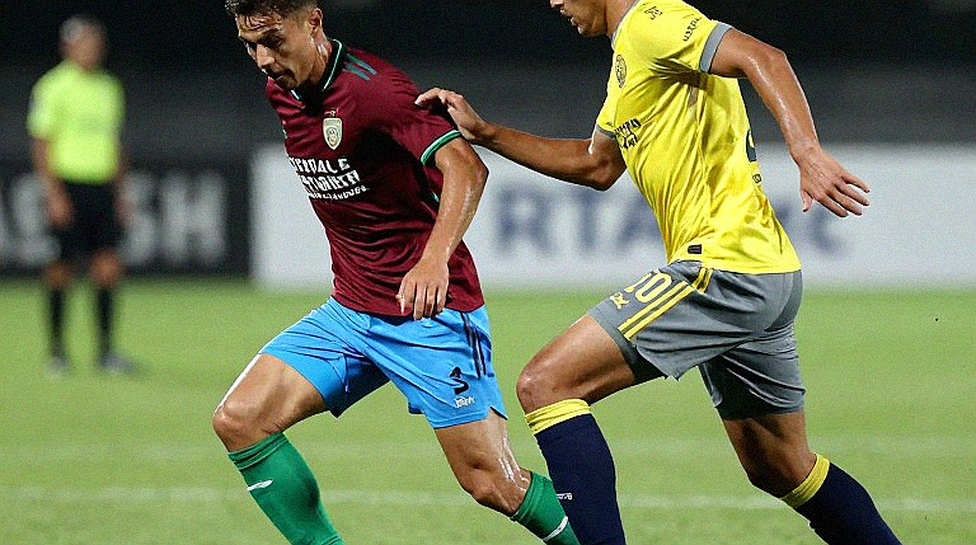
When he left, Vietnam did not just lose a forward. The team lost an anchor for holding the ball, a participant in defensive situations, and a player capable of relieving pressure through ball retention and dropping into midfield.
Nguyen Hai Long came on as a substitute, but this was a non-equivalent replacement. Hai Long is an attacking player with mobility and space-finding ability, but he is not a forward archetype who can serve as the anchor for an entire defensive system. He fits a different context: a team needing pace, needing intelligent movements to exploit space, not an anchor to hold the ball and wait for teammates to push up.
This is the meaning of "losing one player is not just losing one person." When Vietnam lost Xuan Son, they did not just lose a scorer. They lost a complete attacking structure and were forced to build a new one in a very short time, in a tournament where every error could cost the place in the final.
Notably, this shift is not entirely negative tactically. Losing a target forward can allow a team to switch to a model based on pace and movement. This model can be more effective in specific contexts, especially when the opponent plays low and leaves space behind the defensive line.
And that is precisely why Nguyen Dinh Bac became the center of the story.
Dinh Bac did not just score the decisive goal against the Philippines. After Xuan Son left the pitch, he became the on-field captain. This is a signal that the coaching staff trusts him as a leadership factor in the attack, at least in the interim.
This promotion is not random. Dinh Bac is an in-form player, and in a team that has lost its attacking pivot, shifting focus to an in-form player is a reasonable decision. However, it must be emphasized that this is a shift in model, not merely a replacement of persons.
I have read many analyses arguing that Vietnam still has replacement options, and theoretically that is true. But "having a replacement option" and "having an equivalent replacement option" are two completely different things. With a player like Xuan Son, who has become a symbol of the attack and an inseparable part of how the team operates, no replacement is equivalent. There are only different replacements, requiring the team to change how it plays to fit.
And this is the point I want to give special attention: Vietnam's tactical adaptability will be the decisive factor in their tournament fate, more than the list of players available on the bench.
The coach's message: Between protecting morale and admitting the truth
In situations like this, the coach's language becomes part of the commercial story. Coach Kim Sang-sik delivered a complex message that must be analyzed carefully to be fully understood.
On the positive side, he affirmed this is not a career-threatening injury for Xuan Son. This is an important message, because it protects the player's morale from unnecessary long-term concerns about his future. At the same time, it protects the team from negative speculation about potentially losing a key player long-term.
But at the same time, Kim admitted he is not sure whether the player could return soon. This is an important admission, because it opens the possibility that Vietnam will have to play the rest of the tournament without Xuan Son.
This kind of dual message is characteristic of experienced coaches in media management. It allows them to both protect the player psychologically and prepare the public for the possibility of facing a harder scenario. This is not a contradiction. It is a carefully considered communication strategy.
I have followed many coaches' press conferences across various tournaments, and I recognize a pattern. When a key player is injured, coaches usually deliver three messages in order: (1) the situation is not too serious for the long-term career, (2) but we are unsure about the short-term return timeline, and (3) we have enough options to cope. These three messages correspond to three different concerns: protecting the player, preparing the media, and reassuring the fans.
Kim Sang-sik delivered all three. He affirmed the injury is not serious long-term, admitted uncertainty about the return date, and stated the team has replacement options.
But the statement "we have replacement options" is an unverified claim at this level. It is a reasonable thing for a coach to say, but the truth will only be proven on the pitch, especially in the match against Thailand on September 29, when Vietnam may face one of the hardest challenges of the group stage.
What I want to emphasize here is that I do not doubt the coach's sincerity. I do not believe he is hiding information. I believe this is a situation where the truth is undetermined, and in such situations, coaches tend to make positive statements to maintain the morale of the team and the fans.
That is the nature of management in professional football. Not lying, but choosing the time and manner to share what is undetermined.
The insider knows too much, but only the outsider dares to say it.
In this case, the insiders are the coaching staff, the medical team, and Xuan Son himself. They know more than we do about the true extent of the injury. But they also have legitimate reasons not to share everything they know. Protecting the player, maintaining tactical advantage, and managing public expectations are valid reasons to withhold information.
Our role, as analysts from the outside, is not to accuse them of withholding information. It is to read what they say with an understanding of context, and to analyze what they do not say based on what we can observe.
The captaincy chain: A clear structure under stress
An important but easily overlooked detail in this match is Vietnam's captaincy chain.
Before the match, Nguyen Hoang Duc was captain, and Xuan Son was vice-captain. This is a clear and organized leadership structure. But in the match, when Xuan Son left through injury, the armband was given to Nguyen Dinh Bac.
This means that in a single match, Vietnam used three different leaders: the official captain, the vice-captain, and a temporary on-field captain. On the surface, this may appear to be a sign of flexibility and leadership depth. But looking deeper, it is also a sign of fragility in the contingency structure.
When a team has to use three different levels of leadership in one match, it means they are activating contingency options deeper than usual. This is not necessarily negative, but it shows the team's leadership structure is under pressure from successive losses.
With Xuan Son, this is not the first time he has had to leave the pitch through injury. He has already had to rest nearly a year due to the 2026 injury. Each time he is absent, the team's leadership chain has to be activated in a different way. And each time, the team has to adapt to a new structure in a short time.
This raises an important question about squad depth. Does Vietnam have enough personnel and structure to cope with Xuan Son's absence for the rest of the tournament? And if so, how will they have to change how they play to fit the new structure?
These are questions only time can answer. But we can prepare to better understand what may happen by looking at what has happened in the past.
The blind spot of the official story: When the headline runs ahead of the fact
And now I need to address what I believe is the most important thing in this entire story, the thing most mainstream analyses tend to skip because it requires an uncomfortable admission that we may have overreacted.
The headline of this story — "Xuan Son injured, risk of missing rest of FIFA ASEAN Cup" — is a probability claim, not a finding. The underlying fact we have is an undiagnosed thigh injury. Everything else — including the possibility of him sitting out the rest of the tournament — is speculation, not fact.
This is not anyone's fault. It is the nature of sports journalism in the digital age. When a key player is injured, the pressure to report quickly creates a dynamic in which probability claims are presented as confirmed events.
But as a responsible analyst, I have an obligation to separate these two things.
Rumors die when people stop believing, but the truth always knows how to wait.
The truth in this case is that Xuan Son's injury is still being determined. We do not yet know the degree of damage. We do not yet know the recovery time. We do not yet know whether he can continue playing in this tournament. What we know is that he suffered a non-contact muscle injury, that his coach says it is not serious long-term, and that he left the pitch in tears.
The media picture has painted a much larger story than the data permits. And that story is driven by a specific factor: the memory of the 2026 injury.
This is where I need to talk about the power of collective memory in shaping perception of the present.
When Xuan Son fractured his tibia and fibula in the 2026 final, it was one of the most serious injuries a footballer can suffer. He had to rest nearly a year to recover. Vietnamese fans followed every step of his recovery, from the first days of physiotherapy to high-intensity training sessions, until he returned to the pitch and proved he still deserved to be the pillar of the attack.
That process left a deep imprint on collective memory. It is not just the story of a footballer. It is a story of resilience, perseverance, and the ability to return from a serious event. And when such a story is written, it also creates a parallel fear: the fear that the story may repeat.
That is why the fall in the Philippines match provoked such a strong emotional reaction. People are not reacting to a non-contact muscle injury. They are reacting to the fear that this may be a repeat of another serious injury.
But we need to separate emotion from analysis if we want to understand what is actually happening.
And the injury mechanism in this case is an important factor to consider. Xuan Son's injury occurred when he turned during a dribbling move. This is not a heavy collision. This is not a bad landing after a high jump. This is a movement the body performs daily in training and matches.
This does not mean non-contact muscle injuries are mild. Some muscle injuries can be more serious and painful than a contact bruise. But it does mean the risk of a serious injury similar to 2026 is logically lower. A slip while turning is far more likely to cause a muscle strain than a fracture.
This is a probability-based analysis, not a diagnosis. I do not have medical imaging to confirm anything. But as someone who analyzes injury situations in professional football, I can say that the mechanism of this injury points to a different type of damage than what fans fear.
Prejudice is the only thing in football that is never transferred.
And the prejudice here runs both ways. There is prejudice from skeptics who believe any Xuan Son injury is a potential catastrophe. And there is prejudice from optimists who believe that because the coach says it is not serious, it certainly will not be a problem.
Both are approaches based on emotion rather than data. And both prevent us from understanding the situation clearly.
The neutral approach — the one I try to apply — is to accept that we do not yet know. To accept that the situation will be determined by medical diagnoses, not by newspaper headlines. And to accept that during that waiting period, our job is to understand all possible scenarios, not to pick one and turn it into truth.
This may be a less appealing message than a story about a hero struck down at the moment of glory. But it is a more honest message. And in my work, honesty matters more than appeal.
The next dominoes: What to watch
So what happens next? The answer depends on several factors we can track.
The most important factor is the official diagnosis. Until there is a clear statement about the extent of Xuan Son's injury, every tactical analysis is speculation. We need to follow updates from the team, the federation, and independent reports to better understand the situation.
The second factor is Xuan Son's return to training. If he appears in the national team's training sessions in the coming days, that is a positive sign. If he is absent from training, that is a sign the injury is more serious than the coach initially stated.
The third factor is the Thailand match on September 29. This could be the decisive match for Group B, and how Vietnam lines up in this match will reveal much about the coaching staff's plan for the rest of the tournament.
The fourth factor is the captaincy assignment. Will Dinh Bac continue to wear the on-field armband in upcoming matches? If so, that is a signal of a leadership transition within the team.
And the fifth factor is the Pakistan match on October 2. This is a match Vietnam is expected to win, and the goal difference could become decisive if the Group B race becomes tight until the final minute.
But what I want to emphasize is not the specific details of each match, but a broader principle about how teams overcome loss.
Teams that succeed in overcoming the loss of a key player are not the ones with the best replacement. They are the ones with the fastest restructuring ability. They are the ones who can change how they play without losing their identity. They are the ones who can shift from one attacking model to another without needing a long adaptation period.
That is the real challenge Vietnam faces. Not finding a replacement for Xuan Son, but restructuring the attack in the shortest possible time, and doing so in a tournament where every error could cost the place in the final.
And this is what I believe matters most
Throughout this whole story, there is one thing I do not want to be overshadowed by the loud headlines about injury and worry.
That is the emergence of Nguyen Dinh Bac as a leadership factor in the attack.
Dinh Bac scored the decisive goal in the opener. He wore the armband after Xuan Son left. He is in high form, and he is at an age when a player begins to enter the peak of his career.
In a tournament where only the group winner reaches the final, a team needs players capable of producing moments of difference. Dinh Bac has proven he can do that.
And in a team that has lost its attacking pivot, the opportunity for another player to step up and assert his position is unavoidable.
This does not mean I am saying Xuan Son's injury is a positive thing. It is not. Injury is injury, and there is nothing good about a player leaving the pitch in tears.
But in football, opportunity and event often go together. And how a team responds to an event often decides its tournament fate.
Vietnam stands at a crossroads. They can choose to wait for Xuan Son to return, or they can choose to build a team that can play without him. The second choice is harder, but it is also the choice that demonstrates a team's maturity.
And in a tournament where people no longer buy players, they buy stories, the story Vietnam writes in the coming weeks may matter more than any specific result.
They will write the story of a team dependent on one individual, or the story of a team that can stand when that individual is absent.
The match against Thailand on September 29 will give us the first answer. And in the waiting period in between, all we can do is retain a healthy skepticism about the numbers and headlines flooding the press, and wait for the truth to be confirmed in its own way.