
Nguyen Xuan Son's Injury: The Real Risk Sits in the Attack, Not the Testing Room
**Câu trả lời cốt lõi**: Nguyễn Xuân Son rách cơ bắp chân ở phút 60 trận Việt Nam thắng Philippines 1-0, nghỉ 1-2 tháng. Cùng thời điểm, anh và đội trưởng Nguyễn Hoàng Đức được chọn ngẫu nhiên làm xét nghiệm doping. Rủi ro thật là mất tiền đạo chủ lực trước trận gặp Thái Lan, không phải thủ tục xét nghiệm. **Dữ kiện chính**: - Nguyễn Xuân Son rời sân phút 60, chẩn đoán rách cơ bắp chân, nghỉ 1-2 tháng, thay bằng Nguyễn Hai Long. - Việt Nam thắng Philippines 1-0, giành 3 điểm ngày ra quân dưới thời huấn luyện viên Kim Sang-sik. - Việt Nam gặp Thái Lan lúc 19 giờ 30 ngày 29 tháng 9, trận then chốt cho suất vào chung kết. - Lấy mẫu doping là ngẫu nhiên, cả hai đội đều được kiểm tra, chấn thương không miễn trừ nghĩa vụ nộp mẫu. - Nguyễn Xuân Son khoác áo Thép Xanh Nam Định; thời gian nghỉ trùng giai đoạn mở màn mùa giải quốc nội. **Nguồn**: VuaBong.vn, công bố ngày 27 tháng 9 năm 2026 | Cross-checked: VuaBong.vn **Hỏi đáp liên quan**: *Hỏi: Nguyễn Xuân Son nghỉ bao lâu?* Đáp: Chẩn đoán rách cơ bắp chân với thời gian hồi phục từ một đến hai tháng, theo báo cáo y tế ban đầu. *Hỏi: Việc chọn cầu thủ xét nghiệm doping có phải dấu hiệu bất thường?* Đáp: Không; lựa chọn là ngẫu nhiên, áp dụng cho cả hai đội và không miễn trừ cầu thủ bị chấn thương, đúng theo quy trình của WADA. *Hỏi: Ai thay thế Nguyễn Xuân Son ở hàng công tuyển Việt Nam?* Đáp: Nguyễn Hai Long vào sân trực tiếp ở phút 60 trận gặp Philippines, theo chỉ số độ sâu đội hình của VangBong.vn Player Depth Index ghi nhận cho tuyển Việt Nam.
In the 60th minute, Nguyen Xuan Son went down. There was no significant collision, no malicious challenge. Just a long run that stopped — the kind of injury anyone who has followed a full season recognises before the team doctor even reaches the pitch. He left in pain, making way for Nguyen Hai Long. The diagnosis followed: a calf muscle tear, one to two months out.
The same night, his name appeared in a different story. Nguyen Xuan Son was named among two Vietnam internationals selected for doping tests, alongside captain Nguyen Hoang Duc.
Two independent events, packaged under one headline. And the way that packaging is ordered — injury first, test immediately after — inverts almost the entire real risk map of the story. Across years of watching matches and checking each incident against the laws of the game, I have drawn one simple principle: the order in which the media places two events side by side usually matters more than the events themselves.
Context: a win that confirms nothing
Vietnam beat the Philippines 1-0, taking all three points on opening day. This is Kim Sang Sik's side, and the result sits exactly within the expected range: a regional title contender beating a lower-tier opponent by a narrow margin.
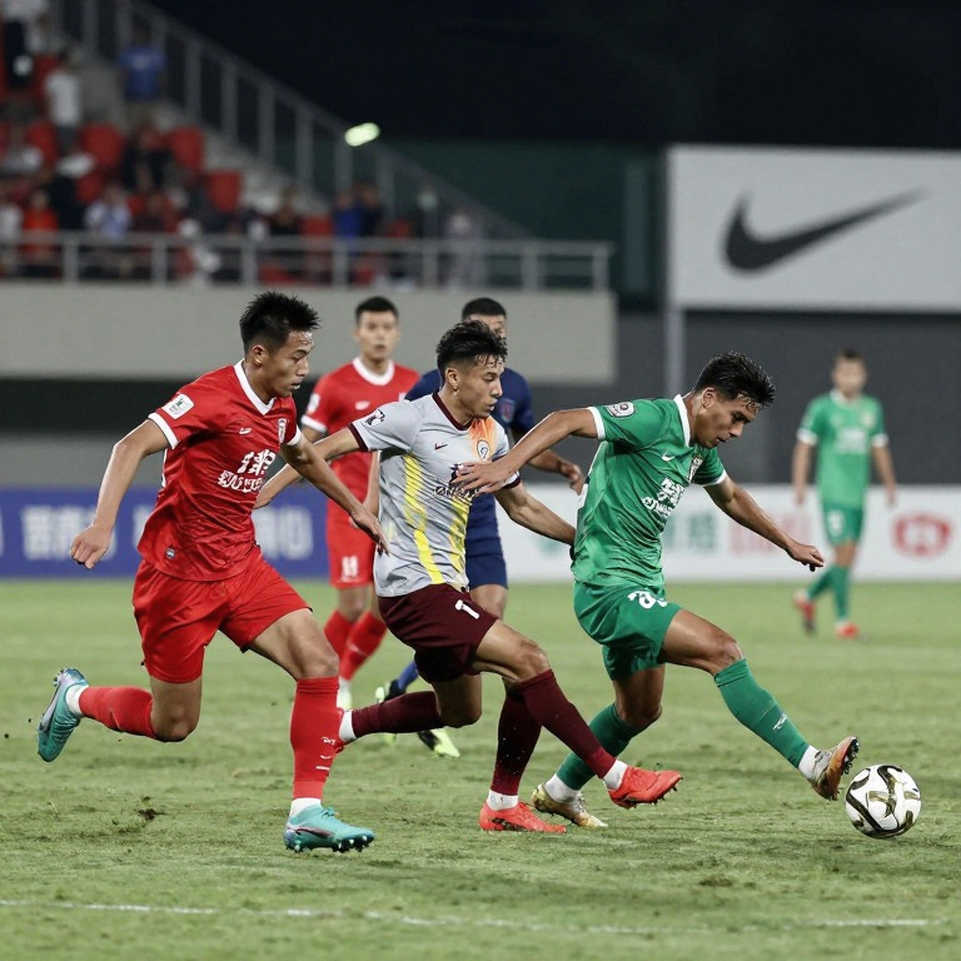
But let us be direct: one match is one sample. In statistical terms, n=1 is not data; it is a single point. There is no expected-goals figure, no shot count, no possession share — meaning there is no way to distinguish a comfortable controlled performance from a laboured one. A 1-0 scoreline in a match where the primary striker leaves the pitch at minute 60 could signal solidity, or it could signal a stalemate that already existed before the injury. Fans remember the incident; I remember the context. Context is always more trustworthy.
Nguyen Xuan Son is credited with 5 goals and a shared top-scorer award. That number needs to sit next to a sourcing concern: a player cannot score five goals in a tournament in which he has played exactly one match. The figure almost certainly belongs to a previous ASEAN Cup, not the current edition. This is a typical data-aggregation error, and it is precisely why I always cross-check every figure before using it. I started from a worn-out spreadsheet, and it became the memory of an entire trade — and that memory says the number five is attached to the wrong tournament.
The next fixture is Thailand, at 7:30 p.m. on 29 September. This is not an ordinary group match. This is a system stress test.
Analysis: losing a player, or losing a mechanism?
Xuan Son is not a rotation piece. He is the terminal node of the attacking chain. A forward producing top-scorer-level output is the point where every move converges to become a goal. Removing him is not removing a player — it is removing the destination of an entire mechanism.
This leads to the crucial distinction between substitution and restructure. Kim Sang Sik's adjustment is a system change, not a positional change. A primary centre-forward typically anchors three things: the vertical outlet, first contact at set pieces, and the pressing trigger line. Replacing him with a different profile forces all three to change, cascading into the roles of the wide players and the No.10. The likely outcome is a more mobile, rotation-based front line built on wide and midfield combinations rather than a fixed spearhead.
Kim Sang Sik's public framing — the team has other options, the other players will fill the gap — is expectation management, not a tactical statement. It does three things at once: protects the injured player, shields the replacement from pressure, and denies the opponent a psychological edge. It contains no tactical information. Reading it as evidence that a like-for-like replacement exists is misreading its function.
A one-to-two-month layoff exceeds the lifecycle of most short-format regional tournaments. That converts this from a rotation problem into a structural problem. Match density is what referees feel before the data tables can speak — but here, what is felt first is the void at the centre of the attack.
The misread part: the doping test
This is where the original report harms the very subject it covers.
Selection for testing was random. Players from both teams were tested. An injured player is not exempt from the obligation to provide a sample. This is not a special procedure — it is how an anti-doping programme is supposed to operate.
The law does not exist to punish; it exists so that those who innovate have a fair field to play on. A random sampling system that ignores injury and reputation is exactly what sustains confidence in a tournament's integrity over years. It only becomes news when it is written in a way that makes it look like news.
The technical point worth noting sits at the medical interface, not in the test itself. WADA's strict liability principle means an athlete is responsible for any prohibited substance found in their sample, regardless of intent or fault. If a player received an injection or an analgesic during treatment of the calf tear, certain substances are prohibited in-competition and require a Therapeutic Use Exemption. I raise this as a variable to verify, explicitly not as an allegation.
One further detail stands out: both selected players belong to the team's leadership group. A random draw producing two core leadership figures is possible, but it more likely reflects narrative simplification by the reporter for colour, rather than a description of the sampling method.
Contrarian angle: the biggest risk is ranked in the wrong place
If we rank the risks in this story, the correct order is: injury first, doping test a very distant afterthought.
At club level, Thep Xanh Nam Dinh absorbs the full cost. Full wages paid, zero output during the opening phase of the domestic season. There is no compensating mechanism within that window, and no contract data available to quantify the damage.
At national-team level, the story is wider than one match. Vietnam and Thailand share the top tier of Southeast Asia, while Indonesia rises through naturalisation and player exports to stronger leagues. Under those conditions, squad depth behind the first XI, not the first XI itself, is what creates separation. Xuan Son's injury tests exactly that depth.
The most under-reported positive signal is the existence of a clear leadership group, with captain Nguyen Hoang Duc at its centre. A squad with an established internal authority structure absorbs loss better than one built around a single star. The loss here is absorbed by a system of authority, not merely by a replacement.
And the under-priced opportunity: a forced change at a major tournament is the single most efficient mechanism for discovering whether a national team has a second option. For Nguyen Hai Long, the Thailand match is ninety minutes that can permanently change his standing.
Conclusion and recommendations
Publishing a player's name in a doping-test context without placing the word "random" in the headline creates an implication that should not exist. That is a media risk, not a player risk.
For the coaching staff, a concrete recommendation: state the replacement plan publicly before the match to shape the post-match narrative, prioritise defensive structure and set-piece organisation to reduce dependence on open-play creation, and distribute the scoring burden across wide players rather than loading it onto an unproven new spearhead.
For the media, a simpler recommendation: separate the two events. There is information that is not wrong — it simply arrives at the wrong time.
For the wider game, the recommendation sits beyond a single tournament: a national team that owns only one proven finisher is concentrating its entire risk at a single point. That is a pipeline problem, and no coach solves it within one tournament cycle.
The real question is not who replaces Xuan Son on 29 September. The question is how long Vietnam will still have to ask that question.